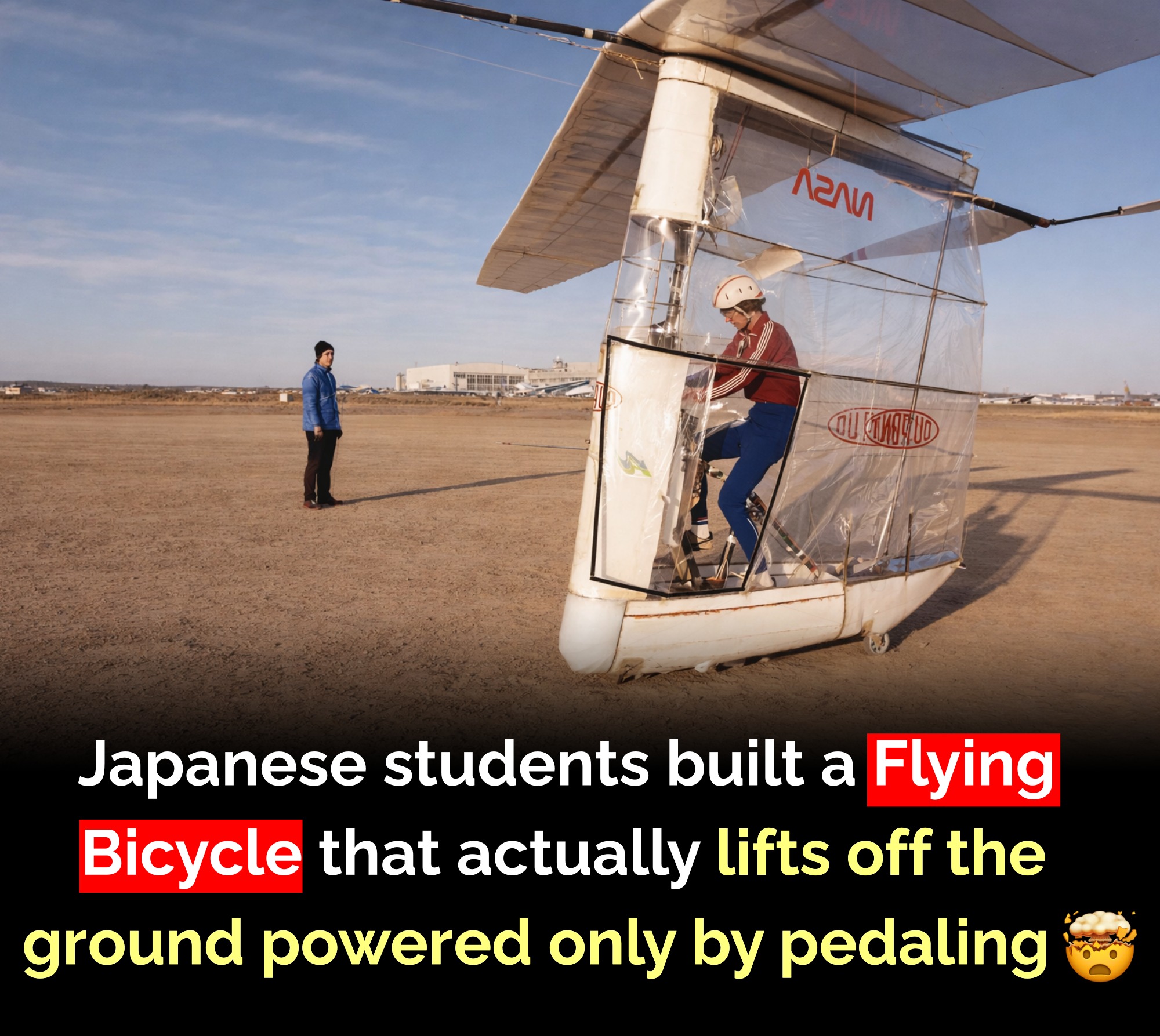

• A group of engineering students in Japan turned a futuristic idea into reality by creating a bicycle that can actually fly. Instead of using fuel or electric motors, the experimental vehicle runs entirely on human power. When the rider pedals, the motion spins a large propeller that generates thrust and lift, allowing the lightweight craft to briefly rise off the ground.

    The flying bicycle is made with ultra-light materials like carbon fiber and aluminum to keep it as light as possible. Large wings or rotor blades help create the lift needed for flight, while the pedaling system transfers energy to the propeller, similar to how a regular bicycle chain powers the wheels.

    Human-powered flight has fascinated engineers for many years. Projects like this show how smart design, lightweight materials, and efficient aerodynamics can make flight possible using only muscle power. Although these prototypes can usually fly only short distances and require careful conditions, they highlight how creativity and innovation can push the limits of what human strength can achieve.
    A group of engineering students in Japan turned a futuristic idea into reality by creating a bicycle that can actually fly. Instead of using fuel or electric motors, the experimental vehicle runs entirely on human power. When the rider pedals, the motion spins a large propeller that generates thrust and lift, allowing the lightweight craft to briefly rise off the ground. The flying bicycle is made with ultra-light materials like carbon fiber and aluminum to keep it as light as possible. Large wings or rotor blades help create the lift needed for flight, while the pedaling system transfers energy to the propeller, similar to how a regular bicycle chain powers the wheels. Human-powered flight has fascinated engineers for many years. Projects like this show how smart design, lightweight materials, and efficient aerodynamics can make flight possible using only muscle power. Although these prototypes can usually fly only short distances and require careful conditions, they highlight how creativity and innovation can push the limits of what human strength can achieve.
    Like
    Love
    Wow
    3
    0 Commenti 0 condivisioni 270 Views 0 Anteprima
  • In the Arctic, sunlight reflecting off endless fields of snow can be more dangerous than it looks. The intense glare can cause snow blindness, a painful condition that temporarily damages the eyes and makes travel extremely difficult.

    More than 2,000 years ago, the Inuit and Yupik peoples of Alaska and northern Canada developed a clever solution to this problem. They created some of the earliest forms of protective eyewear, often known as snow goggles.

    These goggles were made using materials found in their surroundings, including driftwood, bone, walrus ivory, and caribou antler. They featured narrow horizontal slits that allowed just enough light to enter while blocking the harsh glare from the snow. Some were even darkened with soot on the inside to further reduce brightness and improve vision across the bright Arctic landscape.

    Beyond being practical tools for survival while hunting or traveling across frozen terrain, many of these goggles were also carefully crafted. Some were decorated with carvings and patterns that reflected cultural traditions, personal identity, or spiritual beliefs.

    This invention highlights the deep knowledge and creativity of Indigenous Arctic communities. Long before modern sunglasses existed, they had already developed an effective way to protect their vision and live successfully in one of the brightest and most challenging environments on Earth.
    In the Arctic, sunlight reflecting off endless fields of snow can be more dangerous than it looks. The intense glare can cause snow blindness, a painful condition that temporarily damages the eyes and makes travel extremely difficult. More than 2,000 years ago, the Inuit and Yupik peoples of Alaska and northern Canada developed a clever solution to this problem. They created some of the earliest forms of protective eyewear, often known as snow goggles. These goggles were made using materials found in their surroundings, including driftwood, bone, walrus ivory, and caribou antler. They featured narrow horizontal slits that allowed just enough light to enter while blocking the harsh glare from the snow. Some were even darkened with soot on the inside to further reduce brightness and improve vision across the bright Arctic landscape. Beyond being practical tools for survival while hunting or traveling across frozen terrain, many of these goggles were also carefully crafted. Some were decorated with carvings and patterns that reflected cultural traditions, personal identity, or spiritual beliefs. This invention highlights the deep knowledge and creativity of Indigenous Arctic communities. Long before modern sunglasses existed, they had already developed an effective way to protect their vision and live successfully in one of the brightest and most challenging environments on Earth.
    Like
    Love
    Wow
    3
    0 Commenti 0 condivisioni 371 Views 0 Anteprima
  • The Sagrada Família is one of the world’s most famous churches and has been under construction for over a century.
    Designed by Antoni Gaudí, work began in 1882, blending Gothic style with nature-inspired geometry.

    Inside, towering columns branch like trees and colorful stained glass fills the space with light.
    Despite wars and delays, the basilica in Barcelona stands as a symbol of patience, vision, and creativity.

    Let us know your thoughts below!
    The Sagrada Família is one of the world’s most famous churches and has been under construction for over a century. Designed by Antoni Gaudí, work began in 1882, blending Gothic style with nature-inspired geometry. Inside, towering columns branch like trees and colorful stained glass fills the space with light. Despite wars and delays, the basilica in Barcelona stands as a symbol of patience, vision, and creativity. Let us know your thoughts below!
    Like
    Love
    Wow
    3
    0 Commenti 0 condivisioni 252 Views 0 Anteprima
  • In New Zealand, tattoo artist Benjamin Lloyd found a powerful way to lift children’s spirits — with temporary airbrush tattoos that wash off easily but leave lasting confidence behind.

    He began offering them for free to young patients at Starship Children’s Hospital in Auckland. What started as a small idea quickly turned into visits filled with color and creativity. Kids pick their favorite designs — dragons, tribal art, superhero sleeves — and watch their skin transform without needles or pain.

    For a little while, hospital rooms turn into art spaces. The machines fade into the background. And in their place? Smiles, laughter, and a reminder that even small moments of joy can mean everything.
    In New Zealand, tattoo artist Benjamin Lloyd found a powerful way to lift children’s spirits — with temporary airbrush tattoos that wash off easily but leave lasting confidence behind. He began offering them for free to young patients at Starship Children’s Hospital in Auckland. What started as a small idea quickly turned into visits filled with color and creativity. Kids pick their favorite designs — dragons, tribal art, superhero sleeves — and watch their skin transform without needles or pain. For a little while, hospital rooms turn into art spaces. The machines fade into the background. And in their place? Smiles, laughter, and a reminder that even small moments of joy can mean everything.
    Like
    Love
    Wow
    3
    0 Commenti 0 condivisioni 794 Views 0 Anteprima
  • A 2023 study in Nature Medicine across 16 countries found that women who regularly engage in hobbies like knitting, gardening, and crafting report fewer signs of depression, better overall health, and even longer life expectancy

    It’s not just “staying busy” — it’s slow, intentional activity that signals safety, creativity, and connection to the brain. Maybe grandma really did have it figured out all along
    A 2023 study in Nature Medicine across 16 countries found that women who regularly engage in hobbies like knitting, gardening, and crafting report fewer signs of depression, better overall health, and even longer life expectancy It’s not just “staying busy” — it’s slow, intentional activity that signals safety, creativity, and connection to the brain. Maybe grandma really did have it figured out all along
    Like
    Love
    Wow
    3
    0 Commenti 0 condivisioni 349 Views 0 Anteprima
Pagine in Evidenza