


Buy Verified Cash App Account: Safe, Legal & Smart Guide
Email: [email protected]
Telegram: @smmproit
Whatsapp:+1(812)528-8960
https://smmproit.com/product/buy-verified-cash-app-accounts/
If you’ve searched for “buy verified cash app account,” you’re not alone. Many people—especially gamers, creators, and online sellers—want faster access, higher transaction limits, and smoother financial transactions.
But here’s the real question:
Is buying a verified cash app account the best move… or a risky shortcut?
Let’s break it down in simple terms.
Why Should You Buy Verified Cash App Accounts for Your Gaming Business?
Running a gaming business or being a game host often means handling fast payments, subscriptions, and tips.
A verified cash app account gives:
Higher transaction limits
Better trust with players
Easier bank account linking
But buying accounts? That’s where things get tricky.
Risks Behind Buying Accounts
Buying verified accounts can lead to:
Account suspension
Loss of money
Legal issues
Identity risks
Think of it like buying a used key—you never know who else has a copy.
Legal Alternatives for Gamers
Instead of buying:
Create your own verified account
Use your phone number and government-issued ID
Build trust naturally
It takes a little time—but it’s safer.
The Positive Side of Verified Cash App Accounts
A verified account unlocks powerful features.
Features of a Verified Account
Higher transaction limits
Access to Bitcoin (BTC)
Better financial transactions tracking
Premium services and tools
You also get smoother access to money, uploads, and services.
How to Unlock Cash App Borrow?
Want to borrow money through cash app?
Requirements & Tips
Active account usage
Regular transactions
Good history
Verified account
It’s like building trust with a bank—the more consistent you are, the better.
Benefits of Owning Verified Cash App Accounts for Gaming Business
For creators and gaming businesses, this is huge.
Faster Payments & Trust
Instant payments from players
Easier subscriptions
Better trust and engagement
Ability to handle unlimited uploads share infinite
You can even connect creator tools, live streaming, and listener insights.
How to Buy Verified Cash App Accounts from smmproit (Reality Check)
Many platforms like smmproit promote services related to cash app accounts.
But pause for a second.
Before you go ahead:
Ask: Is it safe?
Ask: Is it legal?
Ask: Will it last long-term?
Buying accounts may seem like a shortcut, but it can cost you more time and money later.
Why Do People Trust smmproit
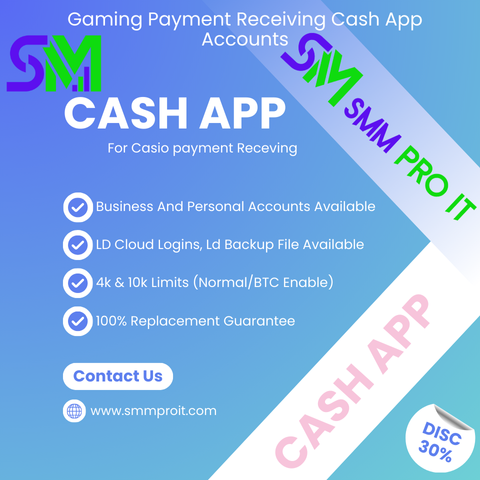
Some users trust services like smmproit because they offer:
Fast delivery
24 hours reply contact
Telegram support
Account upload options
However, trust should always be backed by safety and compliance.
When Buy Verified Cash App Accounts?
Honestly? The better question is:
Should you buy them at all?
In most cases:
It’s safer to create your own
It builds long-term access
It protects your money
Benefits of a Verified Cash App Account
Let’s keep it simple.
A verified account gives:
Higher transaction limits
Bitcoin access
Secure bank account linking
Better services and support
It’s like upgrading from basic to pro—upgrade upgrade upgrade pro!
How to Buy a Verified Cash App Account (Safe Way)
The safest “buy” method is actually:
Create + Verify Yourself
Steps:
Download cash app
Sign up with phone number
Add bank account
Submit government-issued ID
Wait for verification
No risks. Full control.
Buy BTC Enabled Cash App Account
Bitcoin features are popular.
But instead of buying:
Enable BTC in your own account
Verify identity
Start small transactions
This ensures safe access to money and crypto.
What is the Limit of a Verified Cash App?
A verified account allows:
Higher sending limits
Higher receiving limits
Unlimited transactions in many cases
This is essential for gaming businesses and creators.
How Does Cash App Work?
Think of cash app like a digital wallet.
You can:
Send money
Receive money
Link bank account
Use for financial transactions
Simple, fast, and widely used.
Why Do You Buy Verified Cash App Accounts?
People usually want:
Speed
Access
Fewer restrictions
But shortcuts can backfire.
Better to build your own verified account.
Is It Safe to Enable Bitcoin on Cash App?
Yes—if done properly.
Tips:
Use your own account
Enable security settings
Avoid unknown services
Safety always comes first.
Can I Have 2 Verified Cash App Accounts?
Generally:
One account per person is recommended
Multiple profiles can raise flags
Always follow platform rules.
Email: [email protected]
Telegram: @smmproit
Whatsapp:+1(812)528-8960
https://smmproit.com/product/buy-verified-cash-app-accounts/
If you’ve searched for “buy verified cash app account,” you’re not alone. Many people—especially gamers, creators, and online sellers—want faster access, higher transaction limits, and smoother financial transactions.
But here’s the real question:
Is buying a verified cash app account the best move… or a risky shortcut?
Let’s break it down in simple terms.
Why Should You Buy Verified Cash App Accounts for Your Gaming Business?
Running a gaming business or being a game host often means handling fast payments, subscriptions, and tips.
A verified cash app account gives:
Higher transaction limits
Better trust with players
Easier bank account linking
But buying accounts? That’s where things get tricky.
Risks Behind Buying Accounts
Buying verified accounts can lead to:
Account suspension
Loss of money
Legal issues
Identity risks
Think of it like buying a used key—you never know who else has a copy.
Legal Alternatives for Gamers
Instead of buying:
Create your own verified account
Use your phone number and government-issued ID
Build trust naturally
It takes a little time—but it’s safer.
The Positive Side of Verified Cash App Accounts
A verified account unlocks powerful features.
Features of a Verified Account
Higher transaction limits
Access to Bitcoin (BTC)
Better financial transactions tracking
Premium services and tools
You also get smoother access to money, uploads, and services.
How to Unlock Cash App Borrow?
Want to borrow money through cash app?
Requirements & Tips
Active account usage
Regular transactions
Good history
Verified account
It’s like building trust with a bank—the more consistent you are, the better.
Benefits of Owning Verified Cash App Accounts for Gaming Business
For creators and gaming businesses, this is huge.
Faster Payments & Trust
Instant payments from players
Easier subscriptions
Better trust and engagement
Ability to handle unlimited uploads share infinite
You can even connect creator tools, live streaming, and listener insights.
How to Buy Verified Cash App Accounts from smmproit (Reality Check)
Many platforms like smmproit promote services related to cash app accounts.
But pause for a second.
Before you go ahead:
Ask: Is it safe?
Ask: Is it legal?
Ask: Will it last long-term?
Buying accounts may seem like a shortcut, but it can cost you more time and money later.
Why Do People Trust smmproit
Some users trust services like smmproit because they offer:
Fast delivery
24 hours reply contact
Telegram support
Account upload options
However, trust should always be backed by safety and compliance.
When Buy Verified Cash App Accounts?
Honestly? The better question is:
Should you buy them at all?
In most cases:
It’s safer to create your own
It builds long-term access
It protects your money
Benefits of a Verified Cash App Account
Let’s keep it simple.
A verified account gives:
Higher transaction limits
Bitcoin access
Secure bank account linking
Better services and support
It’s like upgrading from basic to pro—upgrade upgrade upgrade pro!
How to Buy a Verified Cash App Account (Safe Way)
The safest “buy” method is actually:
Create + Verify Yourself
Steps:
Download cash app
Sign up with phone number
Add bank account
Submit government-issued ID
Wait for verification
No risks. Full control.
Buy BTC Enabled Cash App Account
Bitcoin features are popular.
But instead of buying:
Enable BTC in your own account
Verify identity
Start small transactions
This ensures safe access to money and crypto.
What is the Limit of a Verified Cash App?
A verified account allows:
Higher sending limits
Higher receiving limits
Unlimited transactions in many cases
This is essential for gaming businesses and creators.
How Does Cash App Work?
Think of cash app like a digital wallet.
You can:
Send money
Receive money
Link bank account
Use for financial transactions
Simple, fast, and widely used.
Why Do You Buy Verified Cash App Accounts?
People usually want:
Speed
Access
Fewer restrictions
But shortcuts can backfire.
Better to build your own verified account.
Is It Safe to Enable Bitcoin on Cash App?
Yes—if done properly.
Tips:
Use your own account
Enable security settings
Avoid unknown services
Safety always comes first.
Can I Have 2 Verified Cash App Accounts?
Generally:
One account per person is recommended
Multiple profiles can raise flags
Always follow platform rules.
Buy Verified Cash App Account: Safe, Legal & Smart Guide
Email: [email protected]
Telegram: @smmproit
Whatsapp:+1(812)528-8960
https://smmproit.com/product/buy-verified-cash-app-accounts/
If you’ve searched for “buy verified cash app account,” you’re not alone. Many people—especially gamers, creators, and online sellers—want faster access, higher transaction limits, and smoother financial transactions.
But here’s the real question:
Is buying a verified cash app account the best move… or a risky shortcut?
Let’s break it down in simple terms.
Why Should You Buy Verified Cash App Accounts for Your Gaming Business?
Running a gaming business or being a game host often means handling fast payments, subscriptions, and tips.
A verified cash app account gives:
Higher transaction limits
Better trust with players
Easier bank account linking
But buying accounts? That’s where things get tricky.
Risks Behind Buying Accounts
Buying verified accounts can lead to:
Account suspension
Loss of money
Legal issues
Identity risks
Think of it like buying a used key—you never know who else has a copy.
Legal Alternatives for Gamers
Instead of buying:
Create your own verified account
Use your phone number and government-issued ID
Build trust naturally
It takes a little time—but it’s safer.
The Positive Side of Verified Cash App Accounts
A verified account unlocks powerful features.
Features of a Verified Account
Higher transaction limits
Access to Bitcoin (BTC)
Better financial transactions tracking
Premium services and tools
You also get smoother access to money, uploads, and services.
How to Unlock Cash App Borrow?
Want to borrow money through cash app?
Requirements & Tips
Active account usage
Regular transactions
Good history
Verified account
It’s like building trust with a bank—the more consistent you are, the better.
Benefits of Owning Verified Cash App Accounts for Gaming Business
For creators and gaming businesses, this is huge.
Faster Payments & Trust
Instant payments from players
Easier subscriptions
Better trust and engagement
Ability to handle unlimited uploads share infinite
You can even connect creator tools, live streaming, and listener insights.
How to Buy Verified Cash App Accounts from smmproit (Reality Check)
Many platforms like smmproit promote services related to cash app accounts.
But pause for a second.
Before you go ahead:
Ask: Is it safe?
Ask: Is it legal?
Ask: Will it last long-term?
Buying accounts may seem like a shortcut, but it can cost you more time and money later.
Why Do People Trust smmproit
Some users trust services like smmproit because they offer:
Fast delivery
24 hours reply contact
Telegram support
Account upload options
However, trust should always be backed by safety and compliance.
When Buy Verified Cash App Accounts?
Honestly? The better question is:
Should you buy them at all?
In most cases:
It’s safer to create your own
It builds long-term access
It protects your money
Benefits of a Verified Cash App Account
Let’s keep it simple.
A verified account gives:
Higher transaction limits
Bitcoin access
Secure bank account linking
Better services and support
It’s like upgrading from basic to pro—upgrade upgrade upgrade pro!
How to Buy a Verified Cash App Account (Safe Way)
The safest “buy” method is actually:
Create + Verify Yourself
Steps:
Download cash app
Sign up with phone number
Add bank account
Submit government-issued ID
Wait for verification
No risks. Full control.
Buy BTC Enabled Cash App Account
Bitcoin features are popular.
But instead of buying:
Enable BTC in your own account
Verify identity
Start small transactions
This ensures safe access to money and crypto.
What is the Limit of a Verified Cash App?
A verified account allows:
Higher sending limits
Higher receiving limits
Unlimited transactions in many cases
This is essential for gaming businesses and creators.
How Does Cash App Work?
Think of cash app like a digital wallet.
You can:
Send money
Receive money
Link bank account
Use for financial transactions
Simple, fast, and widely used.
Why Do You Buy Verified Cash App Accounts?
People usually want:
Speed
Access
Fewer restrictions
But shortcuts can backfire.
Better to build your own verified account.
Is It Safe to Enable Bitcoin on Cash App?
Yes—if done properly.
Tips:
Use your own account
Enable security settings
Avoid unknown services
Safety always comes first.
Can I Have 2 Verified Cash App Accounts?
Generally:
One account per person is recommended
Multiple profiles can raise flags
Always follow platform rules.
0 Comments
0 Shares
9K Views
0 Reviews


 Language
 VN
VN
 French
 Spanish
 Portuguese
 Deutsch
 Turkish
 Dutch
Dutch
 Italiano
 Russian
 Romaian
 Portuguese (Brazil)
 Greek
Greek
 Arabic