



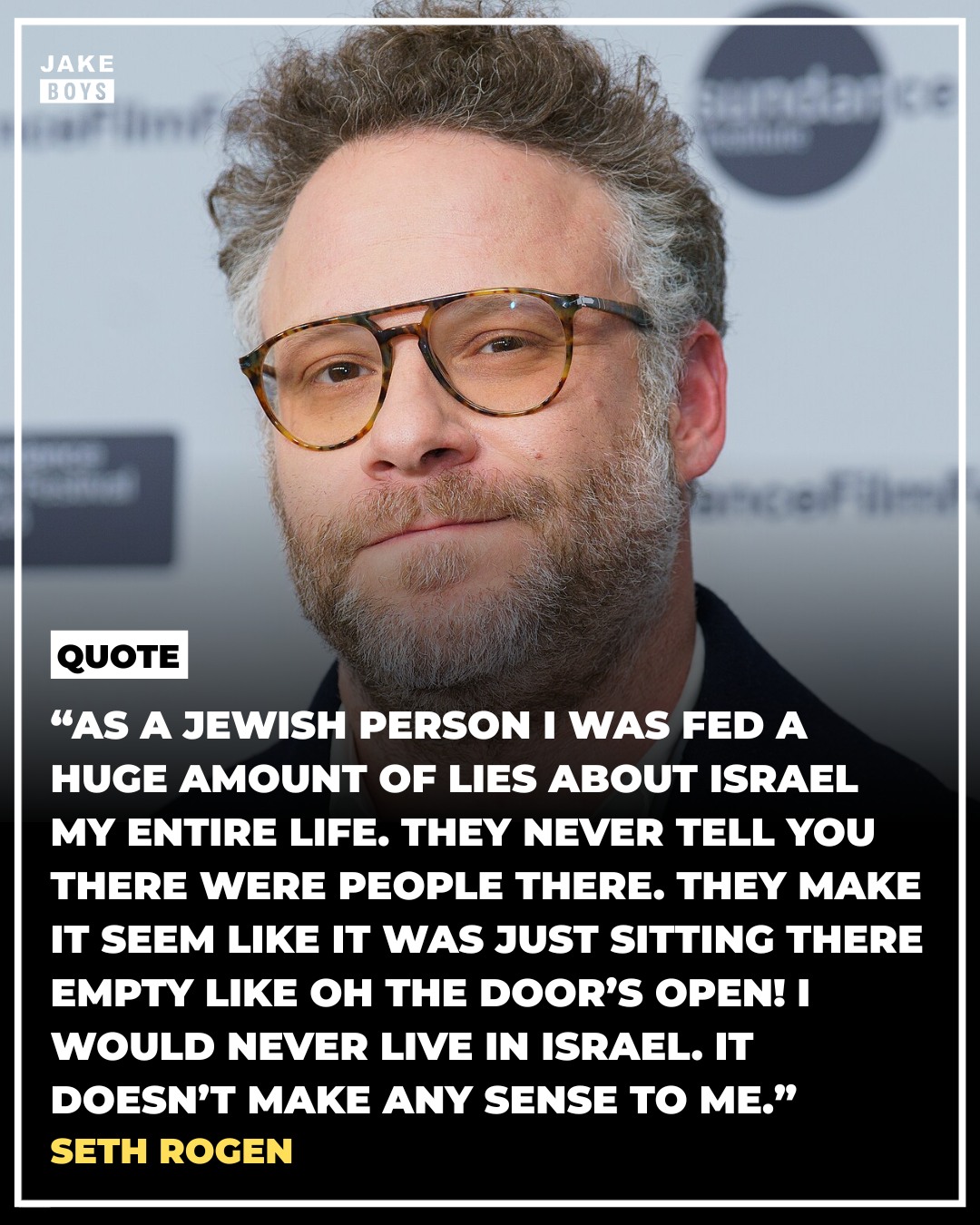
Actor Seth Rogen made a provocative statement criticizing the dominant narratives he was exposed to regarding the history and context of Israel. Rogen, who identifies as Jewish, claimed he was "fed a huge amount of lies" throughout his life about the realities on the ground, specifically disputing the notion that Israel was an empty territory waiting to be claimed.
Rogen asserted that the common portrayal obscured the fact that "there were people there" prior to the establishment of the Israeli state, implying that the dominant discourse failed to grapple with the presence of existing Palestinian communities. His comparison of the situation to an "open door" suggested he saw the mainstream framing as disingenuously presenting Israel as an unoccupied land.
The actor went on to categorically state that he "would never live in Israel," indicating a personal rejection of the Zionist ideology and the state of Israel itself. Rogen's concluding statement that living in Israel "doesn't make any sense" to him represented a stark ideological distance from the beliefs and values underpinning the Israeli project.
This statement reflected a growing willingness among some Jewish individuals to publicly challenge the dominant pro-Israel narrative, particularly the historical claims used to justify the establishment and expansion of the Israeli state. Rogen's comments represented a provocative counterpoint to the conventional perspective, reflecting his own evolving understanding of the Israeli-Palestinian conflict.
Rogen asserted that the common portrayal obscured the fact that "there were people there" prior to the establishment of the Israeli state, implying that the dominant discourse failed to grapple with the presence of existing Palestinian communities. His comparison of the situation to an "open door" suggested he saw the mainstream framing as disingenuously presenting Israel as an unoccupied land.
The actor went on to categorically state that he "would never live in Israel," indicating a personal rejection of the Zionist ideology and the state of Israel itself. Rogen's concluding statement that living in Israel "doesn't make any sense" to him represented a stark ideological distance from the beliefs and values underpinning the Israeli project.
This statement reflected a growing willingness among some Jewish individuals to publicly challenge the dominant pro-Israel narrative, particularly the historical claims used to justify the establishment and expansion of the Israeli state. Rogen's comments represented a provocative counterpoint to the conventional perspective, reflecting his own evolving understanding of the Israeli-Palestinian conflict.
Actor Seth Rogen made a provocative statement criticizing the dominant narratives he was exposed to regarding the history and context of Israel. Rogen, who identifies as Jewish, claimed he was "fed a huge amount of lies" throughout his life about the realities on the ground, specifically disputing the notion that Israel was an empty territory waiting to be claimed.
Rogen asserted that the common portrayal obscured the fact that "there were people there" prior to the establishment of the Israeli state, implying that the dominant discourse failed to grapple with the presence of existing Palestinian communities. His comparison of the situation to an "open door" suggested he saw the mainstream framing as disingenuously presenting Israel as an unoccupied land.
The actor went on to categorically state that he "would never live in Israel," indicating a personal rejection of the Zionist ideology and the state of Israel itself. Rogen's concluding statement that living in Israel "doesn't make any sense" to him represented a stark ideological distance from the beliefs and values underpinning the Israeli project.
This statement reflected a growing willingness among some Jewish individuals to publicly challenge the dominant pro-Israel narrative, particularly the historical claims used to justify the establishment and expansion of the Israeli state. Rogen's comments represented a provocative counterpoint to the conventional perspective, reflecting his own evolving understanding of the Israeli-Palestinian conflict.




 Language
 English
 VN
VN
 French
 Spanish
 Portuguese
 Deutsch
 Turkish
 Dutch
Dutch
 Russian
 Romaian
 Portuguese (Brazil)
 Greek
Greek
 Arabic