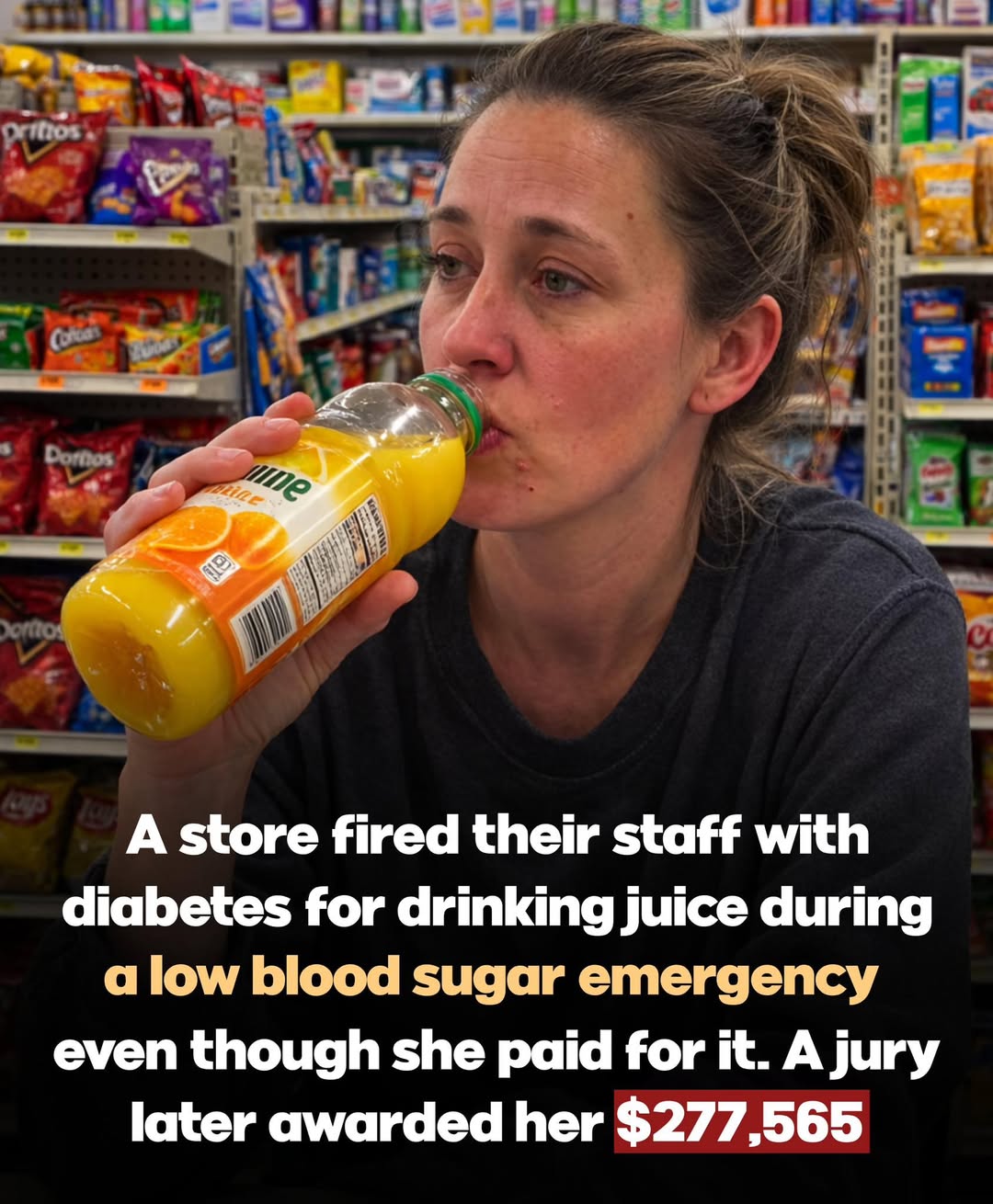
• In 2014, Linda Atkins — a Type 1 diabetic working at a Dollar General in Maryville — felt her blood sugar crashing while she was alone at the register.

    Anyone who understands insulin-dependent diabetes knows how fast that can turn dangerous. Shaking. Confusion. Loss of consciousness. Even death.

    She had already informed management about her condition. She had asked multiple times to keep juice at the register for emergencies.

    The answer was no. Company policy didn’t allow drinks at the register. Employees were also banned from “grazing” — consuming merchandise before paying.

    That day, as her blood sugar dropped, she grabbed a $1.69 orange juice, drank it to prevent diabetic shock, and paid for it once she stabilized.

    Weeks later, during an inventory review, she admitted what happened.

    They fired her.

    Management knew she was diabetic. They knew she had requested accommodation. They knew she paid.

    Still, she was terminated.

    Linda filed a complaint with the U.S. Equal Employment Opportunity Commission, which sued under the Americans with Disabilities Act. A federal jury ruled the company failed to reasonably accommodate her disability and unlawfully fired her.

    She was awarded $277,565 in damages. The verdict was upheld on appeal.

    Employment law experts later called it the “$1.69 orange juice case.”

    But it was never about $1.69.

    It was about what happens when rigid rules override basic human understanding.

    Sometimes what looks like a policy violation…
    is actually someone trying to stay alive.
    In 2014, Linda Atkins — a Type 1 diabetic working at a Dollar General in Maryville — felt her blood sugar crashing while she was alone at the register. Anyone who understands insulin-dependent diabetes knows how fast that can turn dangerous. Shaking. Confusion. Loss of consciousness. Even death. She had already informed management about her condition. She had asked multiple times to keep juice at the register for emergencies. The answer was no. Company policy didn’t allow drinks at the register. Employees were also banned from “grazing” — consuming merchandise before paying. That day, as her blood sugar dropped, she grabbed a $1.69 orange juice, drank it to prevent diabetic shock, and paid for it once she stabilized. Weeks later, during an inventory review, she admitted what happened. They fired her. Management knew she was diabetic. They knew she had requested accommodation. They knew she paid. Still, she was terminated. Linda filed a complaint with the U.S. Equal Employment Opportunity Commission, which sued under the Americans with Disabilities Act. A federal jury ruled the company failed to reasonably accommodate her disability and unlawfully fired her. She was awarded $277,565 in damages. The verdict was upheld on appeal. Employment law experts later called it the “$1.69 orange juice case.” But it was never about $1.69. It was about what happens when rigid rules override basic human understanding. Sometimes what looks like a policy violation… is actually someone trying to stay alive.
    Like
    Love
    Wow
    3
    0 Commenti 0 condivisioni 332 Views 0 Anteprima
  • He spent most of his life farming — not studying.

    Diosdado “Tatay Ebang” Evangelista Jr. worked the land for decades before ever stepping into a college classroom. At 69, the Filipino farmer finally earned his Bachelor of Science in Agriculture degree — after a lifetime of planting rice, sugarcane, cacao, ginger, and native trees to support his family.

    He married Oelia Garcia in 1974, and together they raised four children — all of whom graduated college before he did. He put his own dream on hold so theirs could grow first.

    After graduating, he took the Agriculturist Licensure Exam in 2024 — and didn’t pass.

    At 72, he tried again.

    This time, the challenge wasn’t just agriculture. It was technology — online registration, digital systems, and processes unfamiliar to him. With help from a PRC security guard and supportive classmates at Central Philippines State University, he adapted and persevered.

    In November 2025, he passed.
    Out of 9,742 examinees, 6,678 succeeded — and he was one of them.

    His journey carried deeper meaning. His wife passed away in 2024, and he honored her memory through study, prayer, and persistence.

    Now a licensed agriculturist at 72, he’s pursuing a master’s degree, continuing farm work, and planning to donate five hectares of land for community agricultural programs.

    While others talk about “starting over,” Tatay Ebang simply kept going.

    His message is clear: it’s never too late — as long as you don’t quit.
    He spent most of his life farming — not studying. Diosdado “Tatay Ebang” Evangelista Jr. worked the land for decades before ever stepping into a college classroom. At 69, the Filipino farmer finally earned his Bachelor of Science in Agriculture degree — after a lifetime of planting rice, sugarcane, cacao, ginger, and native trees to support his family. He married Oelia Garcia in 1974, and together they raised four children — all of whom graduated college before he did. He put his own dream on hold so theirs could grow first. After graduating, he took the Agriculturist Licensure Exam in 2024 — and didn’t pass. At 72, he tried again. This time, the challenge wasn’t just agriculture. It was technology — online registration, digital systems, and processes unfamiliar to him. With help from a PRC security guard and supportive classmates at Central Philippines State University, he adapted and persevered. In November 2025, he passed. Out of 9,742 examinees, 6,678 succeeded — and he was one of them. His journey carried deeper meaning. His wife passed away in 2024, and he honored her memory through study, prayer, and persistence. Now a licensed agriculturist at 72, he’s pursuing a master’s degree, continuing farm work, and planning to donate five hectares of land for community agricultural programs. While others talk about “starting over,” Tatay Ebang simply kept going. His message is clear: it’s never too late — as long as you don’t quit.
    Like
    Love
    Wow
    3
    0 Commenti 0 condivisioni 669 Views 0 Anteprima
  • In a surprising incident in France, beekeepers opened their hives and were stunned to find honey tinted bright blue and green instead of the usual golden color . After some investigation, the unusual shades were traced back to a nearby candy factory. Bees had been collecting sugary residue from discarded M&M candies, and the vibrant food dyes made their way into the honey.

    The situation showed how dependent bees are on nearby food sources . Instead of gathering nectar only from flowers, they chose an easy and abundant sugar supply. While the colorful honey seemed amusing at first, it also highlighted how human activities can influence nature in unexpected ways .

    This discovery also demonstrated how adaptable bees are. When convenient food is available, they will collect from flowers, tree sap, or even processed sweets. For beekeepers, it was shocking, but it reinforced an important message: bees are vital for pollination and healthy ecosystems, so protecting them truly matters .
    In a surprising incident in France, beekeepers opened their hives and were stunned to find honey tinted bright blue and green instead of the usual golden color . After some investigation, the unusual shades were traced back to a nearby candy factory. Bees had been collecting sugary residue from discarded M&M candies, and the vibrant food dyes made their way into the honey. The situation showed how dependent bees are on nearby food sources . Instead of gathering nectar only from flowers, they chose an easy and abundant sugar supply. While the colorful honey seemed amusing at first, it also highlighted how human activities can influence nature in unexpected ways . This discovery also demonstrated how adaptable bees are. When convenient food is available, they will collect from flowers, tree sap, or even processed sweets. For beekeepers, it was shocking, but it reinforced an important message: bees are vital for pollination and healthy ecosystems, so protecting them truly matters .
    Like
    Love
    Wow
    3
    0 Commenti 0 condivisioni 891 Views 0 Anteprima
  • Best kind of sugar
    Best kind of sugar
    Like
    Love
    Wow
    3
    0 Commenti 0 condivisioni 127K Views 0 Anteprima
  • OC: Happy Sugar Cane at the Super Bowl
    OC: Happy Sugar Cane at the Super Bowl
    Like
    Love
    Wow
    3
    0 Commenti 0 condivisioni 124K Views 0 Anteprima
Pagine in Evidenza