



Scientists have just opened new paths for treating autoimmune diseases and improving therapies for cancer and transplants.
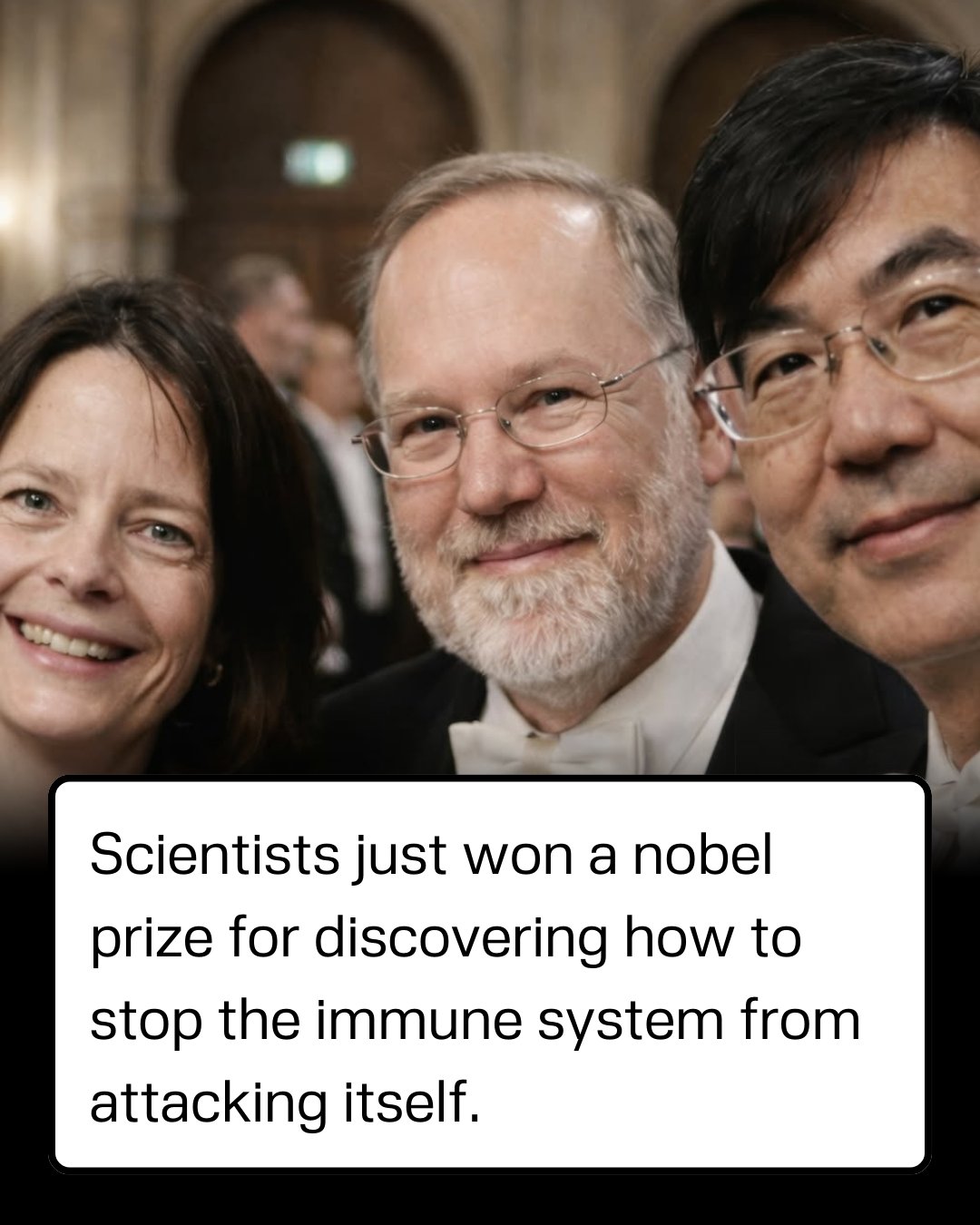
The 2025 Nobel Prize in Physiology or Medicine went to Mary E. Brunkow, Fred Ramsdell and Shimon Sakaguchi, who discovered how specialized regulatory T cells — often described as the immune system’s “security guards” — and the gene that controls them help keep our immune response in check and prevent it from targeting healthy tissues.
A major breakthrough in understanding how the immune system protects the body from attacking itself.
The 2025 Nobel Prize in Physiology or Medicine went to Mary E. Brunkow, Fred Ramsdell and Shimon Sakaguchi, who discovered how specialized regulatory T cells — often described as the immune system’s “security guards” — and the gene that controls them help keep our immune response in check and prevent it from targeting healthy tissues.
A major breakthrough in understanding how the immune system protects the body from attacking itself.
Scientists have just opened new paths for treating autoimmune diseases and improving therapies for cancer and transplants.
The 2025 Nobel Prize in Physiology or Medicine went to Mary E. Brunkow, Fred Ramsdell and Shimon Sakaguchi, who discovered how specialized regulatory T cells — often described as the immune system’s “security guards” — and the gene that controls them help keep our immune response in check and prevent it from targeting healthy tissues.
A major breakthrough in understanding how the immune system protects the body from attacking itself.










 Language
 English
 VN
VN
 French
 Spanish
 Portuguese
 Deutsch
 Dutch
Dutch
 Italiano
 Russian
 Romaian
 Portuguese (Brazil)
 Greek
Greek
 Arabic