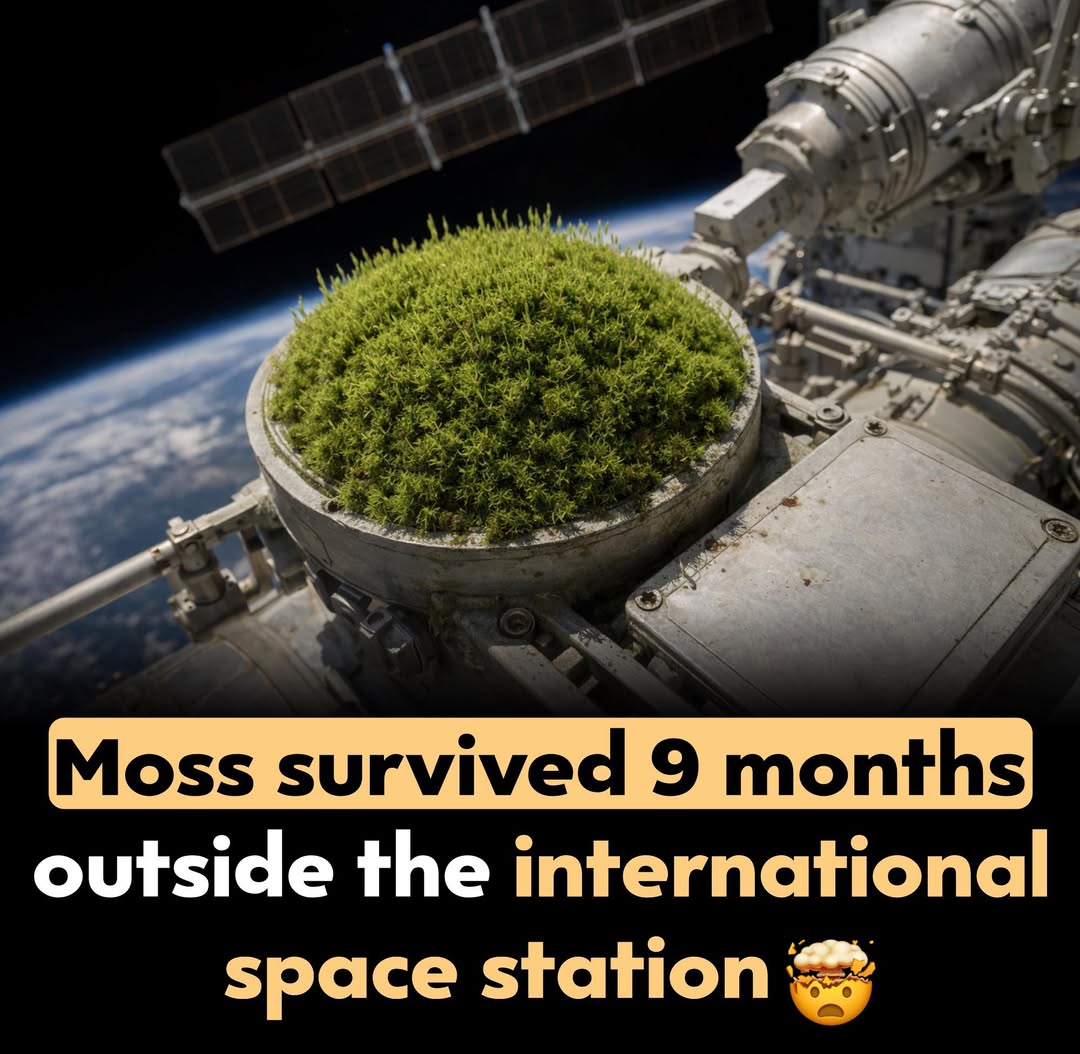
A type of terrestrial moss stunned scientists after surviving 283 days in the vacuum of space
In an experiment conducted outside the International Space Station, spores of Physcomitrium patens were exposed to extreme space conditions — total vacuum, intense ultraviolet radiation, and drastic temperature changes — for nearly ten months. These are conditions that would destroy most life forms instantly.
When the samples returned to Earth aboard a SpaceX Dragon capsule, researchers found that more than 80 percent had survived, and nearly 90 percent of those were able to germinate successfully in the lab.
Led by Tomomichi Fujita of Hokkaido University, the study suggests the moss’s simple and ancient biological structure, dating back around 400 million years, plays a key role in its resilience. Scientists now estimate the spores could potentially survive up to 5,600 days in space.
The findings expand our understanding of the limits of life and may help support future agriculture in space environments.
A type of terrestrial moss stunned scientists after surviving 283 days in the vacuum of space
In an experiment conducted outside the International Space Station, spores of Physcomitrium patens were exposed to extreme space conditions — total vacuum, intense ultraviolet radiation, and drastic temperature changes — for nearly ten months. These are conditions that would destroy most life forms instantly.
When the samples returned to Earth aboard a SpaceX Dragon capsule, researchers found that more than 80 percent had survived, and nearly 90 percent of those were able to germinate successfully in the lab.
Led by Tomomichi Fujita of Hokkaido University, the study suggests the moss’s simple and ancient biological structure, dating back around 400 million years, plays a key role in its resilience. Scientists now estimate the spores could potentially survive up to 5,600 days in space.
The findings expand our understanding of the limits of life and may help support future agriculture in space environments.













 Language
 English
 VN
VN
 French
 Spanish
 Deutsch
 Turkish
 Dutch
Dutch
 Italiano
 Russian
 Romaian
 Portuguese (Brazil)
 Greek
Greek
 Arabic