


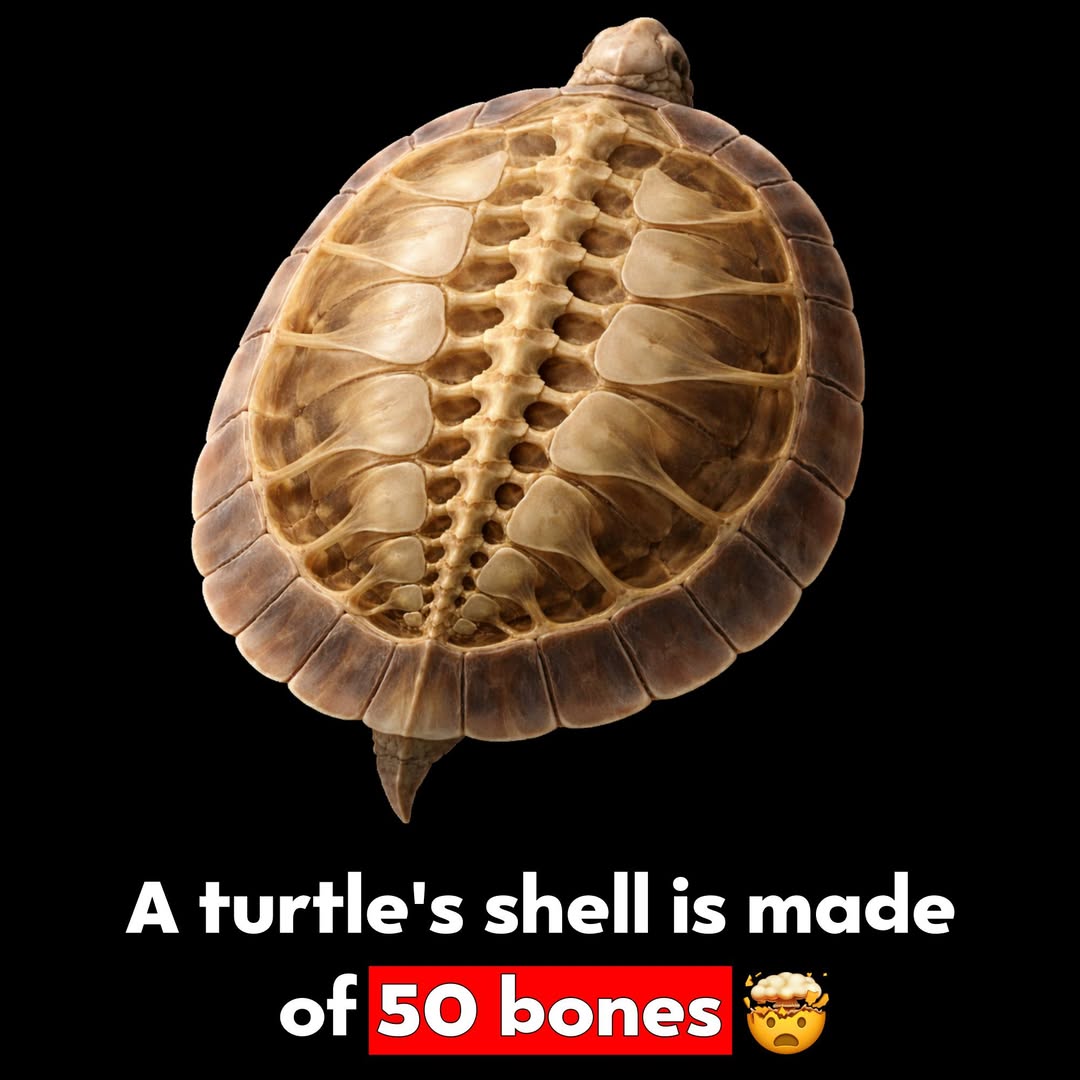
A turtle’s shell isn’t just a hard outer layer — it’s an extraordinary part of its skeleton . Made from around 50 different bones fused into one solid structure, the shell is directly connected to the turtle’s spine and ribs. This means a turtle can’t step out of its shell, because it’s literally built into its body.
The upper section, known as the carapace, forms the curved dome over the turtle’s back, while the lower section, called the plastron, protects the underside. Together, they create a strong, natural shield around the turtle’s vital organs. Covering these bones are tough, keratin-based plates called scutes, which add another layer of durability and protection.
This incredible combination of bone and protective plating makes the turtle’s shell one of nature’s most impressive defensive designs — a living armor perfected over millions of years of evolution .
The upper section, known as the carapace, forms the curved dome over the turtle’s back, while the lower section, called the plastron, protects the underside. Together, they create a strong, natural shield around the turtle’s vital organs. Covering these bones are tough, keratin-based plates called scutes, which add another layer of durability and protection.
This incredible combination of bone and protective plating makes the turtle’s shell one of nature’s most impressive defensive designs — a living armor perfected over millions of years of evolution .
A turtle’s shell isn’t just a hard outer layer — it’s an extraordinary part of its skeleton . Made from around 50 different bones fused into one solid structure, the shell is directly connected to the turtle’s spine and ribs. This means a turtle can’t step out of its shell, because it’s literally built into its body.
The upper section, known as the carapace, forms the curved dome over the turtle’s back, while the lower section, called the plastron, protects the underside. Together, they create a strong, natural shield around the turtle’s vital organs. Covering these bones are tough, keratin-based plates called scutes, which add another layer of durability and protection.
This incredible combination of bone and protective plating makes the turtle’s shell one of nature’s most impressive defensive designs — a living armor perfected over millions of years of evolution .


 Language
 English
 VN
VN
 French
 Spanish
 Portuguese
 Deutsch
 Turkish
 Italiano
 Russian
 Romaian
 Portuguese (Brazil)
 Greek
Greek
 Arabic