


When people hear “Vikings,” they often imagine fierce warriors, longships cutting through icy seas, and towering rune stones beneath stormy skies . But when Norse explorers arrived in Britain over a thousand years ago, they didn’t just bring weapons and legends—they also carried something far gentler and surprisingly unique.
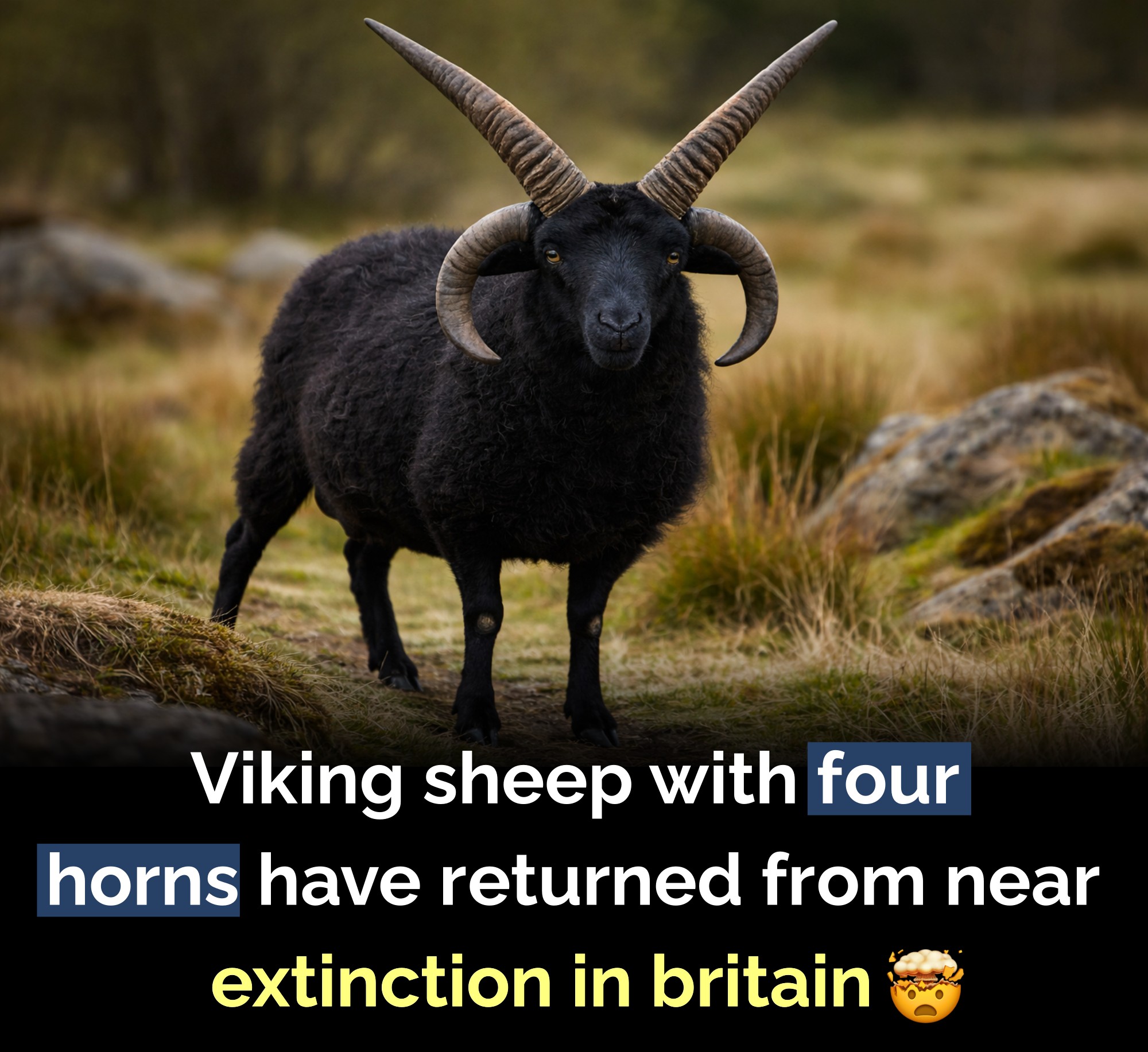
Alongside their culture, they introduced a rare breed of sheep —one so unusual it can grow not just two, but sometimes four horns. This hardy, multi-horned sheep once roamed Britain’s rugged hills and coastal landscapes, becoming a familiar part of the countryside.
Over time, however, modern farming methods pushed the breed close to extinction. Its numbers shrank, and it nearly faded into history.
Today, thanks to dedicated conservationists and passionate farmers , this remarkable Viking-era sheep is slowly returning—an ancient legacy quietly reclaiming its place on the land.
Alongside their culture, they introduced a rare breed of sheep —one so unusual it can grow not just two, but sometimes four horns. This hardy, multi-horned sheep once roamed Britain’s rugged hills and coastal landscapes, becoming a familiar part of the countryside.
Over time, however, modern farming methods pushed the breed close to extinction. Its numbers shrank, and it nearly faded into history.
Today, thanks to dedicated conservationists and passionate farmers , this remarkable Viking-era sheep is slowly returning—an ancient legacy quietly reclaiming its place on the land.
When people hear “Vikings,” they often imagine fierce warriors, longships cutting through icy seas, and towering rune stones beneath stormy skies . But when Norse explorers arrived in Britain over a thousand years ago, they didn’t just bring weapons and legends—they also carried something far gentler and surprisingly unique.
Alongside their culture, they introduced a rare breed of sheep —one so unusual it can grow not just two, but sometimes four horns. This hardy, multi-horned sheep once roamed Britain’s rugged hills and coastal landscapes, becoming a familiar part of the countryside.
Over time, however, modern farming methods pushed the breed close to extinction. Its numbers shrank, and it nearly faded into history.
Today, thanks to dedicated conservationists and passionate farmers , this remarkable Viking-era sheep is slowly returning—an ancient legacy quietly reclaiming its place on the land.


 Language
 English
 VN
VN
 French
 Spanish
 Deutsch
 Turkish
 Dutch
Dutch
 Italiano
 Russian
 Romaian
 Portuguese (Brazil)
 Greek
Greek
 Arabic