


In 2014, Linda Atkins — a Type 1 diabetic working at a Dollar General in Maryville — felt her blood sugar crashing while she was alone at the register.
Anyone who understands insulin-dependent diabetes knows how fast that can turn dangerous. Shaking. Confusion. Loss of consciousness. Even death.
She had already informed management about her condition. She had asked multiple times to keep juice at the register for emergencies.
The answer was no. Company policy didn’t allow drinks at the register. Employees were also banned from “grazing” — consuming merchandise before paying.
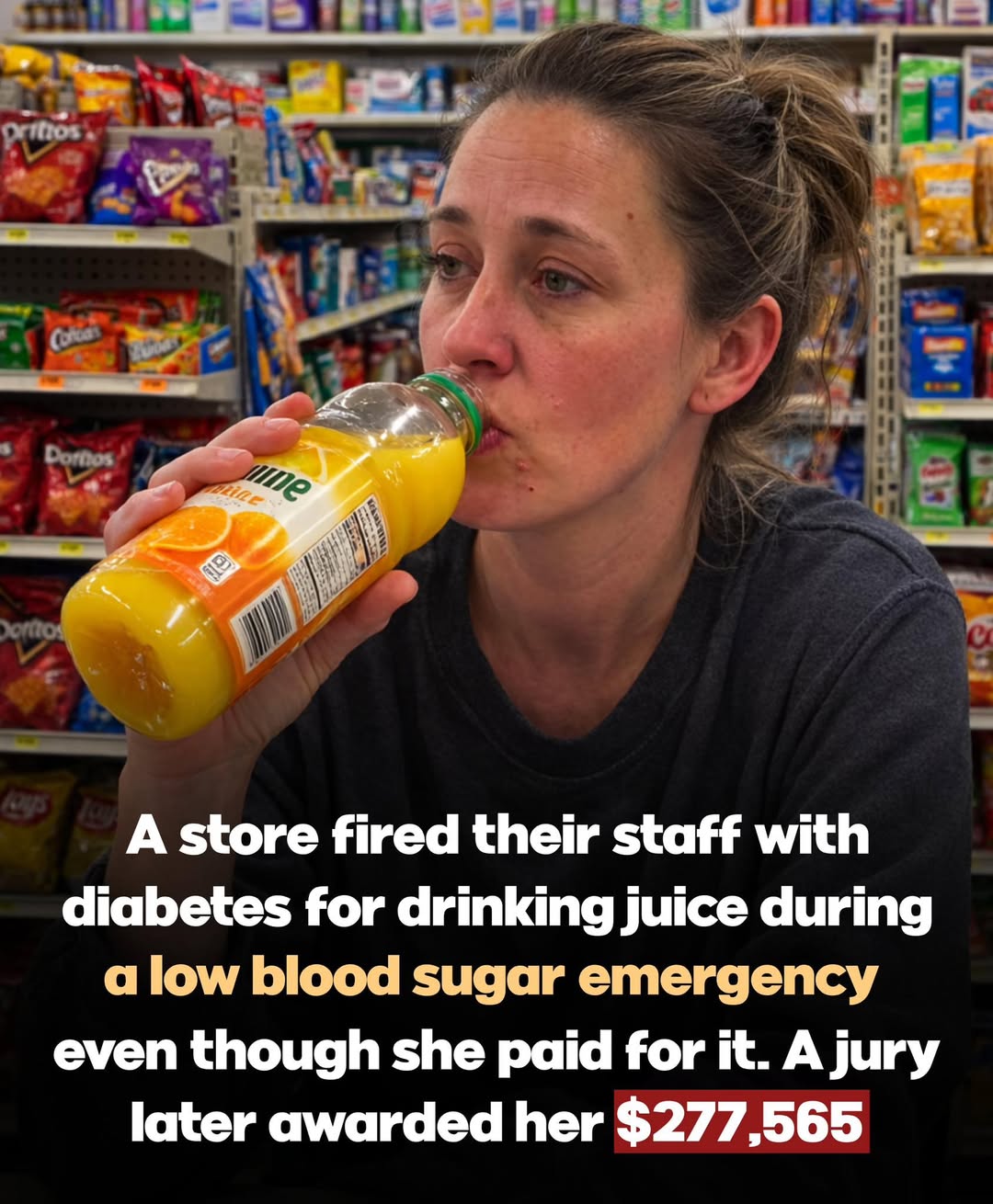
That day, as her blood sugar dropped, she grabbed a $1.69 orange juice, drank it to prevent diabetic shock, and paid for it once she stabilized.
Weeks later, during an inventory review, she admitted what happened.
They fired her.
Management knew she was diabetic. They knew she had requested accommodation. They knew she paid.
Still, she was terminated.
Linda filed a complaint with the U.S. Equal Employment Opportunity Commission, which sued under the Americans with Disabilities Act. A federal jury ruled the company failed to reasonably accommodate her disability and unlawfully fired her.
She was awarded $277,565 in damages. The verdict was upheld on appeal.
Employment law experts later called it the “$1.69 orange juice case.”
But it was never about $1.69.
It was about what happens when rigid rules override basic human understanding.
Sometimes what looks like a policy violation…
is actually someone trying to stay alive.
Anyone who understands insulin-dependent diabetes knows how fast that can turn dangerous. Shaking. Confusion. Loss of consciousness. Even death.
She had already informed management about her condition. She had asked multiple times to keep juice at the register for emergencies.
The answer was no. Company policy didn’t allow drinks at the register. Employees were also banned from “grazing” — consuming merchandise before paying.
That day, as her blood sugar dropped, she grabbed a $1.69 orange juice, drank it to prevent diabetic shock, and paid for it once she stabilized.
Weeks later, during an inventory review, she admitted what happened.
They fired her.
Management knew she was diabetic. They knew she had requested accommodation. They knew she paid.
Still, she was terminated.
Linda filed a complaint with the U.S. Equal Employment Opportunity Commission, which sued under the Americans with Disabilities Act. A federal jury ruled the company failed to reasonably accommodate her disability and unlawfully fired her.
She was awarded $277,565 in damages. The verdict was upheld on appeal.
Employment law experts later called it the “$1.69 orange juice case.”
But it was never about $1.69.
It was about what happens when rigid rules override basic human understanding.
Sometimes what looks like a policy violation…
is actually someone trying to stay alive.
In 2014, Linda Atkins — a Type 1 diabetic working at a Dollar General in Maryville — felt her blood sugar crashing while she was alone at the register.
Anyone who understands insulin-dependent diabetes knows how fast that can turn dangerous. Shaking. Confusion. Loss of consciousness. Even death.
She had already informed management about her condition. She had asked multiple times to keep juice at the register for emergencies.
The answer was no. Company policy didn’t allow drinks at the register. Employees were also banned from “grazing” — consuming merchandise before paying.
That day, as her blood sugar dropped, she grabbed a $1.69 orange juice, drank it to prevent diabetic shock, and paid for it once she stabilized.
Weeks later, during an inventory review, she admitted what happened.
They fired her.
Management knew she was diabetic. They knew she had requested accommodation. They knew she paid.
Still, she was terminated.
Linda filed a complaint with the U.S. Equal Employment Opportunity Commission, which sued under the Americans with Disabilities Act. A federal jury ruled the company failed to reasonably accommodate her disability and unlawfully fired her.
She was awarded $277,565 in damages. The verdict was upheld on appeal.
Employment law experts later called it the “$1.69 orange juice case.”
But it was never about $1.69.
It was about what happens when rigid rules override basic human understanding.
Sometimes what looks like a policy violation…
is actually someone trying to stay alive.


 Language
 English
 VN
VN
 French
 Spanish
 Portuguese
 Deutsch
 Turkish
 Dutch
Dutch
 Russian
 Romaian
 Portuguese (Brazil)
 Greek
Greek
 Arabic