


In the Arctic, sunlight reflecting off endless fields of snow can be more dangerous than it looks. The intense glare can cause snow blindness, a painful condition that temporarily damages the eyes and makes travel extremely difficult.
More than 2,000 years ago, the Inuit and Yupik peoples of Alaska and northern Canada developed a clever solution to this problem. They created some of the earliest forms of protective eyewear, often known as snow goggles.
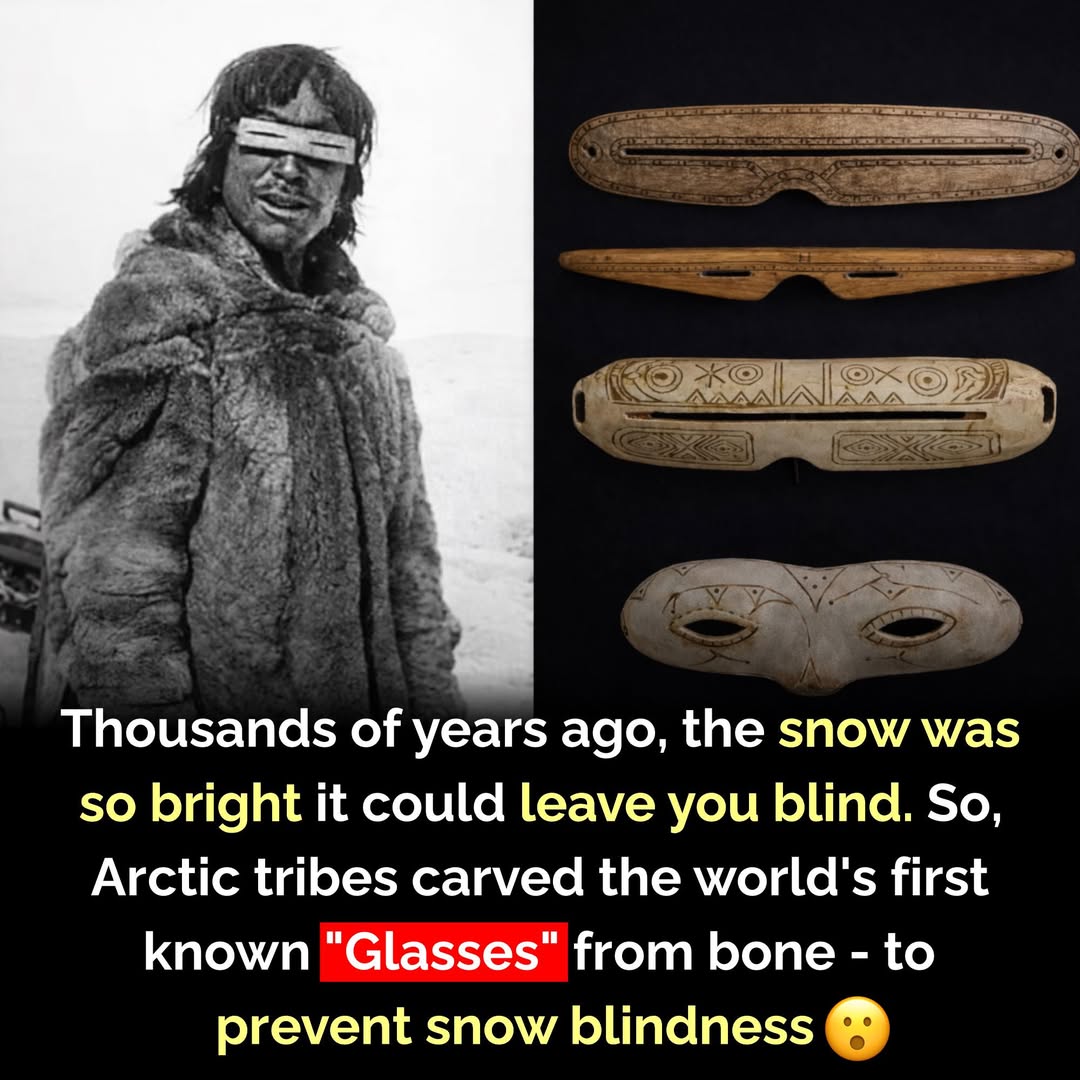
These goggles were made using materials found in their surroundings, including driftwood, bone, walrus ivory, and caribou antler. They featured narrow horizontal slits that allowed just enough light to enter while blocking the harsh glare from the snow. Some were even darkened with soot on the inside to further reduce brightness and improve vision across the bright Arctic landscape.
Beyond being practical tools for survival while hunting or traveling across frozen terrain, many of these goggles were also carefully crafted. Some were decorated with carvings and patterns that reflected cultural traditions, personal identity, or spiritual beliefs.
This invention highlights the deep knowledge and creativity of Indigenous Arctic communities. Long before modern sunglasses existed, they had already developed an effective way to protect their vision and live successfully in one of the brightest and most challenging environments on Earth.
More than 2,000 years ago, the Inuit and Yupik peoples of Alaska and northern Canada developed a clever solution to this problem. They created some of the earliest forms of protective eyewear, often known as snow goggles.
These goggles were made using materials found in their surroundings, including driftwood, bone, walrus ivory, and caribou antler. They featured narrow horizontal slits that allowed just enough light to enter while blocking the harsh glare from the snow. Some were even darkened with soot on the inside to further reduce brightness and improve vision across the bright Arctic landscape.
Beyond being practical tools for survival while hunting or traveling across frozen terrain, many of these goggles were also carefully crafted. Some were decorated with carvings and patterns that reflected cultural traditions, personal identity, or spiritual beliefs.
This invention highlights the deep knowledge and creativity of Indigenous Arctic communities. Long before modern sunglasses existed, they had already developed an effective way to protect their vision and live successfully in one of the brightest and most challenging environments on Earth.
In the Arctic, sunlight reflecting off endless fields of snow can be more dangerous than it looks. The intense glare can cause snow blindness, a painful condition that temporarily damages the eyes and makes travel extremely difficult.
More than 2,000 years ago, the Inuit and Yupik peoples of Alaska and northern Canada developed a clever solution to this problem. They created some of the earliest forms of protective eyewear, often known as snow goggles.
These goggles were made using materials found in their surroundings, including driftwood, bone, walrus ivory, and caribou antler. They featured narrow horizontal slits that allowed just enough light to enter while blocking the harsh glare from the snow. Some were even darkened with soot on the inside to further reduce brightness and improve vision across the bright Arctic landscape.
Beyond being practical tools for survival while hunting or traveling across frozen terrain, many of these goggles were also carefully crafted. Some were decorated with carvings and patterns that reflected cultural traditions, personal identity, or spiritual beliefs.
This invention highlights the deep knowledge and creativity of Indigenous Arctic communities. Long before modern sunglasses existed, they had already developed an effective way to protect their vision and live successfully in one of the brightest and most challenging environments on Earth.


 Language
 English
 VN
VN
 French
 Portuguese
 Deutsch
 Turkish
 Dutch
Dutch
 Italiano
 Russian
 Romaian
 Portuguese (Brazil)
 Greek
Greek
 Arabic