


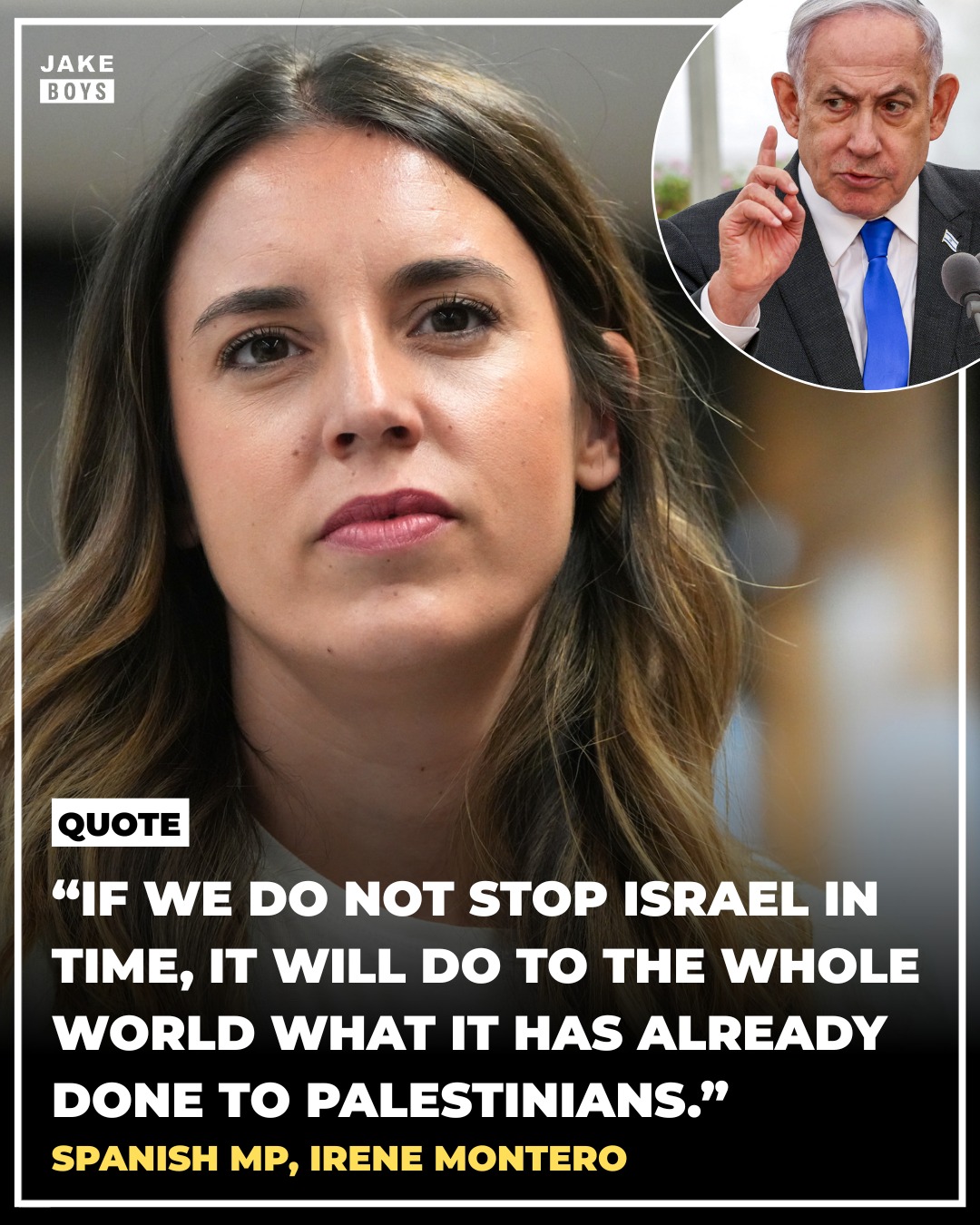
Spanish MEP Irene Montero just issued one of the most forceful critiques yet from a European political leader about the ongoing war in Gaza and Western support for Israel. She warned that “if we do not stop Israel in time, it will do to the whole world what it has already done to Palestinians” — tying the violence and humanitarian catastrophe in occupied Palestinian territories to a broader warning about unchecked militarism and power.
Montero has repeatedly called for Europe to break its diplomatic silence and impose sanctions or isolation on Israel and its key backers, including the U.S., over what she describes as genocide and terror. Her statements reflect a sector of progressive opinion that sees the international response to the war as deeply hypocritical — especially given Western governments’ reluctance to sanction Israel despite documented displacement, civilian deaths, and concerns flagged by U.N. human rights experts about violations of international law.
Whether one agrees or not, this rhetoric directly challenges mainstream European foreign‑policy consensus and is fueling a heated trans‑Atlantic debate about war, human rights, and the limits of Western military alliances. It’s stirring strong reactions from activists on both sides, and could become a flashpoint in how European progressives frame opposition to U.S.–linked military power globally.
Montero has repeatedly called for Europe to break its diplomatic silence and impose sanctions or isolation on Israel and its key backers, including the U.S., over what she describes as genocide and terror. Her statements reflect a sector of progressive opinion that sees the international response to the war as deeply hypocritical — especially given Western governments’ reluctance to sanction Israel despite documented displacement, civilian deaths, and concerns flagged by U.N. human rights experts about violations of international law.
Whether one agrees or not, this rhetoric directly challenges mainstream European foreign‑policy consensus and is fueling a heated trans‑Atlantic debate about war, human rights, and the limits of Western military alliances. It’s stirring strong reactions from activists on both sides, and could become a flashpoint in how European progressives frame opposition to U.S.–linked military power globally.
Spanish MEP Irene Montero just issued one of the most forceful critiques yet from a European political leader about the ongoing war in Gaza and Western support for Israel. She warned that “if we do not stop Israel in time, it will do to the whole world what it has already done to Palestinians” — tying the violence and humanitarian catastrophe in occupied Palestinian territories to a broader warning about unchecked militarism and power.
Montero has repeatedly called for Europe to break its diplomatic silence and impose sanctions or isolation on Israel and its key backers, including the U.S., over what she describes as genocide and terror. Her statements reflect a sector of progressive opinion that sees the international response to the war as deeply hypocritical — especially given Western governments’ reluctance to sanction Israel despite documented displacement, civilian deaths, and concerns flagged by U.N. human rights experts about violations of international law.
Whether one agrees or not, this rhetoric directly challenges mainstream European foreign‑policy consensus and is fueling a heated trans‑Atlantic debate about war, human rights, and the limits of Western military alliances. It’s stirring strong reactions from activists on both sides, and could become a flashpoint in how European progressives frame opposition to U.S.–linked military power globally.


 Language
 English
 VN
VN
 French
 Spanish
 Portuguese
 Deutsch
 Turkish
 Dutch
Dutch
 Russian
 Romaian
 Portuguese (Brazil)
 Greek
Greek
 Arabic