
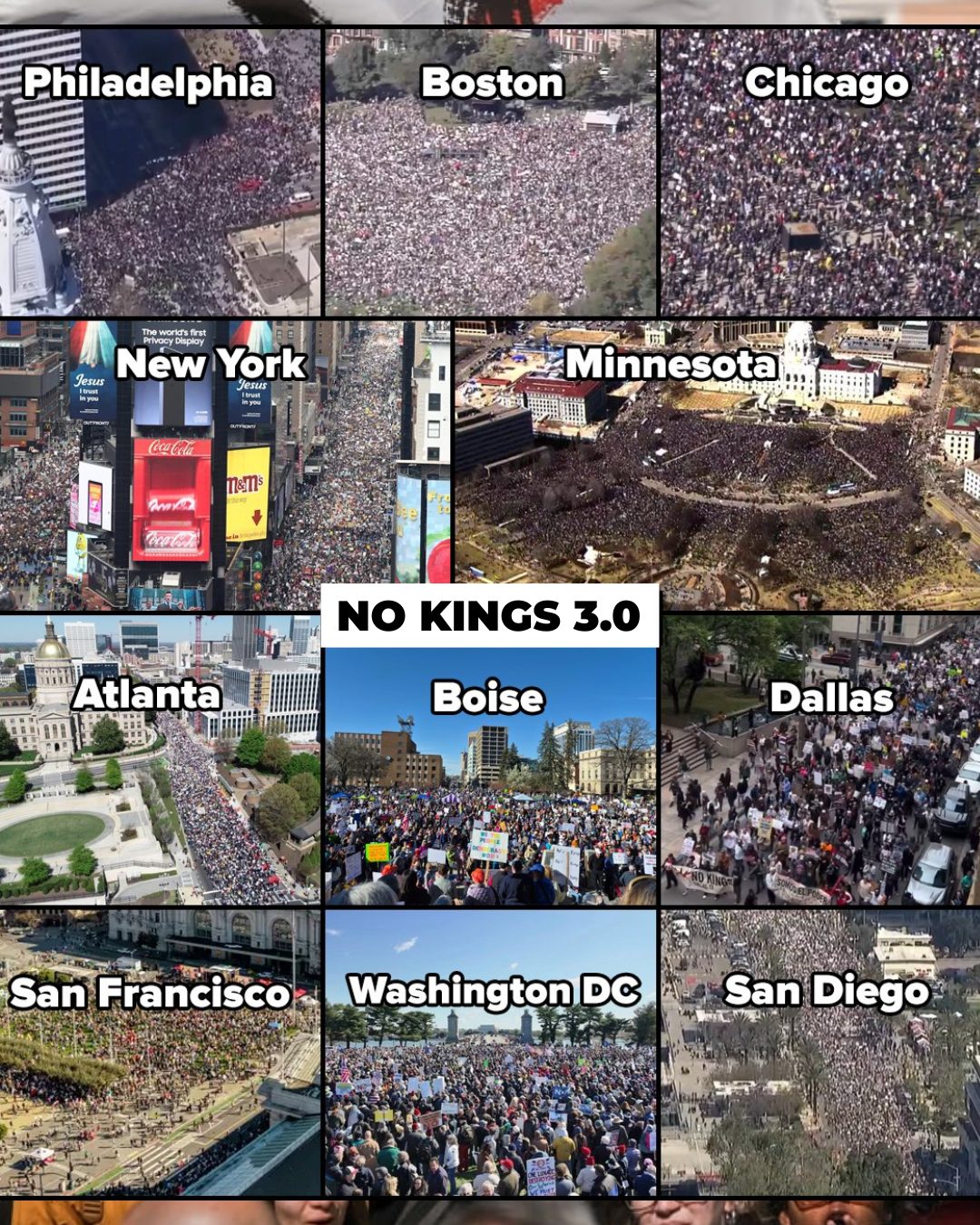
• No Kings 3.0 has officially become one of the largest protest movements in U.S. history.

    On March 28, millions of Americans took to the streets in a coordinated nationwide demonstration against President Donald Trump, with events held in all 50 states and spanning more than 3,300 cities and towns.

    Organizers estimate that at least 8 million people participated, potentially making it the largest single day of protest in American history.

    From major hubs like New York, Los Angeles, and Washington D.C. to small rural communities, crowds gathered under one message: opposition to what they describe as growing authoritarianism, controversial immigration crackdowns, and escalating military conflict abroad.

    The flagship rally in Minnesota drew over 200,000 people, becoming a focal point for outrage following recent high-profile federal agent shootings.

    This marks the third wave of the movement, following earlier protests that drew around 5 million people in June 2025 and 7 million in October 2025, showing rapidly growing momentum.

    Unlike traditional protests centered on a single issue, No Kings 3.0 brought together a wide coalition of Americans — uniting around democracy, civil rights, and resistance to executive overreach — with demonstrations not just across the U.S., but in cities around the world.

    Supporters are calling it a historic show of people power, while critics dismiss it as politically motivated. Either way, the scale is undeniable — this wasn’t just a protest, it was a nationwide moment.
    No Kings 3.0 has officially become one of the largest protest movements in U.S. history. On March 28, millions of Americans took to the streets in a coordinated nationwide demonstration against President Donald Trump, with events held in all 50 states and spanning more than 3,300 cities and towns. Organizers estimate that at least 8 million people participated, potentially making it the largest single day of protest in American history. From major hubs like New York, Los Angeles, and Washington D.C. to small rural communities, crowds gathered under one message: opposition to what they describe as growing authoritarianism, controversial immigration crackdowns, and escalating military conflict abroad. The flagship rally in Minnesota drew over 200,000 people, becoming a focal point for outrage following recent high-profile federal agent shootings. This marks the third wave of the movement, following earlier protests that drew around 5 million people in June 2025 and 7 million in October 2025, showing rapidly growing momentum. Unlike traditional protests centered on a single issue, No Kings 3.0 brought together a wide coalition of Americans — uniting around democracy, civil rights, and resistance to executive overreach — with demonstrations not just across the U.S., but in cities around the world. Supporters are calling it a historic show of people power, while critics dismiss it as politically motivated. Either way, the scale is undeniable — this wasn’t just a protest, it was a nationwide moment.
    Like
    Love
    Wow
    3
    0 Comments 0 Shares 244 Views 0 Reviews
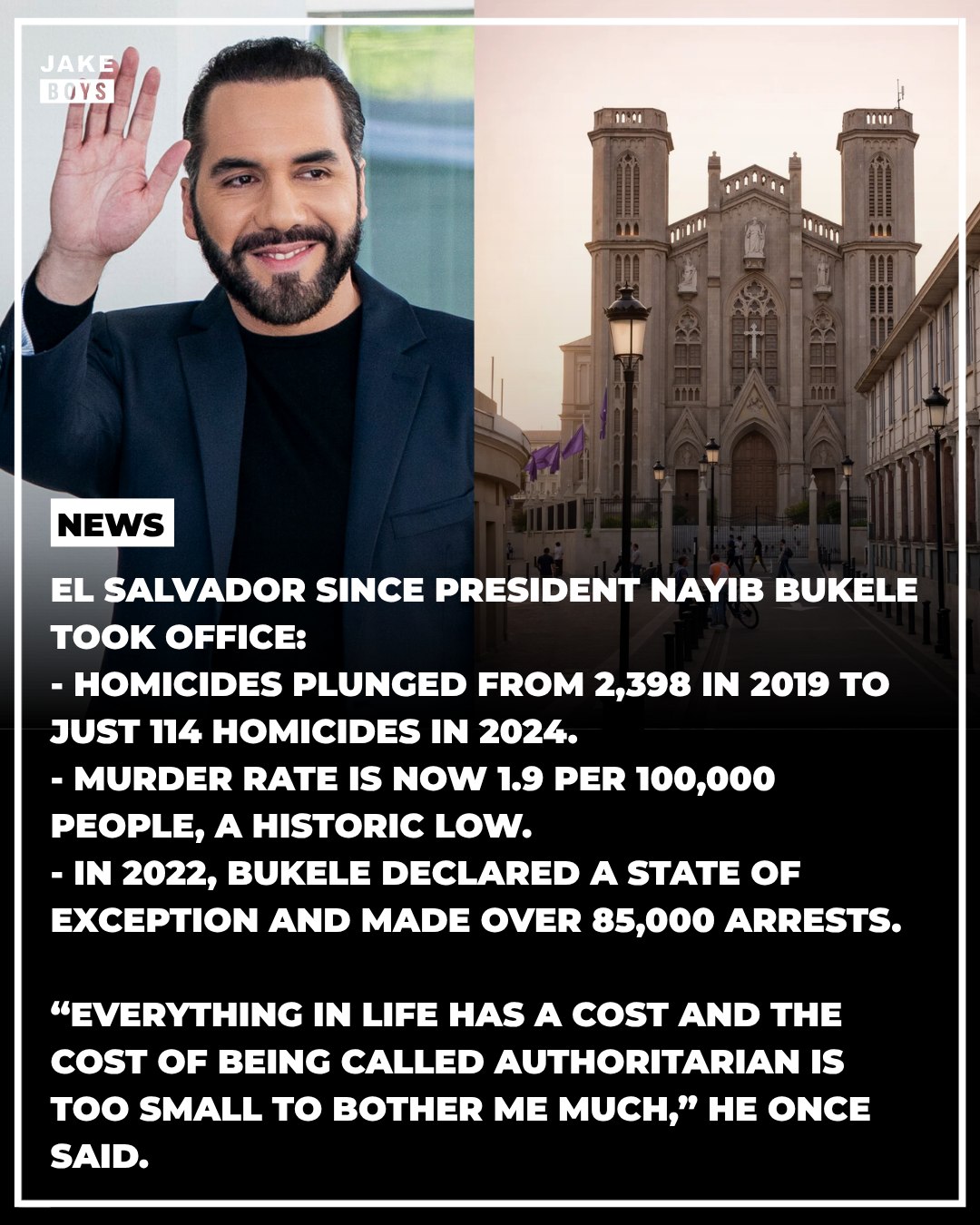
  • Since taking office, President Nayib Bukele has transformed the security landscape in El Salvador, overseeing one of the most dramatic declines in violent crime in recent history.

    His aggressive crackdown on gangs — including a sweeping state of exception that led to tens of thousands of arrests — has been credited by supporters with restoring order in a country that was once considered one of the most dangerous in the world. Streets that were previously controlled by criminal groups have, in many areas, returned to everyday life.

    At the same time, the approach has drawn intense scrutiny from international observers and human rights organizations, who warn that the mass arrests and emergency powers raise serious concerns about due process, wrongful detentions, and civil liberties.

    Bukele himself has acknowledged the criticism, arguing that the results justify the method — and that restoring safety comes at a cost.
    Since taking office, President Nayib Bukele has transformed the security landscape in El Salvador, overseeing one of the most dramatic declines in violent crime in recent history. His aggressive crackdown on gangs — including a sweeping state of exception that led to tens of thousands of arrests — has been credited by supporters with restoring order in a country that was once considered one of the most dangerous in the world. Streets that were previously controlled by criminal groups have, in many areas, returned to everyday life. At the same time, the approach has drawn intense scrutiny from international observers and human rights organizations, who warn that the mass arrests and emergency powers raise serious concerns about due process, wrongful detentions, and civil liberties. Bukele himself has acknowledged the criticism, arguing that the results justify the method — and that restoring safety comes at a cost.
    Like
    Love
    Wow
    3
    0 Comments 0 Shares 281 Views 0 Reviews
  • Actor Jane Fonda has called on Americans to “use the tools we have” to stop what she describes as an authoritarian shift under Donald Trump.

    Speaking during No Kings Day, Fonda warned: “This is the first time in U.S. history that an authoritarian regime has broken through… historians say it has never happened this fast in any industrialised democracy.”

    She added that the speed of consolidation makes immediate action critical.
    Actor Jane Fonda has called on Americans to “use the tools we have” to stop what she describes as an authoritarian shift under Donald Trump. Speaking during No Kings Day, Fonda warned: “This is the first time in U.S. history that an authoritarian regime has broken through… historians say it has never happened this fast in any industrialised democracy.” She added that the speed of consolidation makes immediate action critical.
    Like
    Love
    Wow
    3
    0 Comments 0 Shares 293 Views 0 Reviews
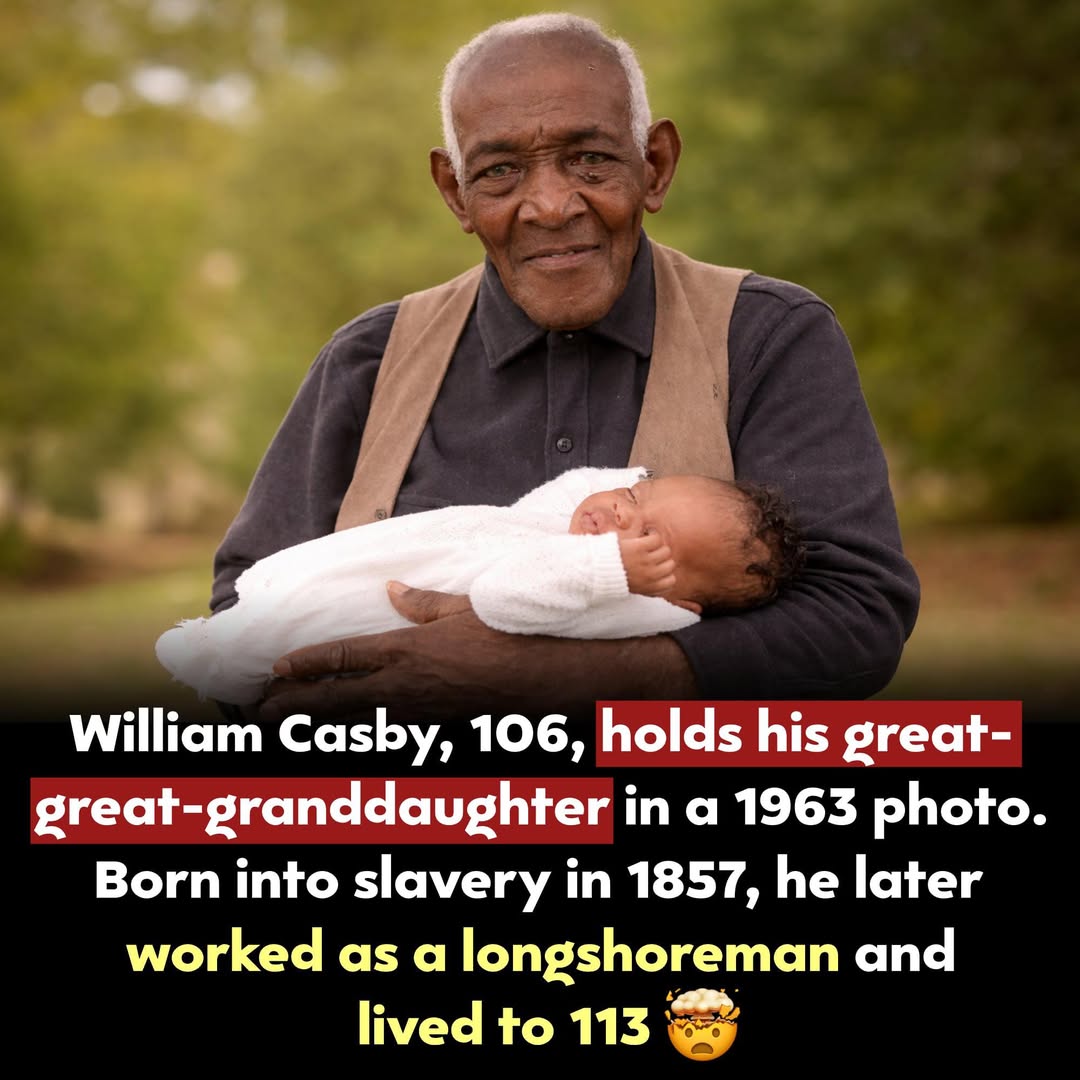
  • William Casby was born in 1857 in Danville, Virginia , during the final years of slavery in the United States

    As a child, he witnessed a historic turning point—the end of slavery after the Civil War and the adoption of the Thirteenth Amendment to the United States Constitution

    Like many of his generation, his life spanned a time of massive change As an adult, he worked as a longshoreman , handling heavy cargo at ports—a tough and physically demanding job

    Over the years, Casby lived through Reconstruction, the rise of industrial America, both World Wars , and the early Civil Rights Movement His life reflected the transformation of an entire nation.

    In 1963, his portrait was captured by Richard Avedon , known for documenting people from all walks of life.

    If his reported age was accurate, Casby lived from before the Civil War to the same year as the March on Washington—connecting two vastly different eras of American history within one lifetime

    His story is a powerful reminder of how much the world can change in a single life
    William Casby was born in 1857 in Danville, Virginia , during the final years of slavery in the United States As a child, he witnessed a historic turning point—the end of slavery after the Civil War and the adoption of the Thirteenth Amendment to the United States Constitution Like many of his generation, his life spanned a time of massive change As an adult, he worked as a longshoreman , handling heavy cargo at ports—a tough and physically demanding job Over the years, Casby lived through Reconstruction, the rise of industrial America, both World Wars , and the early Civil Rights Movement His life reflected the transformation of an entire nation. In 1963, his portrait was captured by Richard Avedon , known for documenting people from all walks of life. If his reported age was accurate, Casby lived from before the Civil War to the same year as the March on Washington—connecting two vastly different eras of American history within one lifetime His story is a powerful reminder of how much the world can change in a single life
    Like
    Love
    Wow
    3
    0 Comments 0 Shares 330 Views 0 Reviews
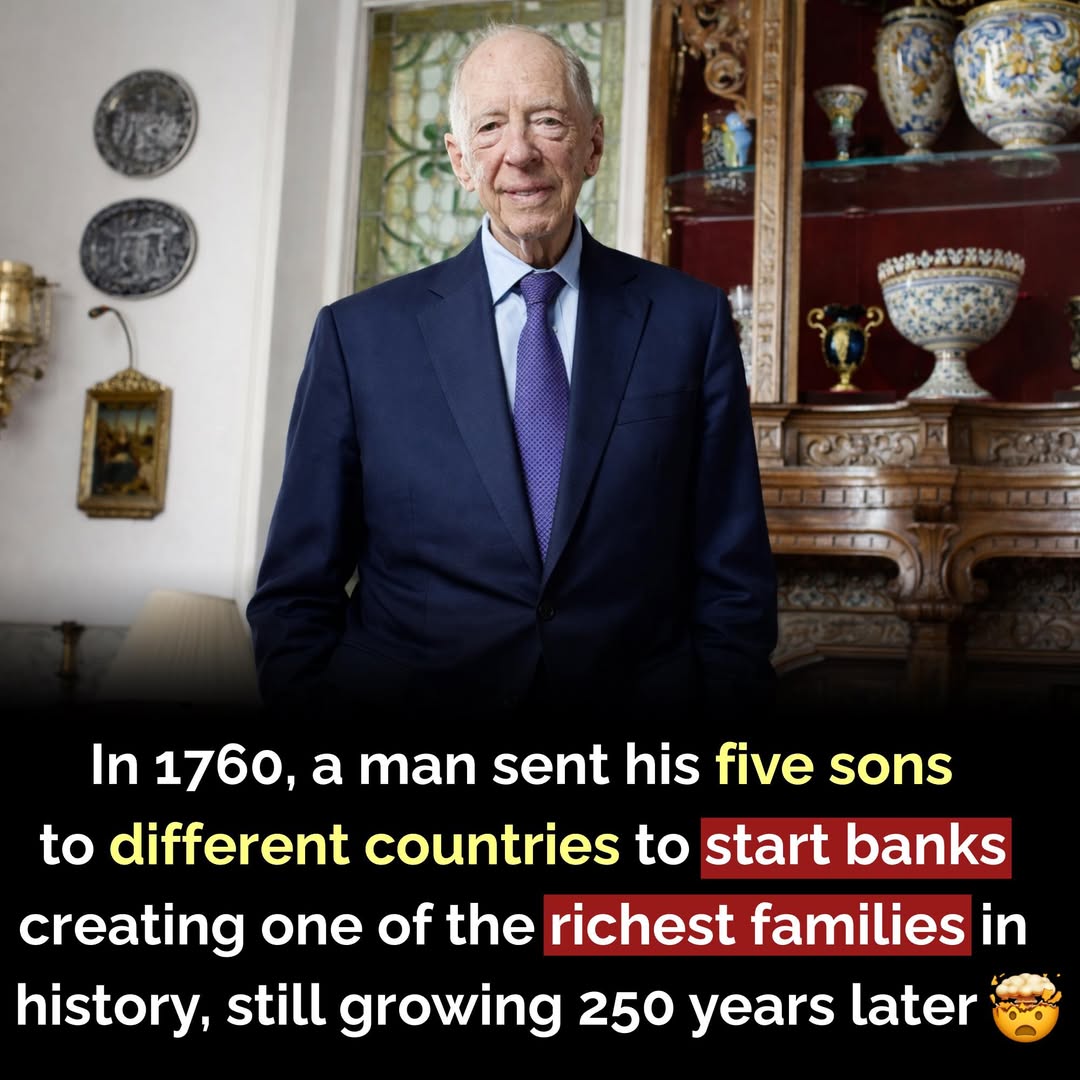
  • In the late 1700s, Mayer Amschel Rothschild made a bold decision that would shape financial history

    He sent his five sons to major European cities—London, Paris, Vienna, Naples, and Frankfurt—where each one established a bank At a time when communication was slow and unreliable , this created something powerful: an international network that could move money and information faster than anyone else

    This advantage allowed the family to finance governments, navigate wars, and build massive influence across Europe Their system was far ahead of its time and gave them a unique edge.

    More than 200 years later, the Rothschild name is still linked with wealth and power But the story is often oversimplified online There isn’t one single massive fortune today—it’s spread across many descendants and branches of the family.

    Still, it all began with one smart strategy A simple yet powerful idea that changed global finance forever
    In the late 1700s, Mayer Amschel Rothschild made a bold decision that would shape financial history He sent his five sons to major European cities—London, Paris, Vienna, Naples, and Frankfurt—where each one established a bank At a time when communication was slow and unreliable , this created something powerful: an international network that could move money and information faster than anyone else This advantage allowed the family to finance governments, navigate wars, and build massive influence across Europe Their system was far ahead of its time and gave them a unique edge. More than 200 years later, the Rothschild name is still linked with wealth and power But the story is often oversimplified online There isn’t one single massive fortune today—it’s spread across many descendants and branches of the family. Still, it all began with one smart strategy A simple yet powerful idea that changed global finance forever
    Like
    Love
    Wow
    3
    0 Comments 0 Shares 447 Views 0 Reviews
More Results