



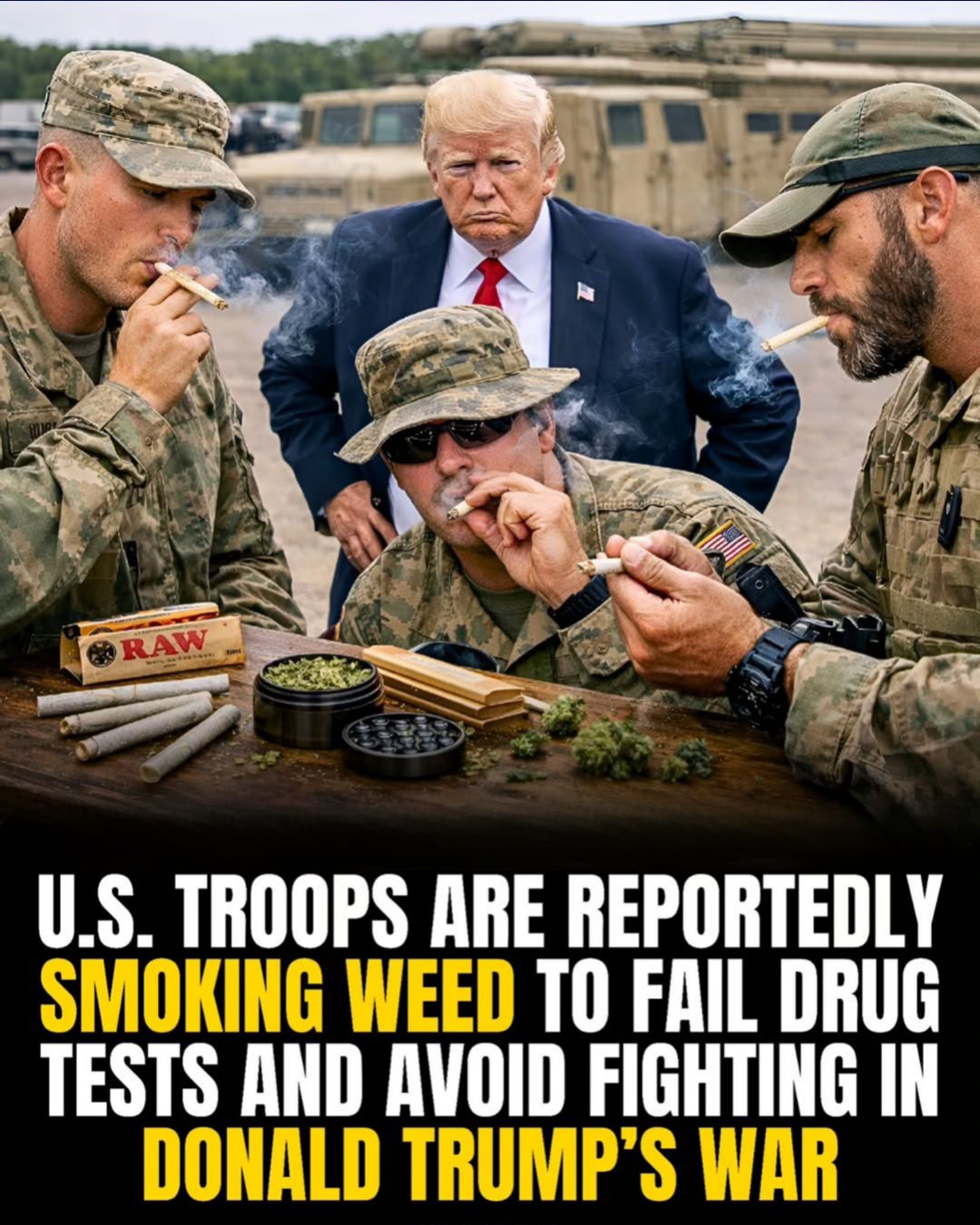
Reports circulating online have sparked controversy, suggesting that some individuals linked to the United States Armed Forces may be intentionally failing drug tests to avoid deployment during tensions tied to policies associated with Donald Trump.
The idea — sometimes described as a “silent protest” — has fueled debate across social media, raising questions about discipline, responsibility, and morale within the military. However, there is no verified evidence confirming this as a widespread or coordinated action, and the claims remain highly sensitive.
Military drug policies are among the strictest in any profession, with serious legal and career consequences for violations. Any deliberate non-compliance would represent a major breach of conduct, making such allegations significant if proven — but so far, officials have not confirmed any pattern supporting these reports.
Experts note that during periods of geopolitical tension, narratives like this can spread quickly online, often reflecting public sentiment or speculation rather than confirmed reality. This makes it harder to separate fact from rumor in today’s digital environment.
Beyond the claim itself, the conversation points to a deeper issue — how service members balance personal beliefs with duty, and how institutions maintain morale, trust, and unity during uncertain times
#USMilitary #MilitaryNews #GlobalTensions #WarDebate #BreakingNews #StayInformed #FactCheck #Geopolitics #TrendingNow
The idea — sometimes described as a “silent protest” — has fueled debate across social media, raising questions about discipline, responsibility, and morale within the military. However, there is no verified evidence confirming this as a widespread or coordinated action, and the claims remain highly sensitive.
Military drug policies are among the strictest in any profession, with serious legal and career consequences for violations. Any deliberate non-compliance would represent a major breach of conduct, making such allegations significant if proven — but so far, officials have not confirmed any pattern supporting these reports.
Experts note that during periods of geopolitical tension, narratives like this can spread quickly online, often reflecting public sentiment or speculation rather than confirmed reality. This makes it harder to separate fact from rumor in today’s digital environment.
Beyond the claim itself, the conversation points to a deeper issue — how service members balance personal beliefs with duty, and how institutions maintain morale, trust, and unity during uncertain times
#USMilitary #MilitaryNews #GlobalTensions #WarDebate #BreakingNews #StayInformed #FactCheck #Geopolitics #TrendingNow
Reports circulating online have sparked controversy, suggesting that some individuals linked to the United States Armed Forces may be intentionally failing drug tests to avoid deployment during tensions tied to policies associated with Donald Trump.
The idea — sometimes described as a “silent protest” — has fueled debate across social media, raising questions about discipline, responsibility, and morale within the military. However, there is no verified evidence confirming this as a widespread or coordinated action, and the claims remain highly sensitive.
Military drug policies are among the strictest in any profession, with serious legal and career consequences for violations. Any deliberate non-compliance would represent a major breach of conduct, making such allegations significant if proven — but so far, officials have not confirmed any pattern supporting these reports.
Experts note that during periods of geopolitical tension, narratives like this can spread quickly online, often reflecting public sentiment or speculation rather than confirmed reality. This makes it harder to separate fact from rumor in today’s digital environment.
Beyond the claim itself, the conversation points to a deeper issue — how service members balance personal beliefs with duty, and how institutions maintain morale, trust, and unity during uncertain times
#USMilitary #MilitaryNews #GlobalTensions #WarDebate #BreakingNews #StayInformed #FactCheck #Geopolitics #TrendingNow



 Language
 English
 VN
VN
 French
 Spanish
 Portuguese
 Deutsch
 Turkish
 Dutch
Dutch
 Russian
 Romaian
 Portuguese (Brazil)
 Greek
Greek
 Arabic