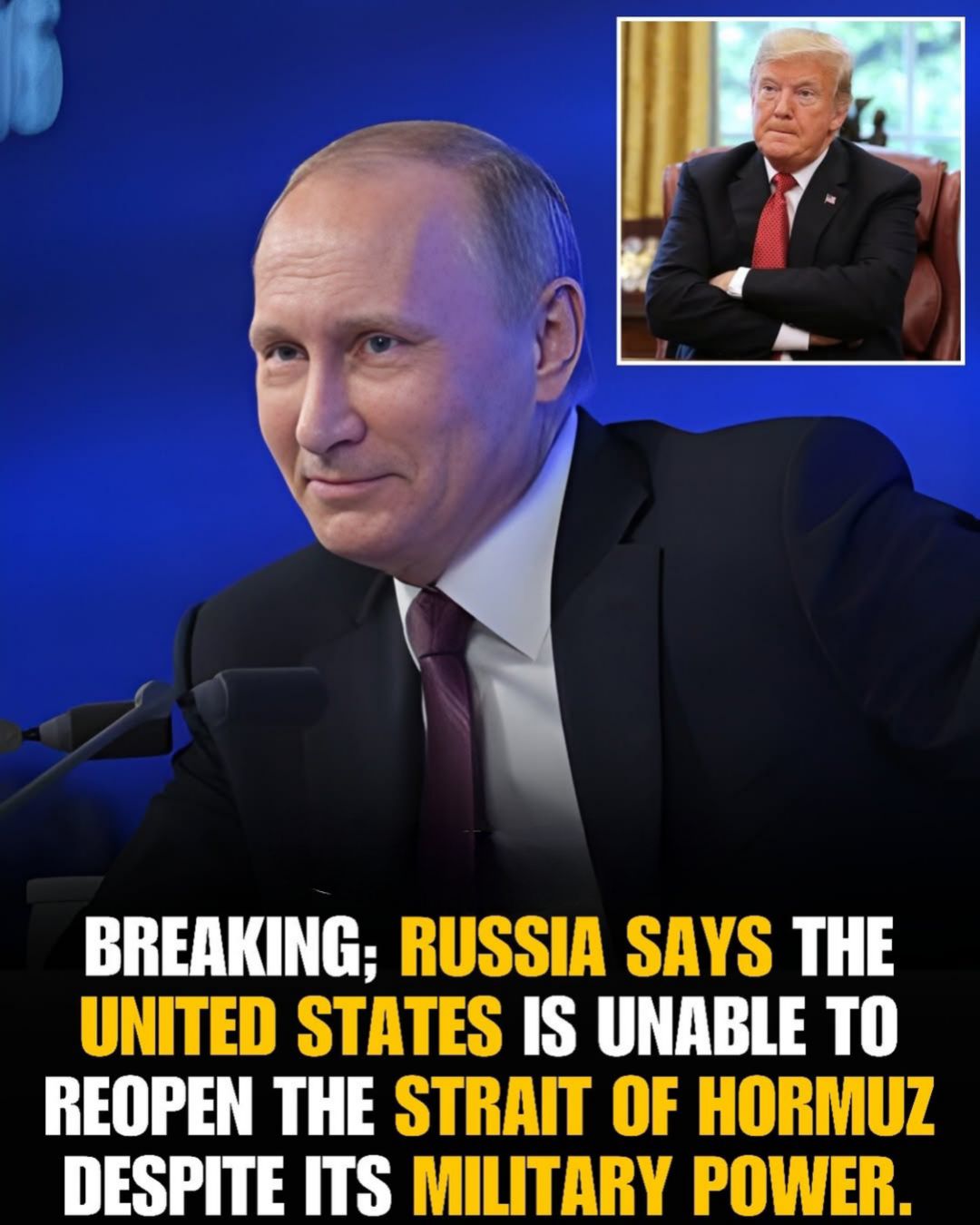
• Russia has claimed that the United States is unable to reopen the Strait of Hormuz despite its massive military power. The Russian Foreign Ministry suggested that the ongoing blockade by Iran cannot be resolved through force alone, mocking recent American efforts to restore shipping in the region.#Headlines360 #StraitOfHormuz #RussiaNews
    Russia has claimed that the United States is unable to reopen the Strait of Hormuz despite its massive military power. The Russian Foreign Ministry suggested that the ongoing blockade by Iran cannot be resolved through force alone, mocking recent American efforts to restore shipping in the region.#Headlines360 #StraitOfHormuz #RussiaNews
    Like
    Love
    Wow
    3
    0 Commenti 0 condivisioni 30 Views 0 Anteprima
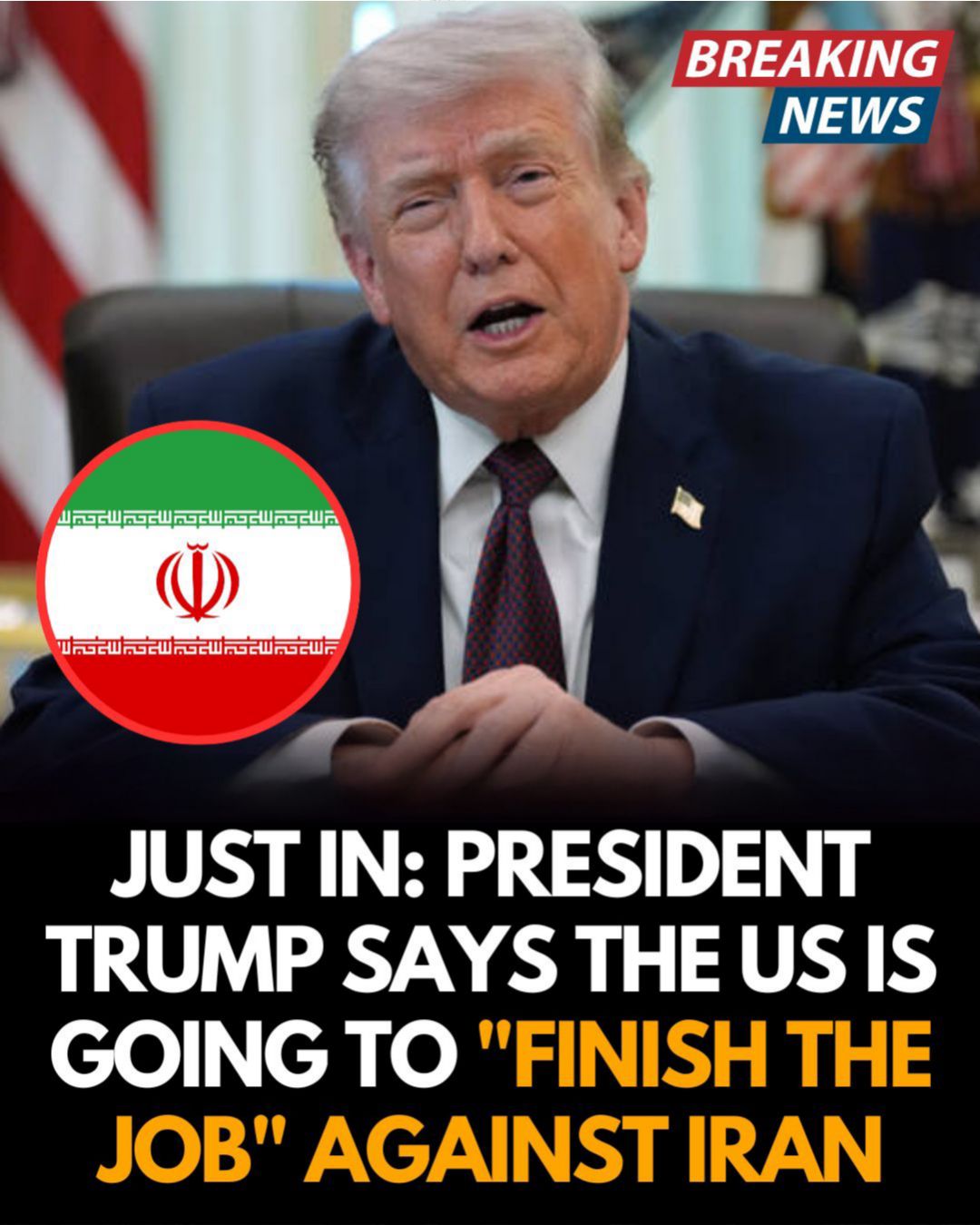
  • The commander-in-chief has signaled a definitive end-game for the current military campaign in the Middle East. During a recent prime-time address from the White House, President Trump stated that the United States is prepared to "finish the job" as core strategic objectives regarding Iran’s nuclear capabilities are nearing completion.

    This "finish the job" rhetoric follows weeks of intense operations, including the massive joint strikes known as Operation Epic Fury which began in late February. The administration is now pivoting from broad aerial bombardment to more targeted goals, including the potential physical seizure of enriched nuclear materials.

    The President’s timeline suggests a withdrawal of U.S. forces could happen within the next two to three weeks, provided specific security benchmarks are met. He emphasized that the goal is to leave the region with Iran’s ability to produce a nuclear weapon "put into the stone ages," ensuring long-term regional stability.

    Geopolitical tension remains at a boiling point as the U.S. also signaled it will no longer take primary responsibility for securing the Strait of Hormuz. By shifting this burden to international allies, the administration is reinforcing its "America First" approach to ending what has been a month-long, high-intensity conflict.

    While the President speaks of a swift conclusion, critics and military analysts warn that "finishing the job" may involve high-risk ground maneuvers in hostile territory. The world now watches to see if this declaration leads to a permanent de-escalation or a final, decisive surge in military activity.

    #Iran #Trump #MiddleEast #BreakingNews #Military
    The commander-in-chief has signaled a definitive end-game for the current military campaign in the Middle East. During a recent prime-time address from the White House, President Trump stated that the United States is prepared to "finish the job" as core strategic objectives regarding Iran’s nuclear capabilities are nearing completion. This "finish the job" rhetoric follows weeks of intense operations, including the massive joint strikes known as Operation Epic Fury which began in late February. The administration is now pivoting from broad aerial bombardment to more targeted goals, including the potential physical seizure of enriched nuclear materials. The President’s timeline suggests a withdrawal of U.S. forces could happen within the next two to three weeks, provided specific security benchmarks are met. He emphasized that the goal is to leave the region with Iran’s ability to produce a nuclear weapon "put into the stone ages," ensuring long-term regional stability. Geopolitical tension remains at a boiling point as the U.S. also signaled it will no longer take primary responsibility for securing the Strait of Hormuz. By shifting this burden to international allies, the administration is reinforcing its "America First" approach to ending what has been a month-long, high-intensity conflict. While the President speaks of a swift conclusion, critics and military analysts warn that "finishing the job" may involve high-risk ground maneuvers in hostile territory. The world now watches to see if this declaration leads to a permanent de-escalation or a final, decisive surge in military activity. #Iran #Trump #MiddleEast #BreakingNews #Military
    Like
    Love
    Wow
    3
    0 Commenti 0 condivisioni 197 Views 0 Anteprima
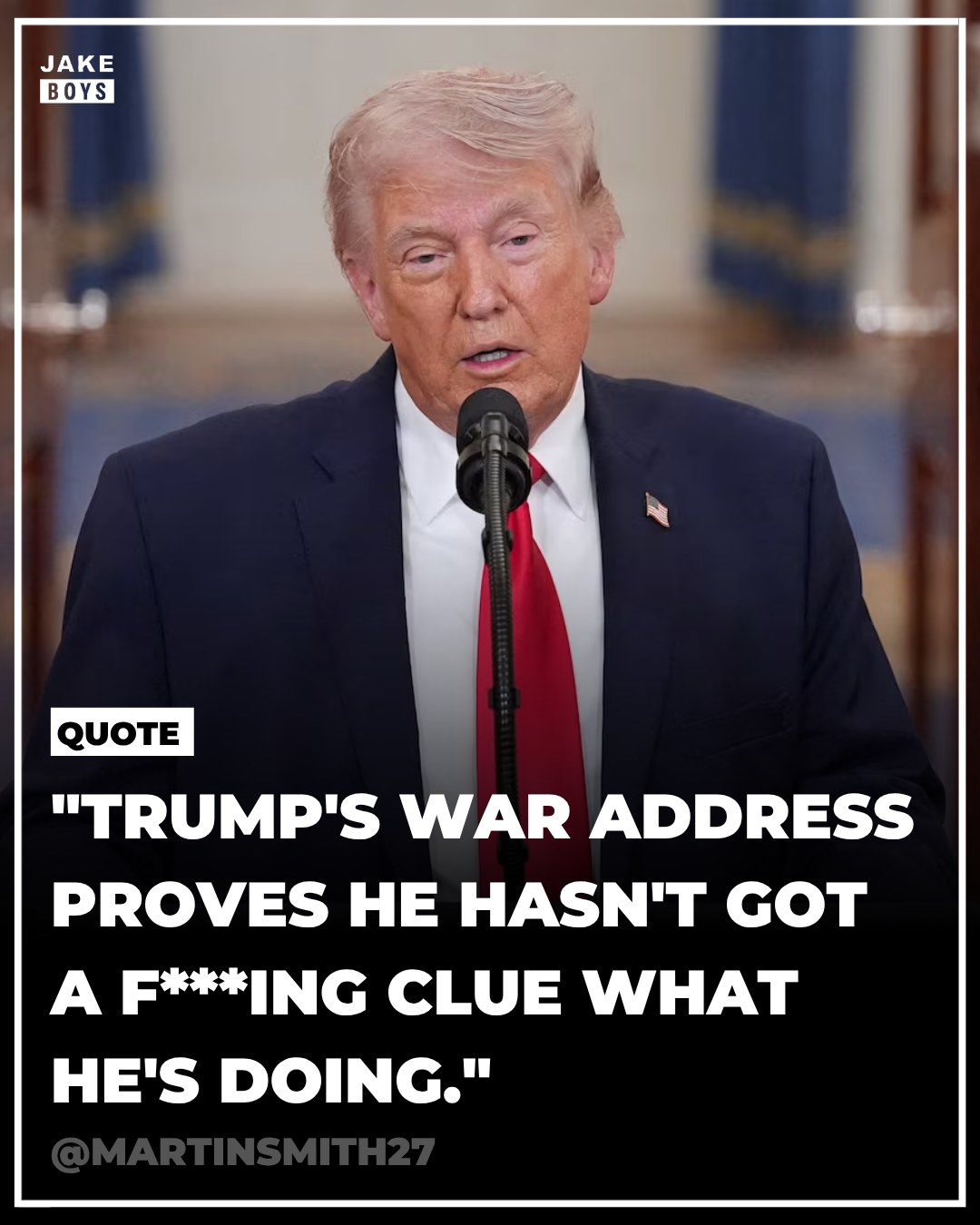
  • A social media user had a blunt assessment of President Trump's recent address on escalating military tensions, declaring: "Trump's war address proves he hasn't got a f***ing clue what he's doing."

    The post reflects the frustration and concern felt by many Americans watching the President's attempts to communicate a coherent strategy amidst the current Middle East crisis. Trump's address was widely criticized for lacking clarity, specificity, and a clear plan of action.

    This sentiment echoes the views of foreign policy experts and national security analysts who have expressed alarm over the Trump administration's apparent improvisational approach to sensitive geopolitical conflicts. The perception that the President lacks a firm grasp on complex global dynamics is fueling growing unease.

    As tensions continue to simmer, the public is being asked to trust the leadership of an administration that many feel is woefully unprepared to navigate these treacherous waters. This latest social media response captures the exasperation felt by those questioning whether Trump has the necessary experience and temperament to de-escalate the situation.
    A social media user had a blunt assessment of President Trump's recent address on escalating military tensions, declaring: "Trump's war address proves he hasn't got a f***ing clue what he's doing." The post reflects the frustration and concern felt by many Americans watching the President's attempts to communicate a coherent strategy amidst the current Middle East crisis. Trump's address was widely criticized for lacking clarity, specificity, and a clear plan of action. This sentiment echoes the views of foreign policy experts and national security analysts who have expressed alarm over the Trump administration's apparent improvisational approach to sensitive geopolitical conflicts. The perception that the President lacks a firm grasp on complex global dynamics is fueling growing unease. As tensions continue to simmer, the public is being asked to trust the leadership of an administration that many feel is woefully unprepared to navigate these treacherous waters. This latest social media response captures the exasperation felt by those questioning whether Trump has the necessary experience and temperament to de-escalate the situation.
    Like
    Love
    Wow
    3
    0 Commenti 0 condivisioni 233 Views 0 Anteprima
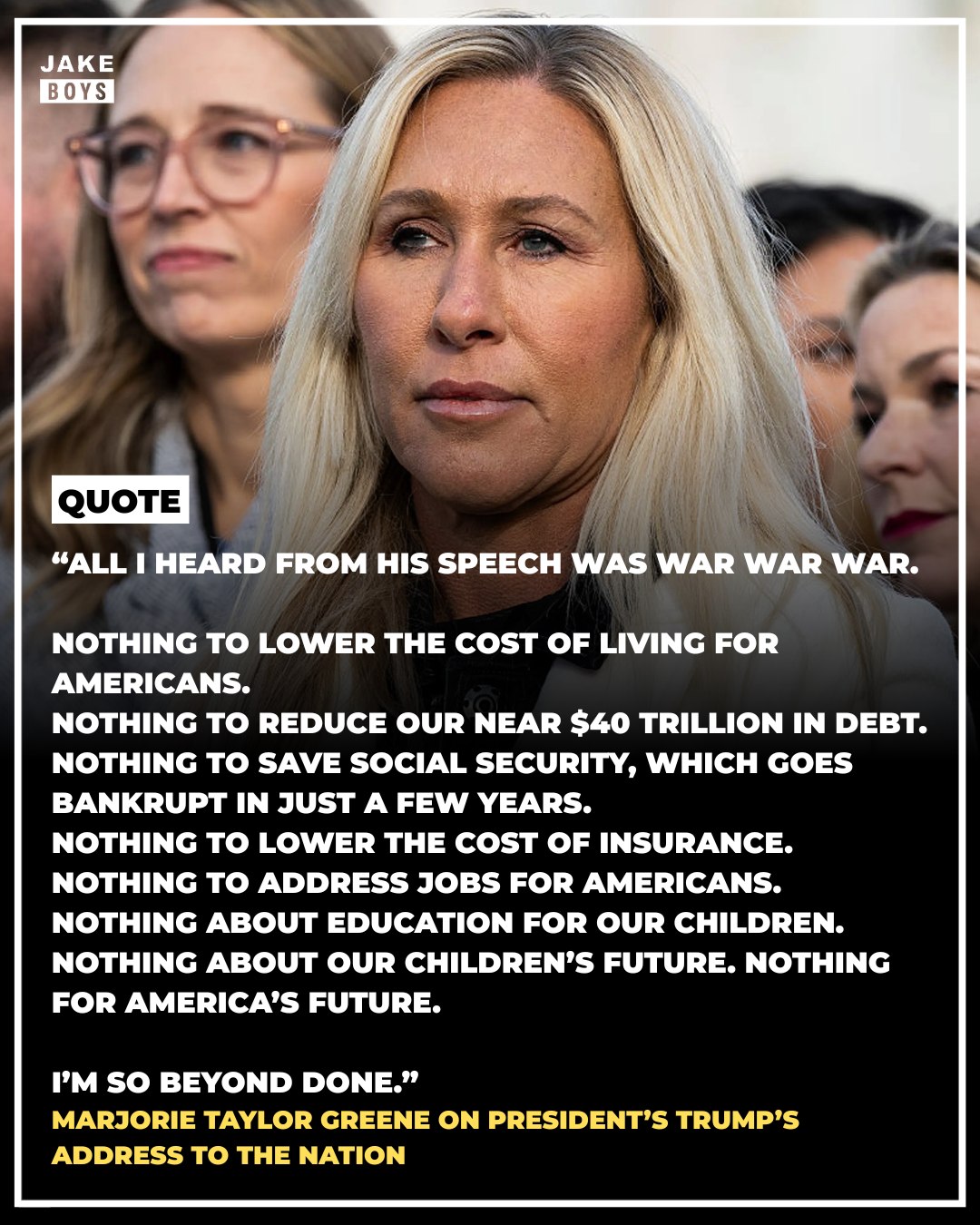
  • In a scathing response, Congresswoman Marjorie Taylor Greene condemned President Trump's recent address to the nation, declaring that all she heard was "WAR WAR WAR" with nothing substantive about addressing the real issues facing Americans.

    Greene lambasted the President's remarks, arguing that he failed to outline any meaningful plans to lower the cost of living, reduce the national debt, save Social Security, or improve access to healthcare and jobs. She accused Trump of neglecting crucial domestic priorities in favor of inflammatory war rhetoric.

    The fiery statement from the controversial Republican representative reflects the growing divide within the party over the administration's foreign policy posture. Greene expressed exasperation that Trump's speech did not focus on bread-and-butter economic concerns or the future of the country, but instead seemed to signal a willingness to further escalate military conflict.

    Her pointed criticism underscores the political risks the President faces as he navigates the delicate balance between appearing tough on adversaries abroad and addressing the kitchen-table issues that matter most to voters at home. Greene's rebuke suggests Trump may be losing the confidence of some within his own base on these critical matters.

    As the 2020 election cycle heats up, Trump's ability to unite his party around a cohesive domestic and foreign policy agenda could prove vital to his chances of winning a second term. Greene's blistering assessment serves as a warning that the President may need to recalibrate his messaging to avoid alienating key constituencies.
    In a scathing response, Congresswoman Marjorie Taylor Greene condemned President Trump's recent address to the nation, declaring that all she heard was "WAR WAR WAR" with nothing substantive about addressing the real issues facing Americans. Greene lambasted the President's remarks, arguing that he failed to outline any meaningful plans to lower the cost of living, reduce the national debt, save Social Security, or improve access to healthcare and jobs. She accused Trump of neglecting crucial domestic priorities in favor of inflammatory war rhetoric. The fiery statement from the controversial Republican representative reflects the growing divide within the party over the administration's foreign policy posture. Greene expressed exasperation that Trump's speech did not focus on bread-and-butter economic concerns or the future of the country, but instead seemed to signal a willingness to further escalate military conflict. Her pointed criticism underscores the political risks the President faces as he navigates the delicate balance between appearing tough on adversaries abroad and addressing the kitchen-table issues that matter most to voters at home. Greene's rebuke suggests Trump may be losing the confidence of some within his own base on these critical matters. As the 2020 election cycle heats up, Trump's ability to unite his party around a cohesive domestic and foreign policy agenda could prove vital to his chances of winning a second term. Greene's blistering assessment serves as a warning that the President may need to recalibrate his messaging to avoid alienating key constituencies.
    Like
    Love
    Wow
    3
    0 Commenti 0 condivisioni 230 Views 0 Anteprima
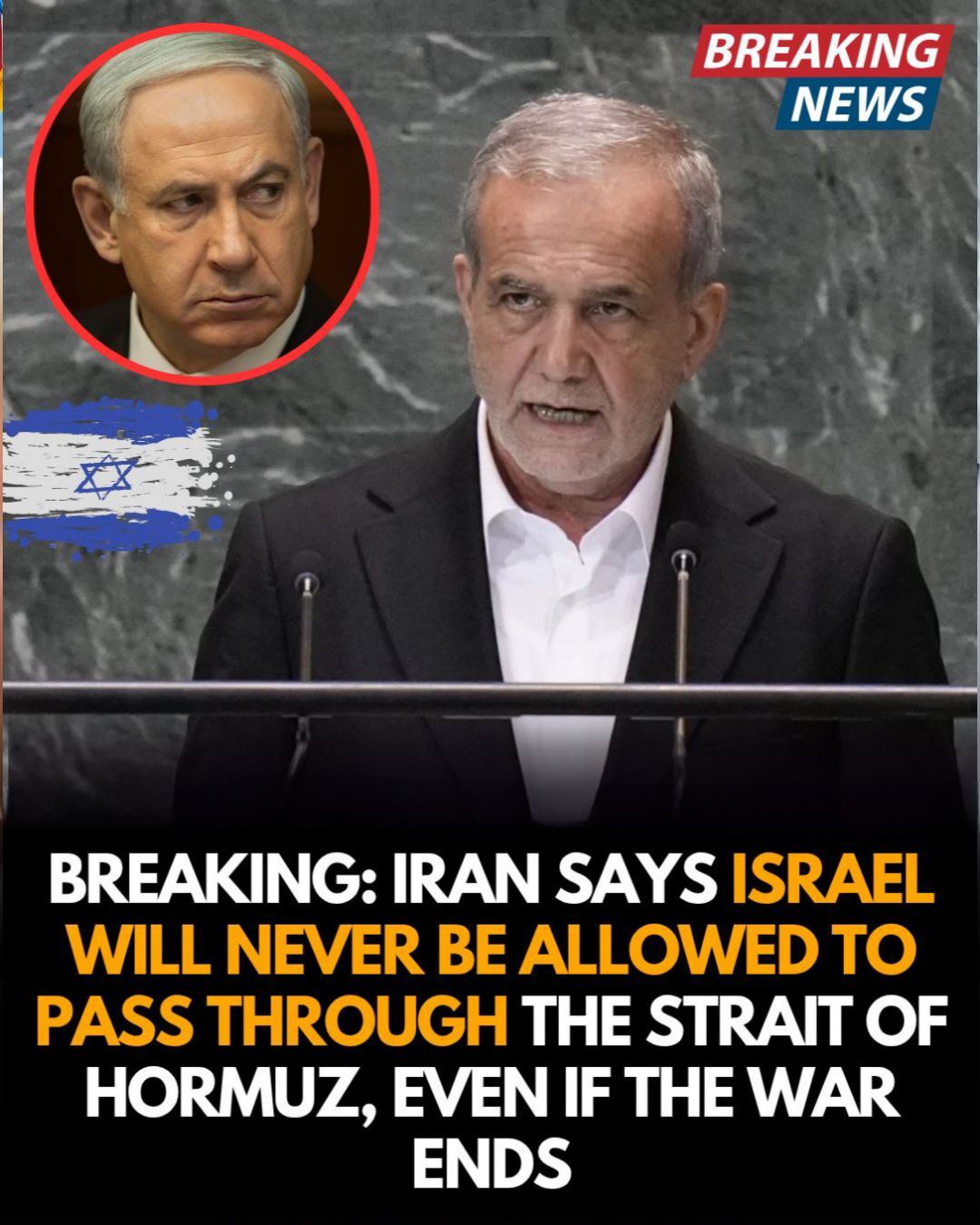
  • President Masoud Pezeshkian has issued a definitive and historic declaration regarding the future of Middle Eastern maritime security, stating that Israeli vessels will face a permanent ban from the Strait of Hormuz. This decree, delivered during a late-night address on April 1st, signals that Iran intends to maintain its blockade against Israel as a long-term strategic policy, regardless of any potential ceasefire or end to current hostilities.

    This hardline stance follows a day of intense military and diplomatic friction, including a massive new wave of Iranian missiles launched at Israel and the official rejection of President Trump’s ceasefire claims. By making this "never" pledge, Tehran is seeking to fundamentally alter the regional status quo and establish a new "Hormuz Doctrine" that excludes its primary adversary from the world's most critical energy chokepoint.

    The declaration comes as Russia, China, India, Iraq, and Pakistan enjoy exclusive "safe passage" through the corridor, creating a starkly divided maritime landscape. Iranian officials emphasized that while they are open to "brotherly" cooperation with neutral states like Malaysia and Oman, Israel remains an "existential enemy" that has forfeited all rights to regional transit.

    International analysts suggest this move is designed to maximize Israel’s long-term economic isolation and force the U.S.-led coalition into a difficult choice between accepting a permanent blockade or initiating a high-risk naval war. The White House has characterized the statement as "unacceptable and illegal," while Jerusalem has reiterated its right to defend freedom of navigation.

    As the IEA warns of a historic energy crisis and the 35-country summit in London enters its second day, the prospect of a diplomatic resolution has dimmed significantly. The world is watching to see if this permanent ban will be enforced by the IRGC’s coastal batteries or if it will trigger a decisive military confrontation to break the blockade once and for all.

    #NationalSecurity #MaritimeLaw #Geopolitics #MiddleEastWar #GlobalTrade
    President Masoud Pezeshkian has issued a definitive and historic declaration regarding the future of Middle Eastern maritime security, stating that Israeli vessels will face a permanent ban from the Strait of Hormuz. This decree, delivered during a late-night address on April 1st, signals that Iran intends to maintain its blockade against Israel as a long-term strategic policy, regardless of any potential ceasefire or end to current hostilities. This hardline stance follows a day of intense military and diplomatic friction, including a massive new wave of Iranian missiles launched at Israel and the official rejection of President Trump’s ceasefire claims. By making this "never" pledge, Tehran is seeking to fundamentally alter the regional status quo and establish a new "Hormuz Doctrine" that excludes its primary adversary from the world's most critical energy chokepoint. The declaration comes as Russia, China, India, Iraq, and Pakistan enjoy exclusive "safe passage" through the corridor, creating a starkly divided maritime landscape. Iranian officials emphasized that while they are open to "brotherly" cooperation with neutral states like Malaysia and Oman, Israel remains an "existential enemy" that has forfeited all rights to regional transit. International analysts suggest this move is designed to maximize Israel’s long-term economic isolation and force the U.S.-led coalition into a difficult choice between accepting a permanent blockade or initiating a high-risk naval war. The White House has characterized the statement as "unacceptable and illegal," while Jerusalem has reiterated its right to defend freedom of navigation. As the IEA warns of a historic energy crisis and the 35-country summit in London enters its second day, the prospect of a diplomatic resolution has dimmed significantly. The world is watching to see if this permanent ban will be enforced by the IRGC’s coastal batteries or if it will trigger a decisive military confrontation to break the blockade once and for all. #NationalSecurity #MaritimeLaw #Geopolitics #MiddleEastWar #GlobalTrade
    Like
    Love
    Wow
    3
    0 Commenti 0 condivisioni 238 Views 0 Anteprima
Pagine in Evidenza