



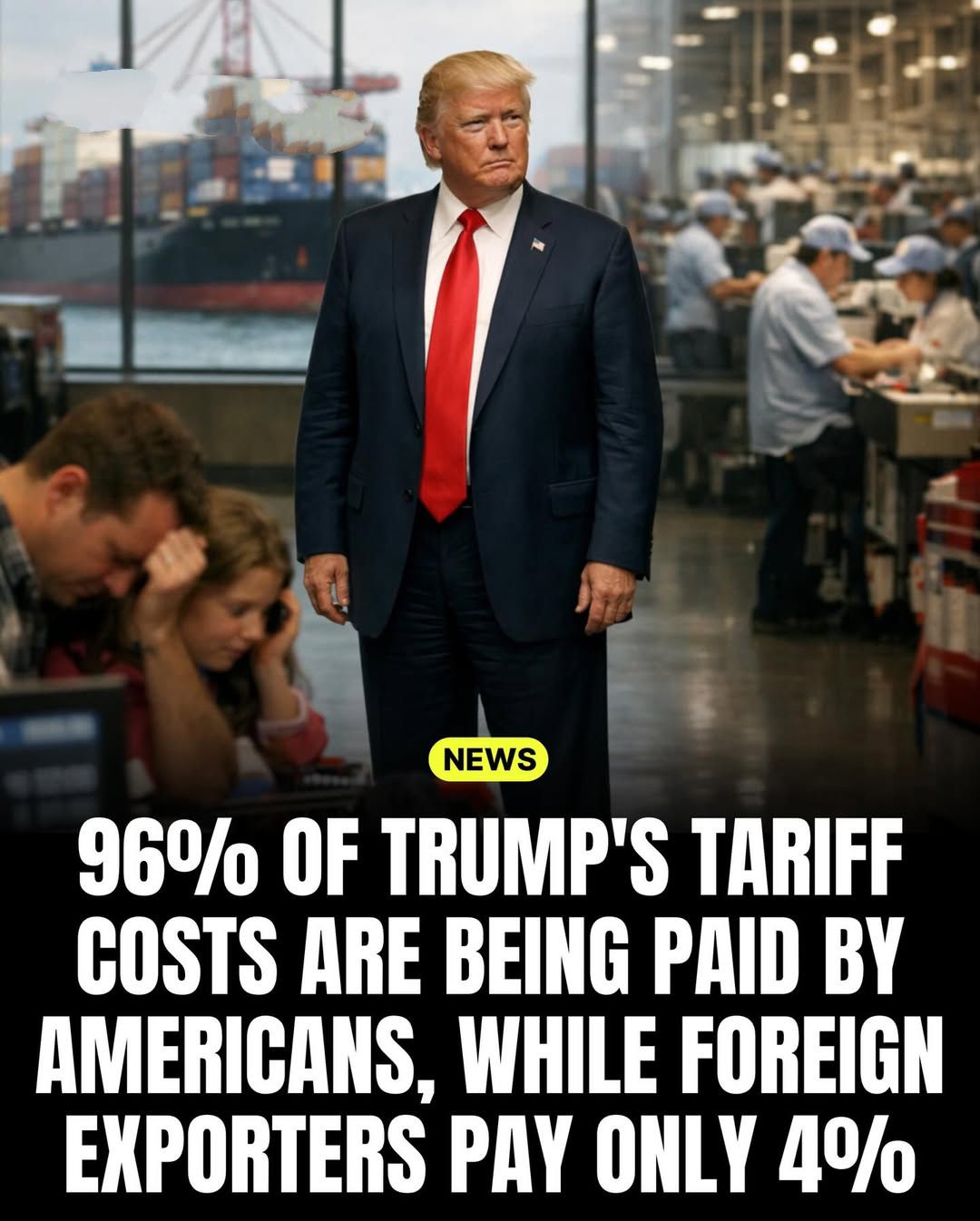
A new analysis from the Kiel Institute for the World Economy concludes that Americans bore the overwhelming majority of the costs associated with tariffs imposed during the administration of Donald Trump.
After examining roughly $4 trillion in import transactions, researchers estimate that approximately 96% of the tariff burden was passed through to U.S. consumers and businesses rather than absorbed by foreign exporters. Economists involved in the study argue this indicates the tariffs functioned more like a domestic tax on importers and buyers, challenging earlier claims that the financial impact would primarily fall on overseas producers.
Supporters of the tariff policy have maintained that the measures were intended to strengthen domestic manufacturing and address trade imbalances, while critics argue that higher import costs ultimately raised prices for American households and companies.
The broader debate over tariffs continues to shape discussions around trade policy, inflation, and economic competitiveness.
#BusinessBulls #TradePolicy #Tariffs #USPolitics #GlobalEconomy
After examining roughly $4 trillion in import transactions, researchers estimate that approximately 96% of the tariff burden was passed through to U.S. consumers and businesses rather than absorbed by foreign exporters. Economists involved in the study argue this indicates the tariffs functioned more like a domestic tax on importers and buyers, challenging earlier claims that the financial impact would primarily fall on overseas producers.
Supporters of the tariff policy have maintained that the measures were intended to strengthen domestic manufacturing and address trade imbalances, while critics argue that higher import costs ultimately raised prices for American households and companies.
The broader debate over tariffs continues to shape discussions around trade policy, inflation, and economic competitiveness.
#BusinessBulls #TradePolicy #Tariffs #USPolitics #GlobalEconomy
A new analysis from the Kiel Institute for the World Economy concludes that Americans bore the overwhelming majority of the costs associated with tariffs imposed during the administration of Donald Trump.
After examining roughly $4 trillion in import transactions, researchers estimate that approximately 96% of the tariff burden was passed through to U.S. consumers and businesses rather than absorbed by foreign exporters. Economists involved in the study argue this indicates the tariffs functioned more like a domestic tax on importers and buyers, challenging earlier claims that the financial impact would primarily fall on overseas producers.
Supporters of the tariff policy have maintained that the measures were intended to strengthen domestic manufacturing and address trade imbalances, while critics argue that higher import costs ultimately raised prices for American households and companies.
The broader debate over tariffs continues to shape discussions around trade policy, inflation, and economic competitiveness.
#BusinessBulls #TradePolicy #Tariffs #USPolitics #GlobalEconomy







 Language
 VN
VN
 French
 Spanish
 Portuguese
 Deutsch
 Turkish
 Dutch
Dutch
 Italiano
 Russian
 Romaian
 Portuguese (Brazil)
 Greek
Greek
 Arabic