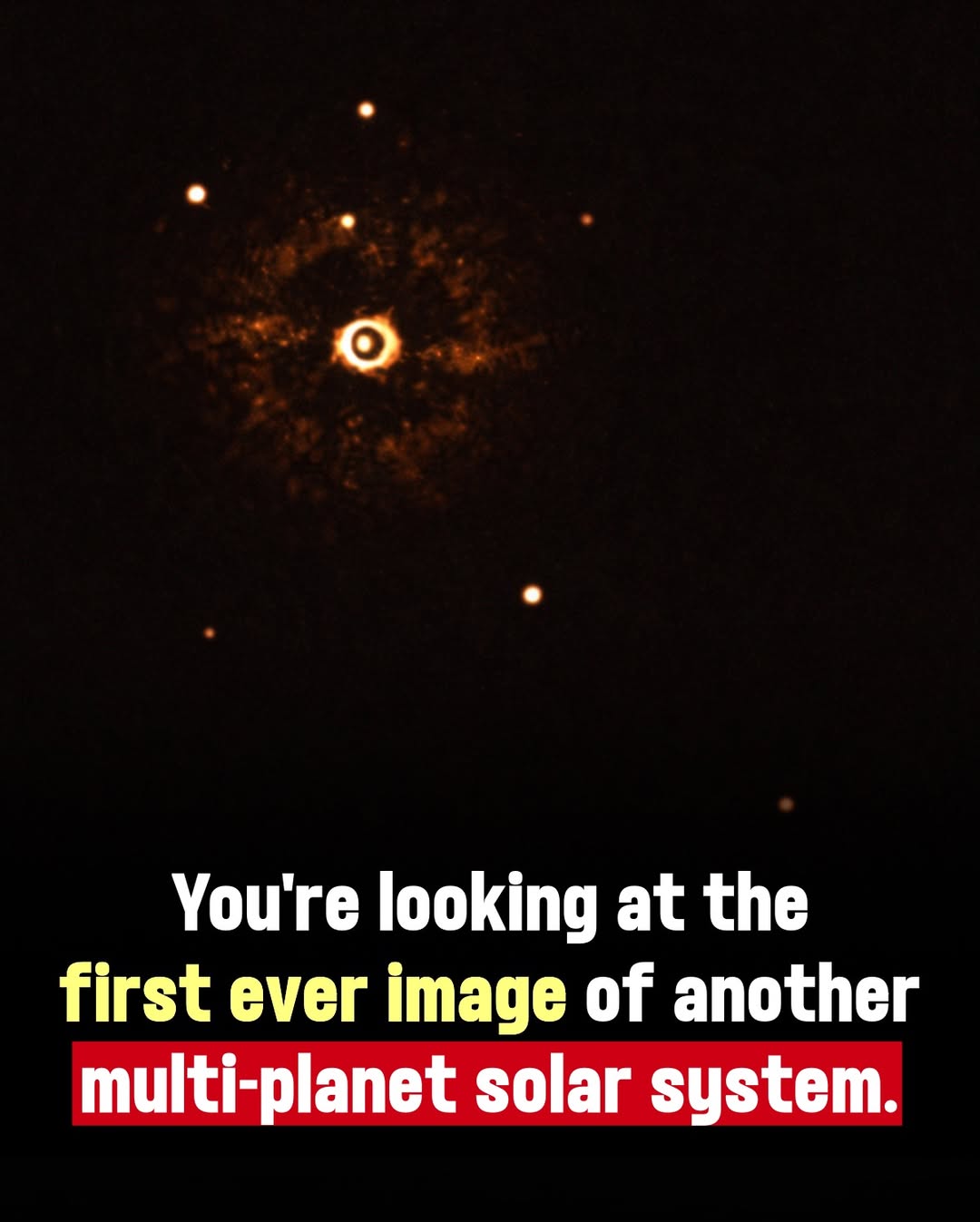
• You’re looking at a historic breakthrough — one of the first direct images of a multi-planet system around the star HR 8799, about 129 light-years away in the constellation Pegasus. Those glowing dots aren’t stars — they’re actual planets orbiting another sun

    Using advanced telescopes to block the star’s light, astronomers captured these distant worlds directly instead of relying on indirect detection. It’s like getting a glimpse of another solar system far beyond our own
    You’re looking at a historic breakthrough — one of the first direct images of a multi-planet system around the star HR 8799, about 129 light-years away in the constellation Pegasus. Those glowing dots aren’t stars — they’re actual planets orbiting another sun Using advanced telescopes to block the star’s light, astronomers captured these distant worlds directly instead of relying on indirect detection. It’s like getting a glimpse of another solar system far beyond our own
    Like
    Love
    Wow
    3
    0 Yorumlar 0 hisse senetleri 356 Views 0 önizleme
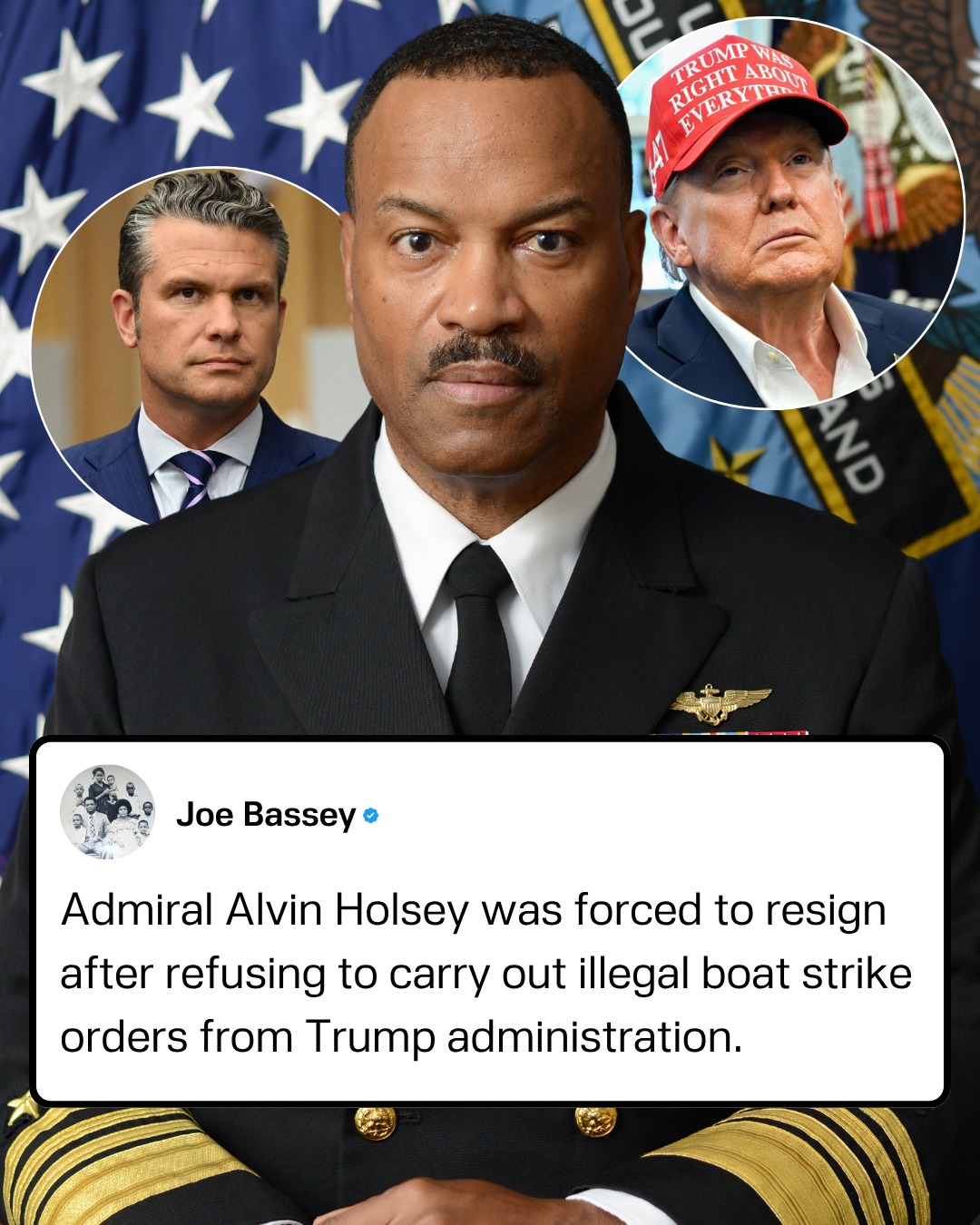
  • Adm. Alvin Holsey — a 37-year Navy veteran and the first Black commander of U.S. Southern Command — was forced out of his role after clashing with the Trump administration over controversial naval strike operations in the Caribbean.

    Holsey, who had spent decades rising through the ranks and leading major commands including Carrier Strike Group One, was overseeing U.S. military activity in Latin America when tensions began to build. At the center of the dispute were lethal strikes on suspected drug-trafficking boats, operations that sparked internal concern among military and legal officials about whether they were operating within U.S. and international law.

    According to multiple reports, Holsey pushed for caution and raised questions about the legal authority and scope of these strikes, particularly as the administration expanded the mission and reclassified it as part of a broader armed conflict.

    His departure came less than a year into what is typically a three-year posting, making it a highly unusual exit for a four-star commander.

    Holsey ultimately retired in December 2025, with officials publicly praising his service, but his exit has been widely linked to growing friction with Pentagon leadership and concerns over the direction of the mission.

    The situation has since become a flashpoint in a larger debate about military accountability, the limits of executive power, and the obligation of officers to question or refuse orders they believe may be unlawful — a principle deeply embedded in U.S. military doctrine.
    Adm. Alvin Holsey — a 37-year Navy veteran and the first Black commander of U.S. Southern Command — was forced out of his role after clashing with the Trump administration over controversial naval strike operations in the Caribbean. Holsey, who had spent decades rising through the ranks and leading major commands including Carrier Strike Group One, was overseeing U.S. military activity in Latin America when tensions began to build. At the center of the dispute were lethal strikes on suspected drug-trafficking boats, operations that sparked internal concern among military and legal officials about whether they were operating within U.S. and international law. According to multiple reports, Holsey pushed for caution and raised questions about the legal authority and scope of these strikes, particularly as the administration expanded the mission and reclassified it as part of a broader armed conflict. His departure came less than a year into what is typically a three-year posting, making it a highly unusual exit for a four-star commander. Holsey ultimately retired in December 2025, with officials publicly praising his service, but his exit has been widely linked to growing friction with Pentagon leadership and concerns over the direction of the mission. The situation has since become a flashpoint in a larger debate about military accountability, the limits of executive power, and the obligation of officers to question or refuse orders they believe may be unlawful — a principle deeply embedded in U.S. military doctrine.
    Like
    Love
    Wow
    3
    0 Yorumlar 0 hisse senetleri 857 Views 0 önizleme
  • Here’s a cleaner rewritten version (same story, smoother for social media):

    A photo that took eight years to capture.

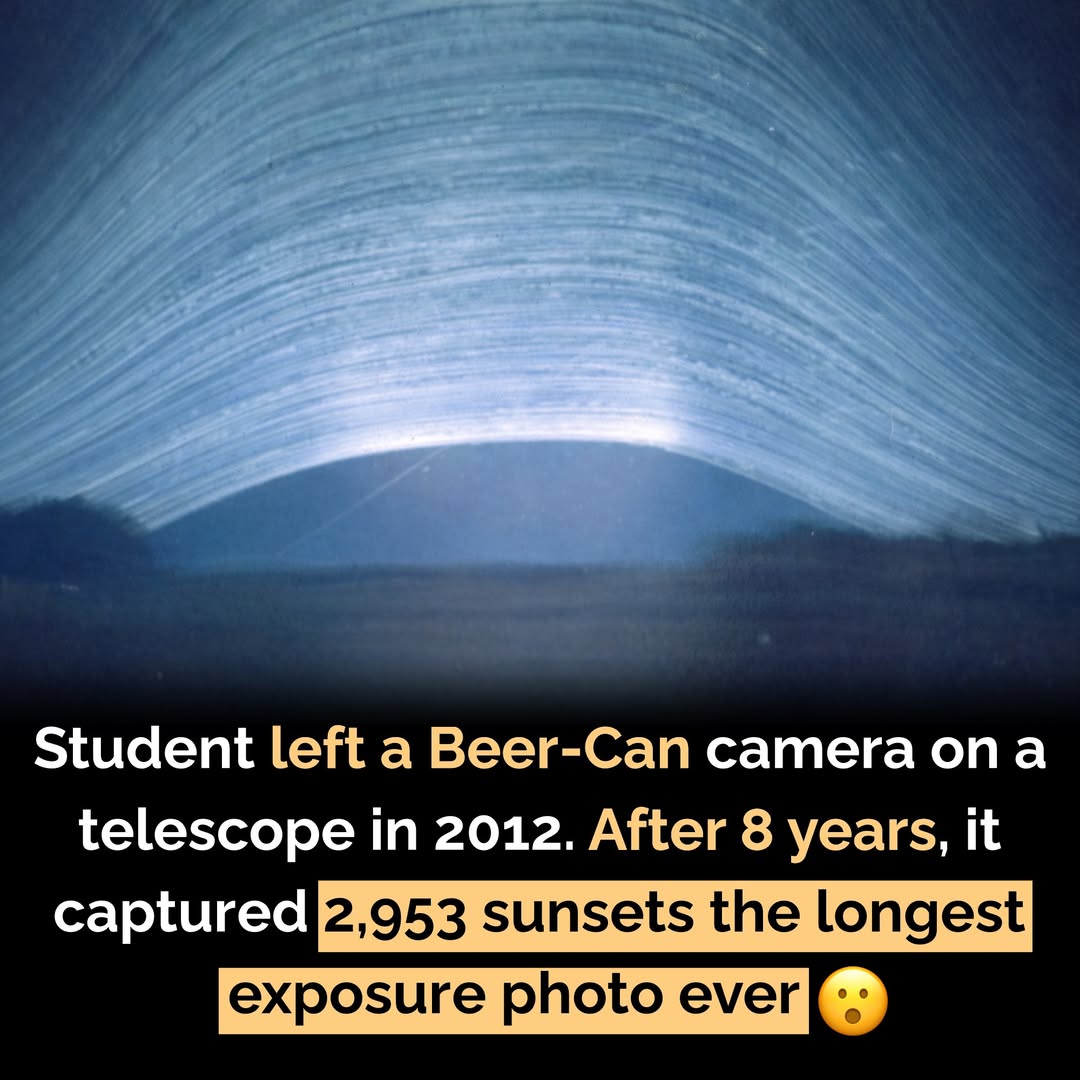
    In 2012, fine art student Regina Valkenborgh was experimenting with pinhole photography at the University of Hertfordshire’s Bayfordbury Observatory in England. She used a simple 500ml cider can, placed photographic paper inside it, poked a tiny hole in the side, and taped it to one of the observatory’s telescopes. Then she forgot about it.

    More than eight years later, in September 2020, the observatory’s technical officer David Campbell was preparing the area for solar panel installation when he noticed the old can. Before throwing it away, he decided to check inside.

    What he found was extraordinary.

    The photographic paper had captured 2,953 arcing trails of the sun rising and setting across the sky over nearly a decade. The image even shows the observatory’s oldest telescope dome and, faintly, a structure that wasn’t built until 2017—right in the middle of the exposure period.

    Valkenborgh had tried similar experiments before, but moisture usually ruined the paper. This one survived by pure chance, quietly recording the sun’s movement while Earth completed eight full orbits.

    The previous record for the longest photographic exposure was four years and eight months, held by German artist Michael Wesely. Valkenborgh’s accidental image nearly doubled it.

    She later said the photo reminds her how small human life is compared to the vast passage of time.

    Just a beer can, a piece of paper, a tiny hole—and eight years of patience she didn’t even know she had.
    Here’s a cleaner rewritten version (same story, smoother for social media): A photo that took eight years to capture. In 2012, fine art student Regina Valkenborgh was experimenting with pinhole photography at the University of Hertfordshire’s Bayfordbury Observatory in England. She used a simple 500ml cider can, placed photographic paper inside it, poked a tiny hole in the side, and taped it to one of the observatory’s telescopes. Then she forgot about it. More than eight years later, in September 2020, the observatory’s technical officer David Campbell was preparing the area for solar panel installation when he noticed the old can. Before throwing it away, he decided to check inside. What he found was extraordinary. The photographic paper had captured 2,953 arcing trails of the sun rising and setting across the sky over nearly a decade. The image even shows the observatory’s oldest telescope dome and, faintly, a structure that wasn’t built until 2017—right in the middle of the exposure period. Valkenborgh had tried similar experiments before, but moisture usually ruined the paper. This one survived by pure chance, quietly recording the sun’s movement while Earth completed eight full orbits. The previous record for the longest photographic exposure was four years and eight months, held by German artist Michael Wesely. Valkenborgh’s accidental image nearly doubled it. She later said the photo reminds her how small human life is compared to the vast passage of time. Just a beer can, a piece of paper, a tiny hole—and eight years of patience she didn’t even know she had.
    Like
    Love
    Wow
    3
    0 Yorumlar 0 hisse senetleri 1K Views 0 önizleme
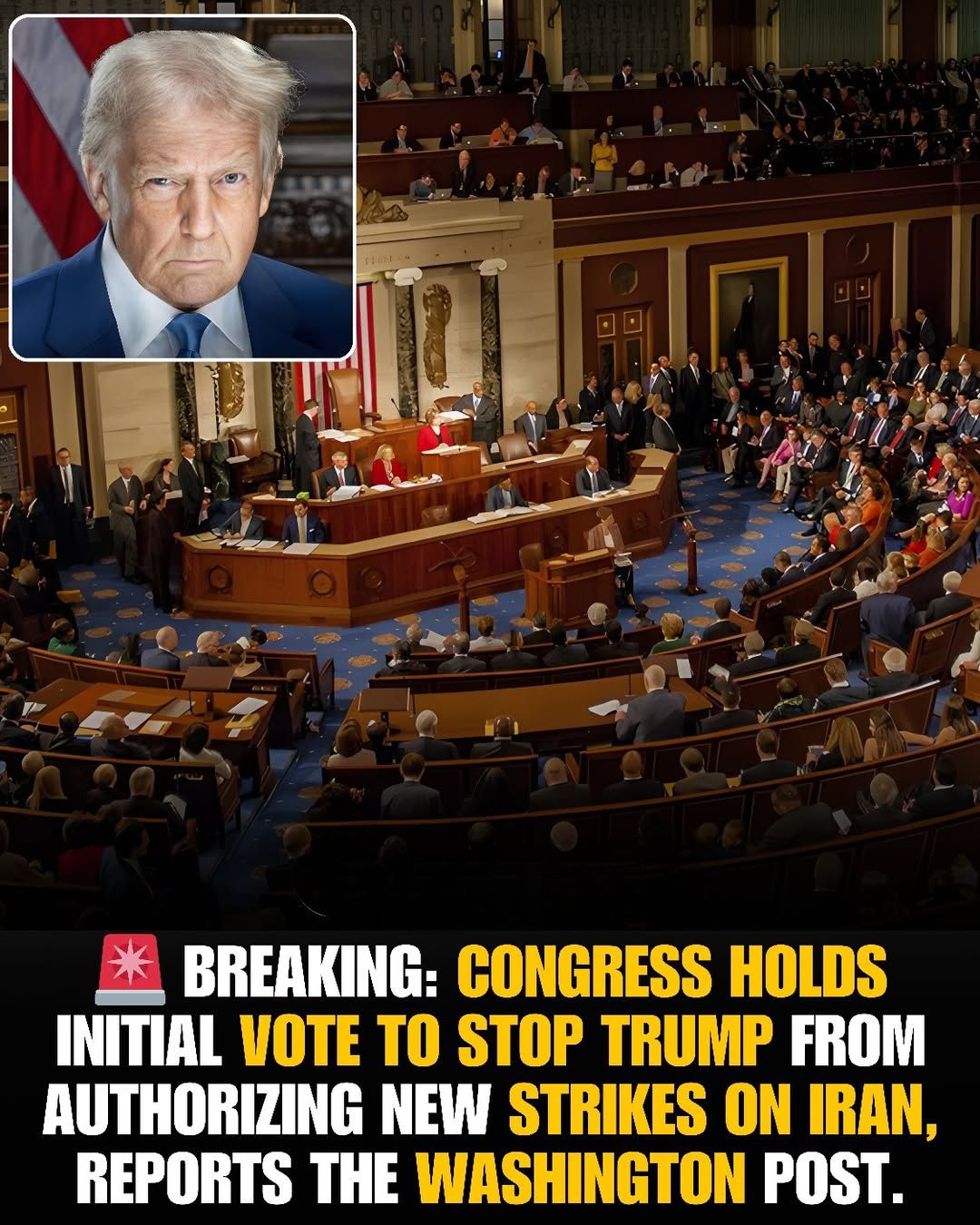
  • The House has cast its first vote to limit the president’s authority over potential military strikes against Iran, according to reporting by The Washington Post. The move signals growing debate in Congress over war powers and the scope of executive authority as tensions continue to rise. Lawmakers say the vote is aimed at reinforcing Congress’s constitutional role in decisions involving military force.
    #Headlines360 #IranConflict #WarPowers #BreakingNews #CapitolHill
    The House has cast its first vote to limit the president’s authority over potential military strikes against Iran, according to reporting by The Washington Post. The move signals growing debate in Congress over war powers and the scope of executive authority as tensions continue to rise. Lawmakers say the vote is aimed at reinforcing Congress’s constitutional role in decisions involving military force. #Headlines360 #IranConflict #WarPowers #BreakingNews #CapitolHill
    Like
    Love
    Wow
    3
    0 Yorumlar 0 hisse senetleri 2K Views 0 önizleme
  • James Webb Telescope Takes a First Peek inside Uranus
    James Webb Telescope Takes a First Peek inside Uranus
    Like
    Love
    Wow
    3
    0 Yorumlar 0 hisse senetleri 133K Views 0 önizleme
Arama Sonuçları