



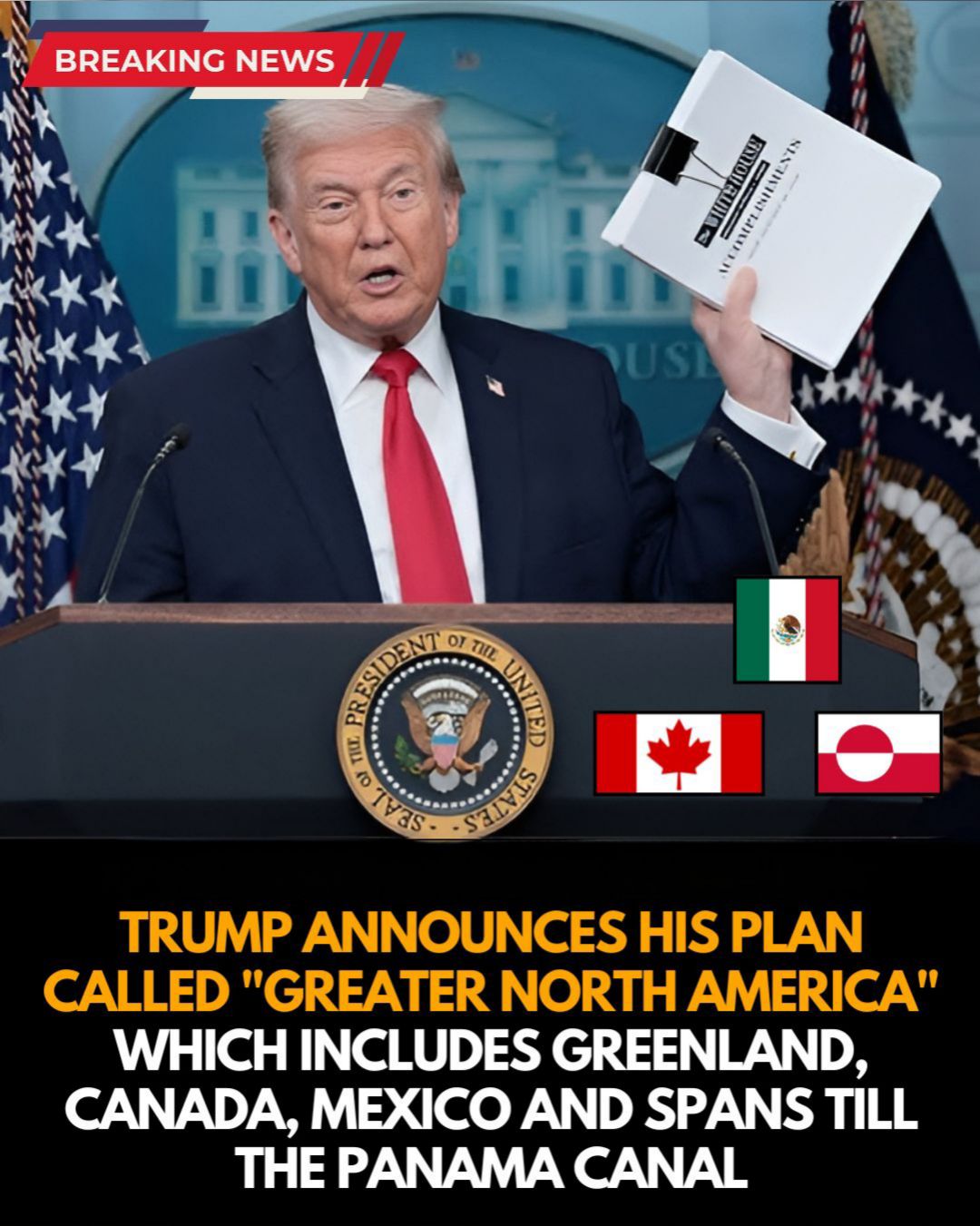
President Trump has unveiled a sweeping geopolitical vision titled "Greater North America," a proposal aimed at consolidating economic and security interests across the continent. This ambitious framework suggests a new level of integration between the United States, Canada, and Mexico, while remarkably reviving interest in the acquisition of Greenland as a strategic northern anchor.
The "Greater North America" initiative is framed as a response to growing global competition, particularly from Eastern powers. By creating a unified "super-bloc" extending from the Arctic Circle down to the Panama Canal, the administration seeks to secure vital supply lines, energy resources, and maritime gateways. The inclusion of the Panama Canal underscores the plan's focus on controlling the most critical logistical chokepoints in the Western Hemisphere.
Economic analysts view this as an evolution of the USMCA, moving beyond mere trade agreements toward a more formal "Continental Security and Economic Zone." This would involve standardized infrastructure projects, unified energy grids, and a collective defense strategy designed to make the continent entirely self-sufficient.
While the proposal has sparked intense debate among neighboring governments regarding national sovereignty, the White House maintains that such a union is necessary for the long-term prosperity of all member states. The strategy emphasizes that a "United Continent" would possess an unparalleled market size and resource base, effectively insulated from external economic shocks.
As the administration begins to socialize this "Greater North America" concept with regional leaders, the international community is closely watching for signs of formal negotiations. Whether this represents a literal expansion of territory or a profound deepening of existing alliances, it marks a historic shift in American foreign policy toward its immediate neighbors.
#Trump #NorthAmerica #Geopolitics #Greenland #BreakingNews
The "Greater North America" initiative is framed as a response to growing global competition, particularly from Eastern powers. By creating a unified "super-bloc" extending from the Arctic Circle down to the Panama Canal, the administration seeks to secure vital supply lines, energy resources, and maritime gateways. The inclusion of the Panama Canal underscores the plan's focus on controlling the most critical logistical chokepoints in the Western Hemisphere.
Economic analysts view this as an evolution of the USMCA, moving beyond mere trade agreements toward a more formal "Continental Security and Economic Zone." This would involve standardized infrastructure projects, unified energy grids, and a collective defense strategy designed to make the continent entirely self-sufficient.
While the proposal has sparked intense debate among neighboring governments regarding national sovereignty, the White House maintains that such a union is necessary for the long-term prosperity of all member states. The strategy emphasizes that a "United Continent" would possess an unparalleled market size and resource base, effectively insulated from external economic shocks.
As the administration begins to socialize this "Greater North America" concept with regional leaders, the international community is closely watching for signs of formal negotiations. Whether this represents a literal expansion of territory or a profound deepening of existing alliances, it marks a historic shift in American foreign policy toward its immediate neighbors.
#Trump #NorthAmerica #Geopolitics #Greenland #BreakingNews
President Trump has unveiled a sweeping geopolitical vision titled "Greater North America," a proposal aimed at consolidating economic and security interests across the continent. This ambitious framework suggests a new level of integration between the United States, Canada, and Mexico, while remarkably reviving interest in the acquisition of Greenland as a strategic northern anchor.
The "Greater North America" initiative is framed as a response to growing global competition, particularly from Eastern powers. By creating a unified "super-bloc" extending from the Arctic Circle down to the Panama Canal, the administration seeks to secure vital supply lines, energy resources, and maritime gateways. The inclusion of the Panama Canal underscores the plan's focus on controlling the most critical logistical chokepoints in the Western Hemisphere.
Economic analysts view this as an evolution of the USMCA, moving beyond mere trade agreements toward a more formal "Continental Security and Economic Zone." This would involve standardized infrastructure projects, unified energy grids, and a collective defense strategy designed to make the continent entirely self-sufficient.
While the proposal has sparked intense debate among neighboring governments regarding national sovereignty, the White House maintains that such a union is necessary for the long-term prosperity of all member states. The strategy emphasizes that a "United Continent" would possess an unparalleled market size and resource base, effectively insulated from external economic shocks.
As the administration begins to socialize this "Greater North America" concept with regional leaders, the international community is closely watching for signs of formal negotiations. Whether this represents a literal expansion of territory or a profound deepening of existing alliances, it marks a historic shift in American foreign policy toward its immediate neighbors.
#Trump #NorthAmerica #Geopolitics #Greenland #BreakingNews





 Language
 English
 VN
VN
 Spanish
 Portuguese
 Deutsch
 Turkish
 Dutch
Dutch
 Italiano
 Russian
 Romaian
 Portuguese (Brazil)
 Greek
Greek
 Arabic