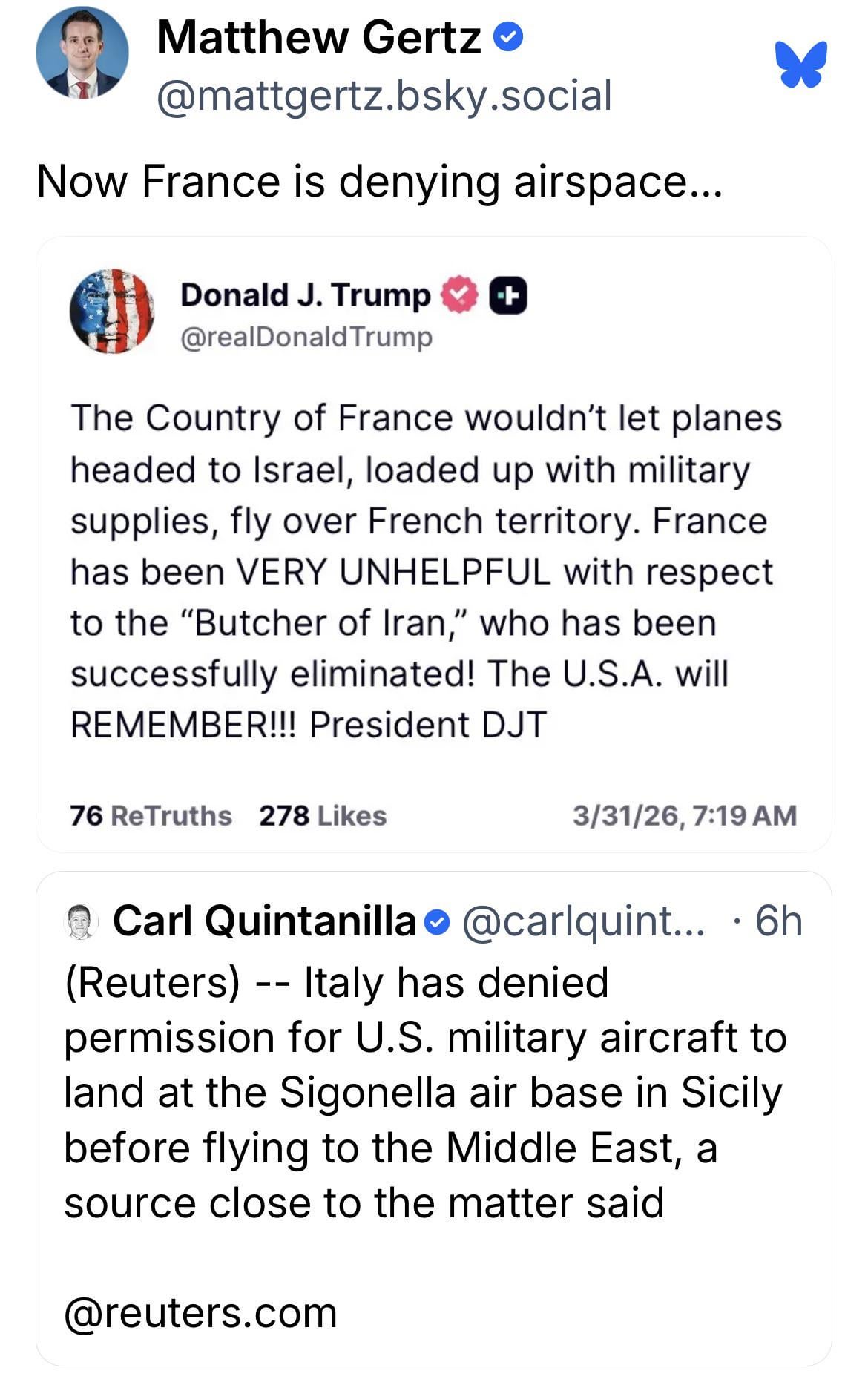

• Multiple key U.S. allies in Europe are now taking unprecedented steps to restrict American military flights amid the ongoing conflict with Iran, widening diplomatic tensions with Washington. After Spain closed its airspace to U.S. military aircraft involved in operations against Iran — forcing bombers and refueling planes to reroute around Spanish territory — France has joined in by refusing to allow planes carrying U.S. weapons destined for the war to pass over its airspace.

    Spain’s defense minister said the move reflects Madrid’s position that the conflict is “unilateral” and “against international law,” and it follows earlier refusals to let U.S. forces use jointly operated bases for war‑related flights. France’s action — reported by multiple diplomatic sources — marks the first time Paris has denied overflight for U.S. weapons shipments since the Iran conflict began, and has drawn sharp criticism from President Trump.

    These developments signal a deepening rift within NATO, as European leaders balance alliance obligations with opposition to what they view as an escalating military campaign that risks broader regional and global instability.
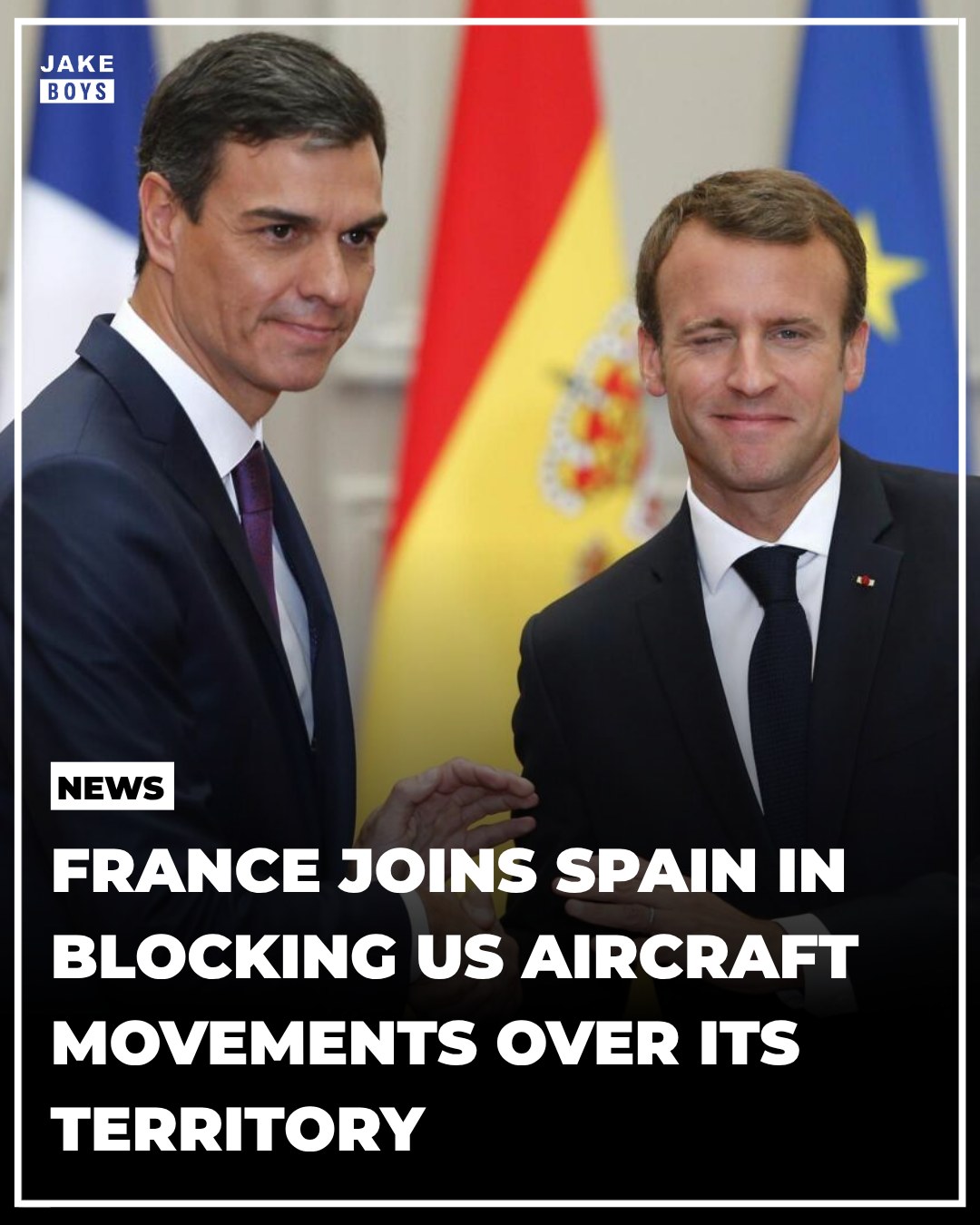
    Multiple key U.S. allies in Europe are now taking unprecedented steps to restrict American military flights amid the ongoing conflict with Iran, widening diplomatic tensions with Washington. After Spain closed its airspace to U.S. military aircraft involved in operations against Iran — forcing bombers and refueling planes to reroute around Spanish territory — France has joined in by refusing to allow planes carrying U.S. weapons destined for the war to pass over its airspace. Spain’s defense minister said the move reflects Madrid’s position that the conflict is “unilateral” and “against international law,” and it follows earlier refusals to let U.S. forces use jointly operated bases for war‑related flights. France’s action — reported by multiple diplomatic sources — marks the first time Paris has denied overflight for U.S. weapons shipments since the Iran conflict began, and has drawn sharp criticism from President Trump. These developments signal a deepening rift within NATO, as European leaders balance alliance obligations with opposition to what they view as an escalating military campaign that risks broader regional and global instability.
    Like
    Love
    Wow
    3
    0 Комментарии 0 Поделились 257 Просмотры 0 предпросмотр
  • It’s a bad idea to insult and threaten your longtime allies
    It’s a bad idea to insult and threaten your longtime allies
    Like
    Love
    Wow
    3
    0 Комментарии 0 Поделились 8Кб Просмотры 0 предпросмотр
  • Believe it or not, GTA V came out on three console generations
    Believe it or not, GTA V came out on three console generations
    Like
    Love
    Wow
    3
    0 Комментарии 0 Поделились 12Кб Просмотры 0 предпросмотр
  • The Chicago Bulls have waived guard Jaden Ivey after a series of controversial social media posts that included anti‑gay comments and a denunciation of the league’s support for Pride Month — calling it “unrighteousness.” The decision, announced Monday, came just hours after the 24‑year‑old former top‑five draft pick livestreamed lengthy remarks criticizing LGBTQ+ inclusion in the NBA and other topics.

    Chicago cited “conduct detrimental to the team” as the reason for the move, and coach Billy Donovan emphasized that the organization expects respect and professionalism from players, especially in a league that actively celebrates diversity and inclusion.

    Ivey had only played four games with the Bulls after being traded earlier this season and was sidelined with a knee injury at the time of his comments — but the backlash was swift, with the team choosing to cut ties rather than navigate the fallout from his remarks.

    This situation is fueling a broader conversation in sports and culture about freedom of speech, workplace standards, and how professional leagues handle public expressions of personal beliefs that target LGBTQ+ communities.
    The Chicago Bulls have waived guard Jaden Ivey after a series of controversial social media posts that included anti‑gay comments and a denunciation of the league’s support for Pride Month — calling it “unrighteousness.” The decision, announced Monday, came just hours after the 24‑year‑old former top‑five draft pick livestreamed lengthy remarks criticizing LGBTQ+ inclusion in the NBA and other topics. Chicago cited “conduct detrimental to the team” as the reason for the move, and coach Billy Donovan emphasized that the organization expects respect and professionalism from players, especially in a league that actively celebrates diversity and inclusion. Ivey had only played four games with the Bulls after being traded earlier this season and was sidelined with a knee injury at the time of his comments — but the backlash was swift, with the team choosing to cut ties rather than navigate the fallout from his remarks. This situation is fueling a broader conversation in sports and culture about freedom of speech, workplace standards, and how professional leagues handle public expressions of personal beliefs that target LGBTQ+ communities.
    Like
    Love
    Wow
    3
    0 Комментарии 0 Поделились 299 Просмотры 0 предпросмотр
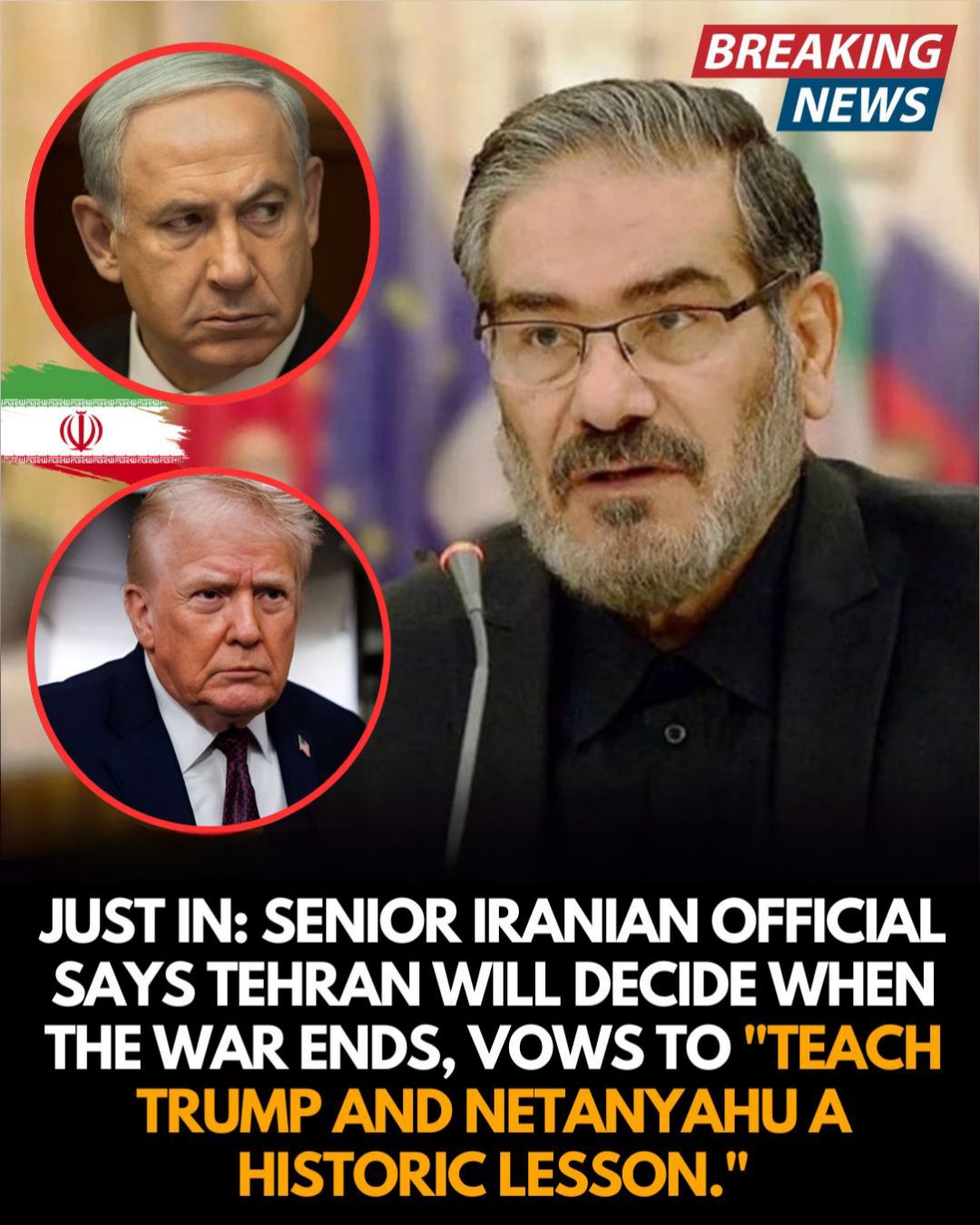
  • Tehran is doubling down on its defiant stance as a high-ranking official asserts that Iran alone holds the key to ending regional hostilities, a bold claim that challenges Western and Israeli influence. This rhetoric comes at a moment of peak tension, signaling that Iran is not looking to de-escalate without significant concessions that meet its strategic goals.

    The "historic lesson" mentioned refers to Iran's expanding arsenal of precision missiles and drone technology, which it views as a deterrent against any direct military intervention by Washington or Jerusalem. By specifically naming both President Trump and Prime Minister Netanyahu, Tehran is emphasizing its belief that current U.S.-Israeli policy is the primary driver of regional instability.

    Geopolitically, this statement is likely intended to project strength to Iran's domestic audience and its network of regional proxies, ensuring they remain committed to the long-term struggle. It underscores a refusal to accept any peace framework that is dictated solely by Western powers or that compromises Iran's territorial sovereignty.

    This hardline positioning makes the prospect of immediate diplomatic breakthroughs much more difficult, as it sets a confrontational tone for any future negotiations through third-party mediators. Military analysts suggest that this language often precedes a shift in tactical operations, potentially indicating an increase in activity along contested borders.

    Ultimately, the official's vow reflects the deep-seated ideological rift between these three nations, where "lessons" are often taught through economic pressure or military posturing. As the rhetoric intensifies, the international community remains on high alert for how this defiance will translate into action on the ground in the coming weeks.

    #Iran #Trump #Netanyahu #Geopolitics #BreakingNews
    Tehran is doubling down on its defiant stance as a high-ranking official asserts that Iran alone holds the key to ending regional hostilities, a bold claim that challenges Western and Israeli influence. This rhetoric comes at a moment of peak tension, signaling that Iran is not looking to de-escalate without significant concessions that meet its strategic goals. The "historic lesson" mentioned refers to Iran's expanding arsenal of precision missiles and drone technology, which it views as a deterrent against any direct military intervention by Washington or Jerusalem. By specifically naming both President Trump and Prime Minister Netanyahu, Tehran is emphasizing its belief that current U.S.-Israeli policy is the primary driver of regional instability. Geopolitically, this statement is likely intended to project strength to Iran's domestic audience and its network of regional proxies, ensuring they remain committed to the long-term struggle. It underscores a refusal to accept any peace framework that is dictated solely by Western powers or that compromises Iran's territorial sovereignty. This hardline positioning makes the prospect of immediate diplomatic breakthroughs much more difficult, as it sets a confrontational tone for any future negotiations through third-party mediators. Military analysts suggest that this language often precedes a shift in tactical operations, potentially indicating an increase in activity along contested borders. Ultimately, the official's vow reflects the deep-seated ideological rift between these three nations, where "lessons" are often taught through economic pressure or military posturing. As the rhetoric intensifies, the international community remains on high alert for how this defiance will translate into action on the ground in the coming weeks. #Iran #Trump #Netanyahu #Geopolitics #BreakingNews
    Like
    Love
    Wow
    3
    0 Комментарии 0 Поделились 356 Просмотры 0 предпросмотр
Расширенные страницы