

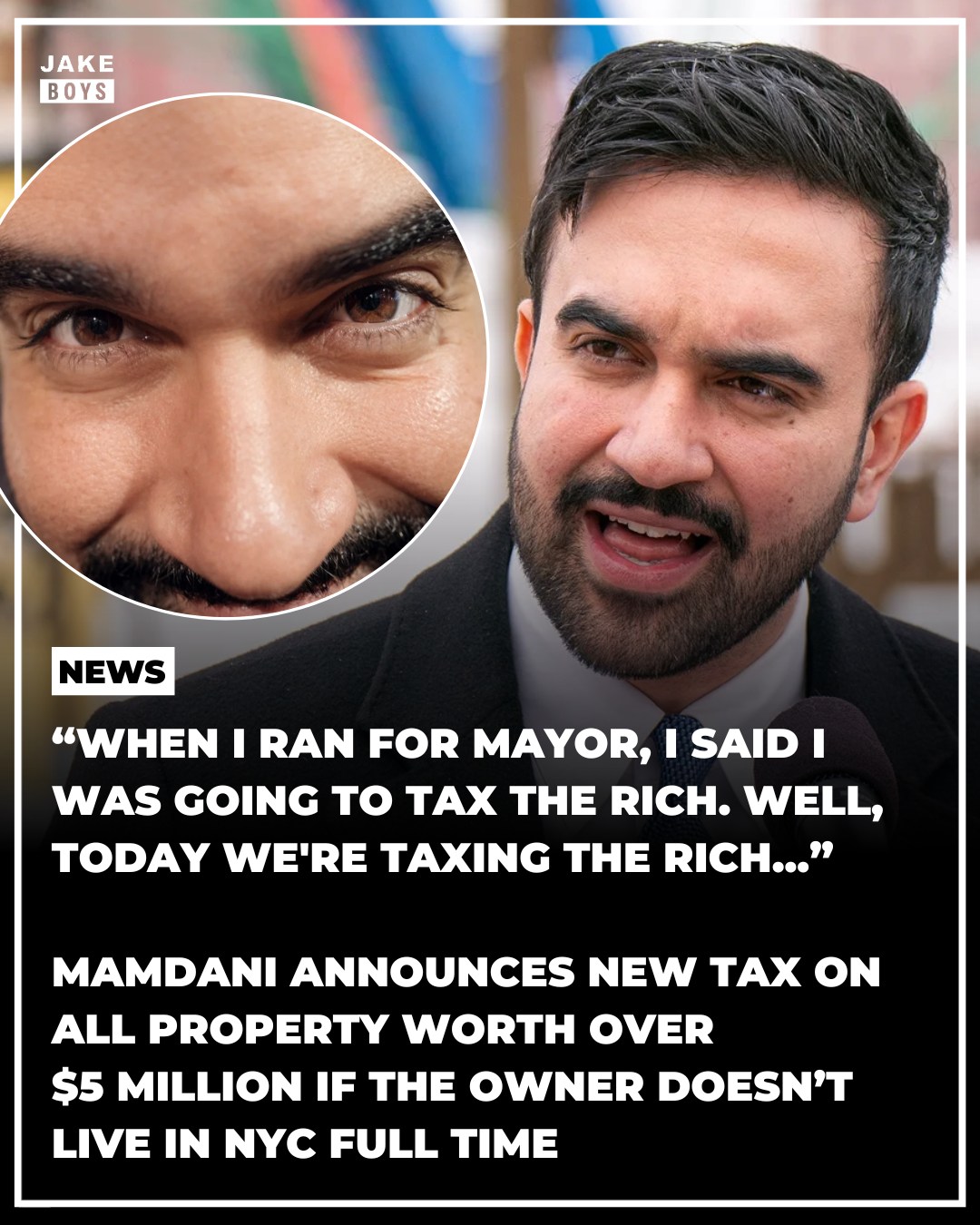
New York mayor Zohran Mamdani is moving forward on a key campaign pledge, announcing a new tax targeting ultra-wealthy property owners in New York City.
“When I ran for mayor, I said I was going to tax the rich. Well, today we’re taxing the rich…” Mamdani said, unveiling a policy that would apply to residential properties valued above $5 million if the owner does not live in the city full time, effectively targeting luxury second homes and investment properties.
According to Mamdani, the measure is expected to generate hundreds of millions of dollars annually, with revenue earmarked for housing initiatives, public services, and efforts to address affordability in one of the most expensive cities in the world.
Supporters argue it closes a loophole that allows wealthy non-residents to park money in NYC real estate, while critics warn it could push investment elsewhere and impact the high-end housing market.
“When I ran for mayor, I said I was going to tax the rich. Well, today we’re taxing the rich…” Mamdani said, unveiling a policy that would apply to residential properties valued above $5 million if the owner does not live in the city full time, effectively targeting luxury second homes and investment properties.
According to Mamdani, the measure is expected to generate hundreds of millions of dollars annually, with revenue earmarked for housing initiatives, public services, and efforts to address affordability in one of the most expensive cities in the world.
Supporters argue it closes a loophole that allows wealthy non-residents to park money in NYC real estate, while critics warn it could push investment elsewhere and impact the high-end housing market.
New York mayor Zohran Mamdani is moving forward on a key campaign pledge, announcing a new tax targeting ultra-wealthy property owners in New York City.
“When I ran for mayor, I said I was going to tax the rich. Well, today we’re taxing the rich…” Mamdani said, unveiling a policy that would apply to residential properties valued above $5 million if the owner does not live in the city full time, effectively targeting luxury second homes and investment properties.
According to Mamdani, the measure is expected to generate hundreds of millions of dollars annually, with revenue earmarked for housing initiatives, public services, and efforts to address affordability in one of the most expensive cities in the world.
Supporters argue it closes a loophole that allows wealthy non-residents to park money in NYC real estate, while critics warn it could push investment elsewhere and impact the high-end housing market.






 English
 French
 Spanish
 Portuguese
 Deutsch
 Turkish
 Dutch
Dutch
 Italiano
 Russian
 Romaian
 Portuguese (Brazil)
 Greek
Greek