



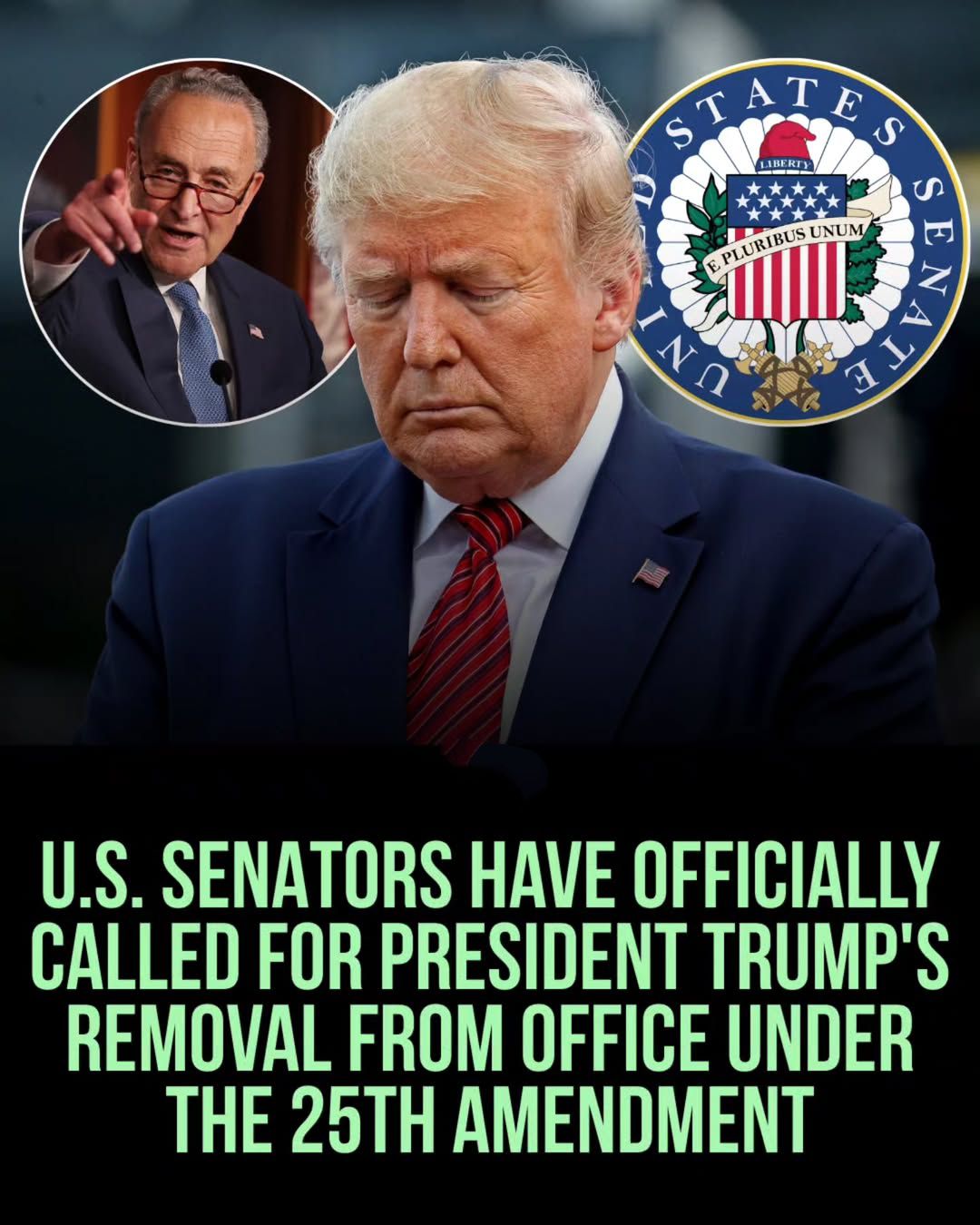
Political tensions are rising after a senator publicly suggested exploring action under the Twenty-fifth Amendment to the United States Constitution in relation to Donald Trump.
The 25th Amendment provides a constitutional process for the temporary or permanent transfer of presidential powers if a president is deemed unable to carry out the duties of the office. However, invoking it sets an exceptionally high threshold. It requires the vice president and a majority of the Cabinet to formally declare incapacity. If the president contests that determination, Congress must then approve the action with a two-thirds vote in both the House and Senate. Historically, the amendment has primarily been used for short-term medical situations rather than political disagreements.
Legal scholars and constitutional experts note that without clear and documented incapacity, any attempt to apply the amendment would face steep constitutional, political, and institutional hurdles. Because it directly affects executive authority and presidential succession, even raising the possibility often sparks intense bipartisan reactions.
As election cycles approach and rhetoric intensifies, constitutional mechanisms like the 25th Amendment frequently reenter public debate — sometimes as political messaging, sometimes as serious institutional discussion. Ultimately, any real movement would depend not on public calls alone, but on formal action within the executive branch and Congress.
#USPolitics #25thAmendment #Constitution #ExecutivePower #PoliticalDebate
The 25th Amendment provides a constitutional process for the temporary or permanent transfer of presidential powers if a president is deemed unable to carry out the duties of the office. However, invoking it sets an exceptionally high threshold. It requires the vice president and a majority of the Cabinet to formally declare incapacity. If the president contests that determination, Congress must then approve the action with a two-thirds vote in both the House and Senate. Historically, the amendment has primarily been used for short-term medical situations rather than political disagreements.
Legal scholars and constitutional experts note that without clear and documented incapacity, any attempt to apply the amendment would face steep constitutional, political, and institutional hurdles. Because it directly affects executive authority and presidential succession, even raising the possibility often sparks intense bipartisan reactions.
As election cycles approach and rhetoric intensifies, constitutional mechanisms like the 25th Amendment frequently reenter public debate — sometimes as political messaging, sometimes as serious institutional discussion. Ultimately, any real movement would depend not on public calls alone, but on formal action within the executive branch and Congress.
#USPolitics #25thAmendment #Constitution #ExecutivePower #PoliticalDebate
Political tensions are rising after a senator publicly suggested exploring action under the Twenty-fifth Amendment to the United States Constitution in relation to Donald Trump.
The 25th Amendment provides a constitutional process for the temporary or permanent transfer of presidential powers if a president is deemed unable to carry out the duties of the office. However, invoking it sets an exceptionally high threshold. It requires the vice president and a majority of the Cabinet to formally declare incapacity. If the president contests that determination, Congress must then approve the action with a two-thirds vote in both the House and Senate. Historically, the amendment has primarily been used for short-term medical situations rather than political disagreements.
Legal scholars and constitutional experts note that without clear and documented incapacity, any attempt to apply the amendment would face steep constitutional, political, and institutional hurdles. Because it directly affects executive authority and presidential succession, even raising the possibility often sparks intense bipartisan reactions.
As election cycles approach and rhetoric intensifies, constitutional mechanisms like the 25th Amendment frequently reenter public debate — sometimes as political messaging, sometimes as serious institutional discussion. Ultimately, any real movement would depend not on public calls alone, but on formal action within the executive branch and Congress.
#USPolitics #25thAmendment #Constitution #ExecutivePower #PoliticalDebate



 Language
 VN
VN
 French
 Spanish
 Portuguese
 Deutsch
 Turkish
 Dutch
Dutch
 Italiano
 Russian
 Romaian
 Portuguese (Brazil)
 Greek
Greek
 Arabic