
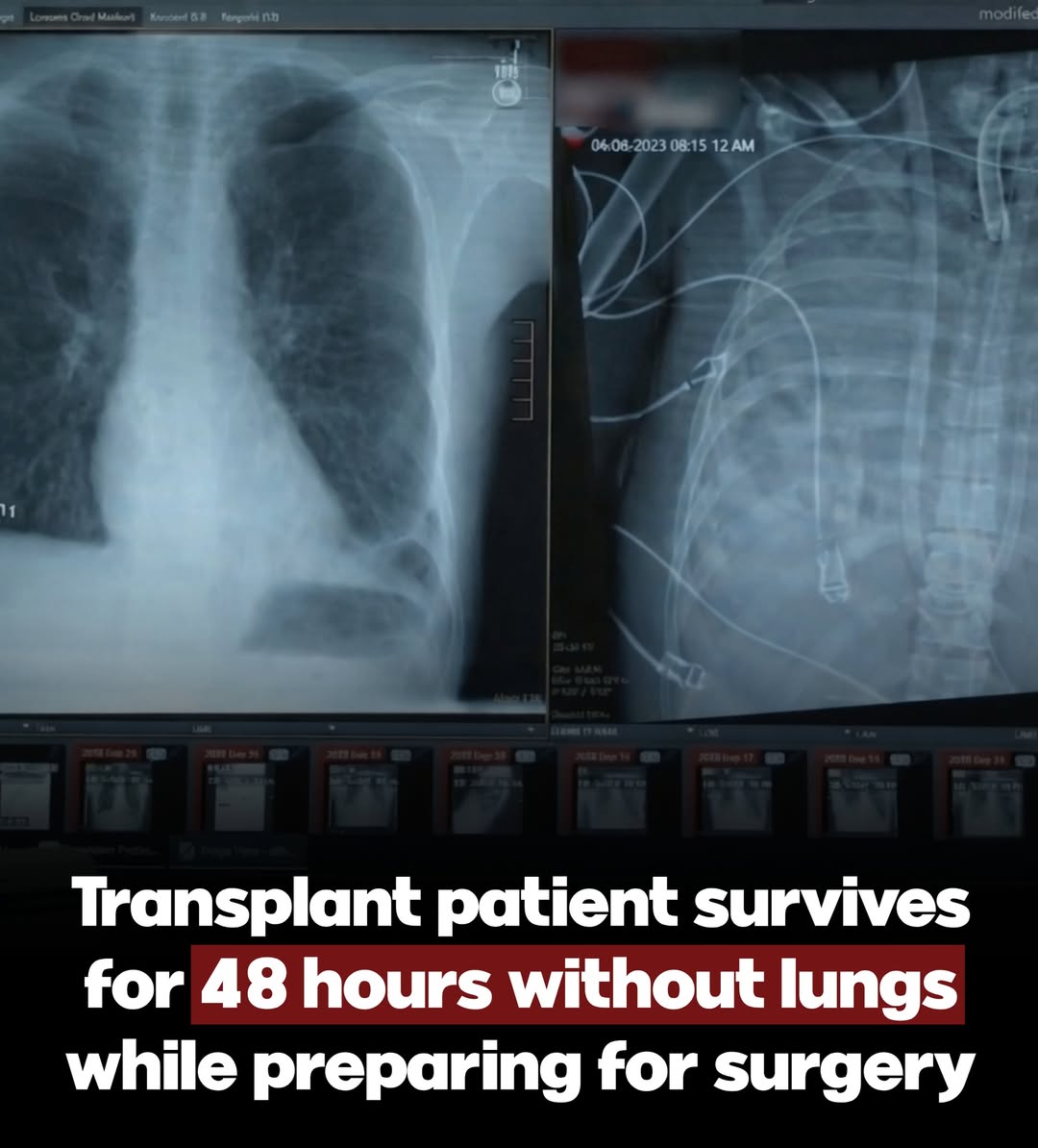
• A 33-year-old patient was facing certain death after a severe infection destroyed his lungs, triggering acute respiratory distress syndrome.

    Doctors made a bold decision.

    They removed both lungs completely.

    To keep him alive, Ankit Bharat and his team at Northwestern University Feinberg School of Medicine used a groundbreaking artificial system to oxygenate his blood and support his organs.

    For 48 hours, he lived without lungs.

    No breathing. No natural oxygen exchange.

    Just technology… and time.

    Then came the breakthrough.

    A donor was found, and he underwent a successful double lung transplant.

    Today, more than two years later, he’s back to living a normal life — with fully functioning lungs.

    This wasn’t just a surgery.

    It was proof that modern medicine can now bridge the gap between organ failure and survival.

    48 hours. No lungs. One life saved.
    A 33-year-old patient was facing certain death after a severe infection destroyed his lungs, triggering acute respiratory distress syndrome. Doctors made a bold decision. They removed both lungs completely. To keep him alive, Ankit Bharat and his team at Northwestern University Feinberg School of Medicine used a groundbreaking artificial system to oxygenate his blood and support his organs. For 48 hours, he lived without lungs. No breathing. No natural oxygen exchange. Just technology… and time. Then came the breakthrough. A donor was found, and he underwent a successful double lung transplant. Today, more than two years later, he’s back to living a normal life — with fully functioning lungs. This wasn’t just a surgery. It was proof that modern medicine can now bridge the gap between organ failure and survival. 48 hours. No lungs. One life saved.
    Like
    Love
    Wow
    3
    0 Comments 0 Shares 479 Views 0 Reviews
  • 102 cookies were a success!
    102 cookies were a success!
    Like
    Love
    Wow
    3
    0 Comments 0 Shares 144K Views 0 Reviews
  • Sometimes the most powerful response to rejection isn’t giving up.
    It’s building your own table.

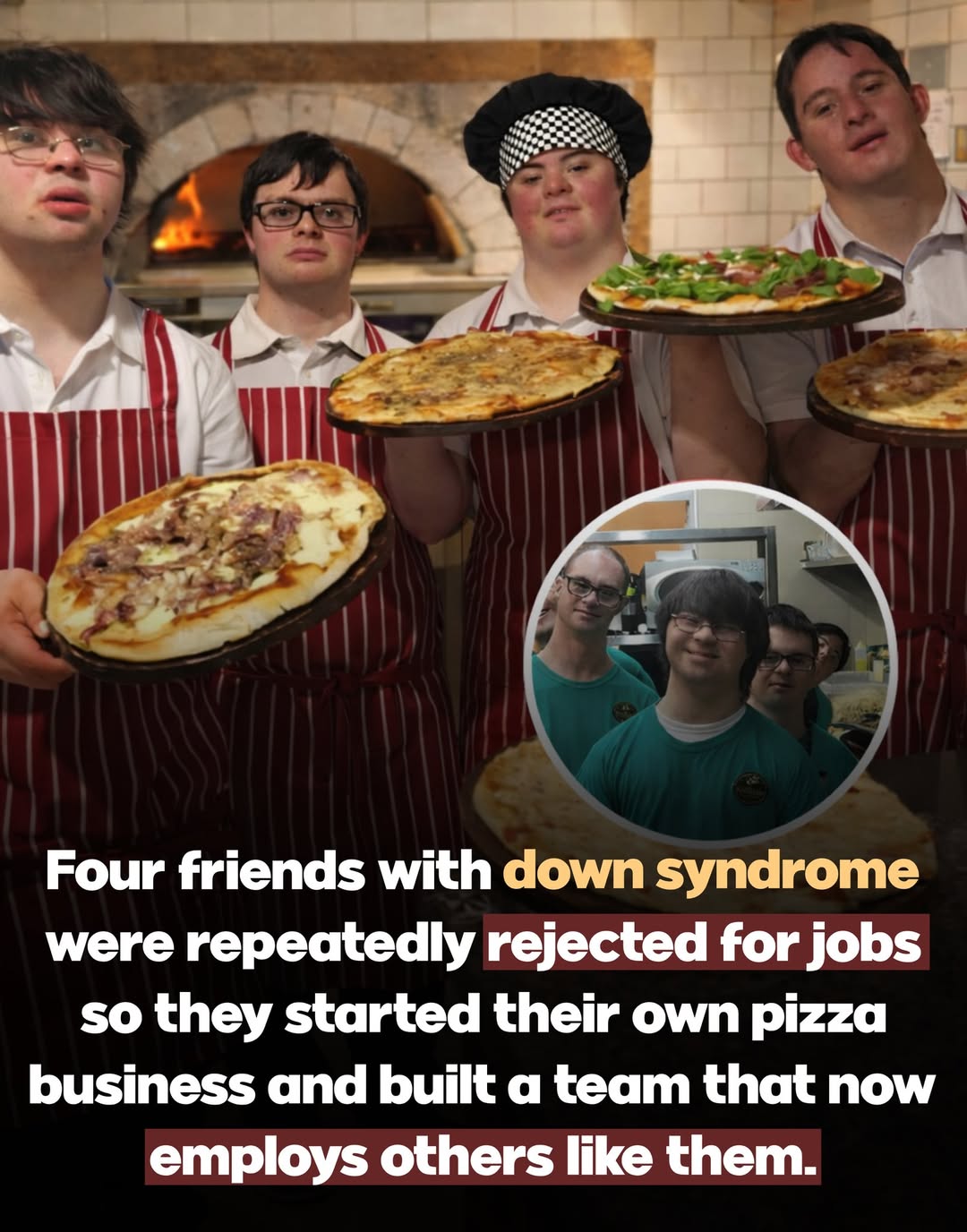
    In Buenos Aires, four friends — Mateo Kawaguchi, Leandro Lopez Padros, Franco Noseda, and Mauricio Roldan — kept hearing the same answer when they applied for jobs:

    “No.”

    All four men live with Down syndrome, and despite their determination, employers repeatedly turned them away.

    So instead of waiting for an opportunity… they created one.

    In 2016, they launched Los Perejiles, a pizza and Italian catering business serving parties and events around the city.

    With support from family and their community, the small idea quickly grew. Within months they were booking dozens of catering events — and eventually expanded to employ more than 20 people, many of whom also have Down syndrome.

    But for the founders, the mission was never just about pizza.

    They wanted to prove something the world often underestimates:

    That people with Down syndrome can work professionally, run businesses, and build something meaningful when given the chance.

    Today, Los Perejiles has become a symbol of inclusive entrepreneurship in Argentina — and a reminder that sometimes success begins the moment you stop waiting for permission.
    Sometimes the most powerful response to rejection isn’t giving up. It’s building your own table. In Buenos Aires, four friends — Mateo Kawaguchi, Leandro Lopez Padros, Franco Noseda, and Mauricio Roldan — kept hearing the same answer when they applied for jobs: “No.” All four men live with Down syndrome, and despite their determination, employers repeatedly turned them away. So instead of waiting for an opportunity… they created one. In 2016, they launched Los Perejiles, a pizza and Italian catering business serving parties and events around the city. With support from family and their community, the small idea quickly grew. Within months they were booking dozens of catering events — and eventually expanded to employ more than 20 people, many of whom also have Down syndrome. But for the founders, the mission was never just about pizza. They wanted to prove something the world often underestimates: That people with Down syndrome can work professionally, run businesses, and build something meaningful when given the chance. Today, Los Perejiles has become a symbol of inclusive entrepreneurship in Argentina — and a reminder that sometimes success begins the moment you stop waiting for permission.
    Like
    Love
    Wow
    3
    0 Comments 0 Shares 1K Views 0 Reviews
  • The paradox of vaccine success: We forget the horror because we no longer see it
    The paradox of vaccine success: We forget the horror because we no longer see it
    Like
    Love
    Wow
    3
    0 Comments 0 Shares 133K Views 0 Reviews
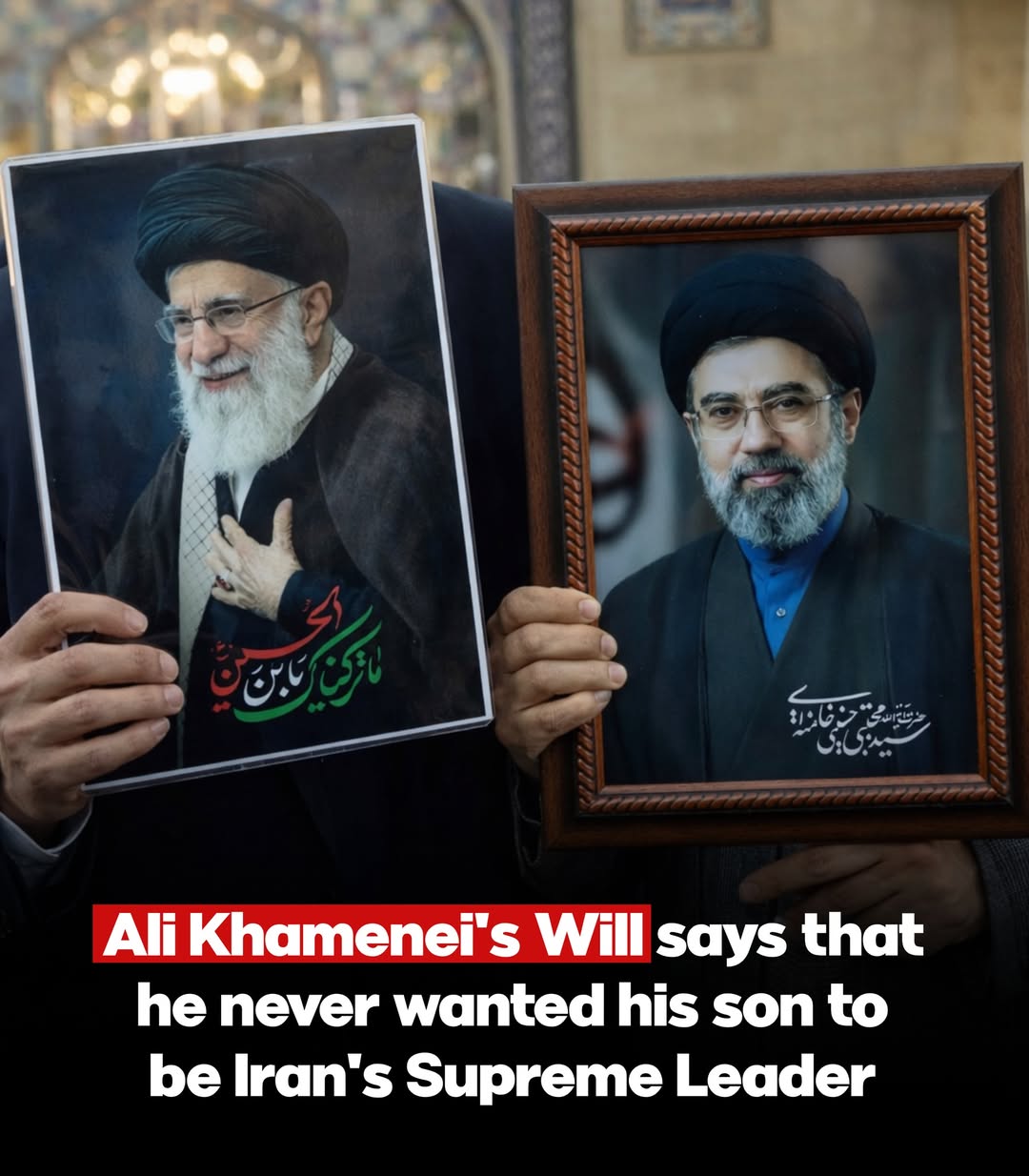
  • According to a report by the New York Post, Ali Khamenei allegedly stated in his will that he did not want his son Mojtaba Khamenei to succeed him as Iran’s Supreme Leader.

    The report claims Khamenei had doubts about Mojtaba’s leadership ability and experience.

    Khosro Isfahani, from the U.S.-based opposition group National Union for Democracy in Iran, said the late leader had explicitly asked in his will that Mojtaba not be named as successor.

    Isfahani also claimed that Iran’s Islamic Revolutionary Guard Corps pressured the Assembly of Experts and pushed Mojtaba into the leadership role.

    These claims remain unverified, and Iranian authorities have not publicly confirmed the details of the reported will.

    The situation continues to draw attention as leadership questions in Iran remain a major geopolitical focus.
    According to a report by the New York Post, Ali Khamenei allegedly stated in his will that he did not want his son Mojtaba Khamenei to succeed him as Iran’s Supreme Leader. The report claims Khamenei had doubts about Mojtaba’s leadership ability and experience. Khosro Isfahani, from the U.S.-based opposition group National Union for Democracy in Iran, said the late leader had explicitly asked in his will that Mojtaba not be named as successor. Isfahani also claimed that Iran’s Islamic Revolutionary Guard Corps pressured the Assembly of Experts and pushed Mojtaba into the leadership role. These claims remain unverified, and Iranian authorities have not publicly confirmed the details of the reported will. The situation continues to draw attention as leadership questions in Iran remain a major geopolitical focus.
    Like
    Love
    Wow
    3
    0 Comments 0 Shares 522 Views 0 Reviews
More Results