
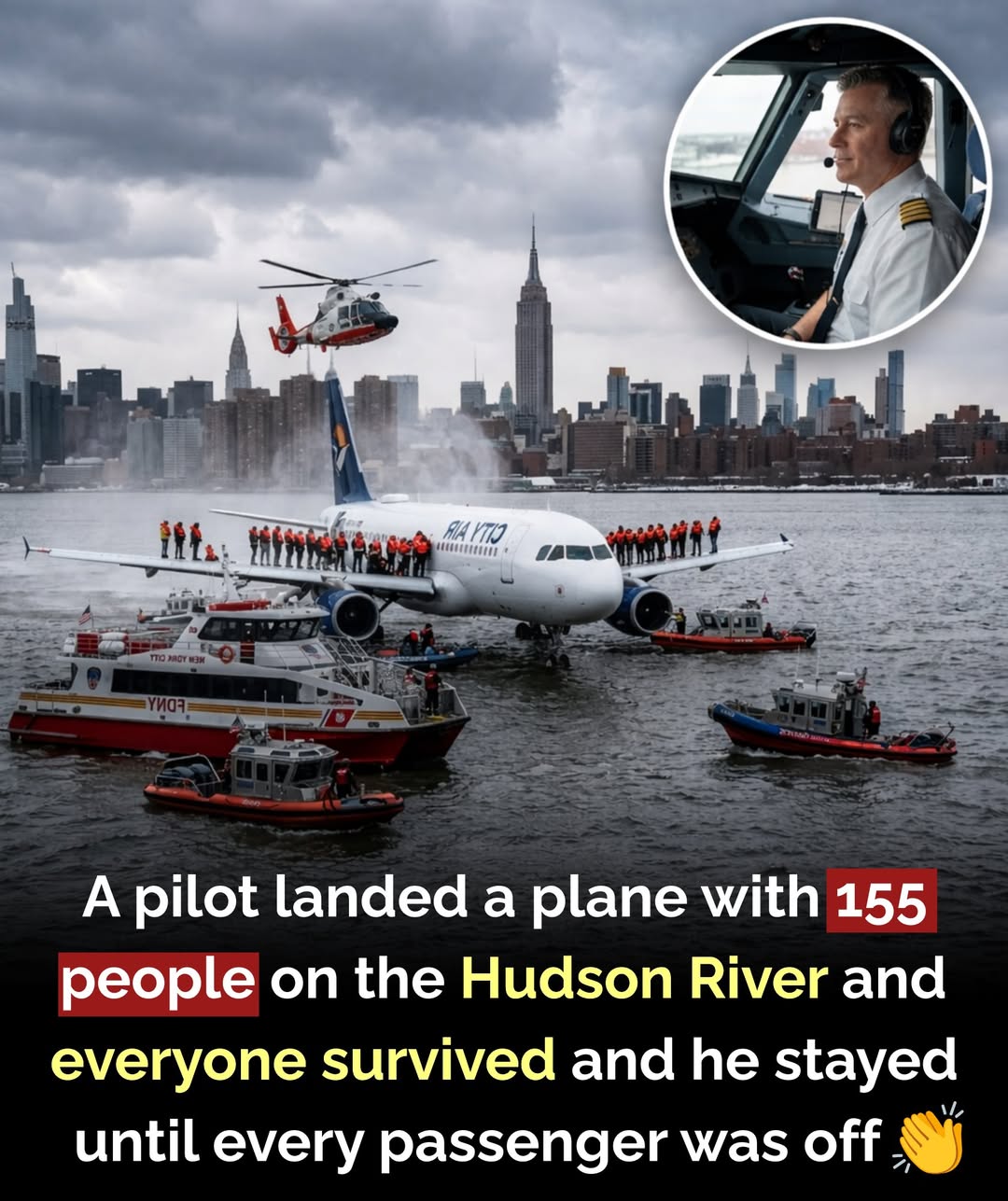
• On January 15, 2009, US Airways Flight 1549 took off from LaGuardia Airport in New York at 3:25 PM . Just minutes into the flight, the aircraft struck a flock of geese, causing both engines to fail. The plane suddenly lost power and fell silent mid-air.

    Captain Chesley “Sully” Sullenberger had only 208 seconds to act . He could attempt to return to LaGuardia or reach another nearby airport—but neither option was certain. Instead, he made a bold and unprecedented decision: land the plane on the Hudson River .

    He calmly instructed passengers to brace for impact. At 3:31 PM, the aircraft touched down on the water at high speed but remained intact and afloat. Within minutes, emergency responders arrived—ferries, Coast Guard, and helicopters .

    All 155 people onboard were safely evacuated onto wings and rafts in freezing conditions . Remarkably, there were no fatalities and no serious injuries.

    After ensuring everyone else had exited, Sullenberger walked through the cabin twice before leaving himself. When later called a hero, he humbly said he was just doing his job, crediting the passengers and rescuers instead .
    On January 15, 2009, US Airways Flight 1549 took off from LaGuardia Airport in New York at 3:25 PM . Just minutes into the flight, the aircraft struck a flock of geese, causing both engines to fail. The plane suddenly lost power and fell silent mid-air. Captain Chesley “Sully” Sullenberger had only 208 seconds to act . He could attempt to return to LaGuardia or reach another nearby airport—but neither option was certain. Instead, he made a bold and unprecedented decision: land the plane on the Hudson River . He calmly instructed passengers to brace for impact. At 3:31 PM, the aircraft touched down on the water at high speed but remained intact and afloat. Within minutes, emergency responders arrived—ferries, Coast Guard, and helicopters . All 155 people onboard were safely evacuated onto wings and rafts in freezing conditions . Remarkably, there were no fatalities and no serious injuries. After ensuring everyone else had exited, Sullenberger walked through the cabin twice before leaving himself. When later called a hero, he humbly said he was just doing his job, crediting the passengers and rescuers instead .

    Love
    Like
    Wow
    Haha
    12
    0 Commentaires 0 Parts 48 Vue 0 Aperçu
  • Fitness for maximum temptation
    Fitness for maximum temptation
    Love
    Yay
    Like
    Wow
    10
    0 Commentaires 0 Parts 7KB Vue 0 Aperçu
  • Vous n’avez pas l’autorisation d’afficher ce contenu
  • Vous n’avez pas l’autorisation d’afficher ce contenu
  • Vous n’avez pas l’autorisation d’afficher ce contenu
  • Vous n’avez pas l’autorisation d’afficher ce contenu
  • Curses CAPTCHA
    Curses CAPTCHA
    Love
    Wow
    Haha
    Like
    11
    0 Commentaires 0 Parts 5KB Vue 0 Aperçu
  • Vous n’avez pas l’autorisation d’afficher ce contenu
  • Interrupting Random Strangers
    Interrupting Random Strangers
    Like
    Love
    Haha
    Wow
    11
    0 Commentaires 0 Parts 78 Vue 0 Aperçu
  • Please accept my chinless boy and his judging stares.
    Please accept my chinless boy and his judging stares.
    Haha
    Love
    Wow
    Like
    8
    0 Commentaires 0 Parts 5KB Vue 0 Aperçu
  • In a rare and unexpected incident, a metro train in Spijkenisse, Netherlands, crashed on November 2, 2020 . The train failed to stop at the end of the track and went past the buffer, coming dangerously close to falling into a canal below .

    What happened next was unbelievable. At the end of the track stood a large whale tail sculpture called “Walvisstaarten,” designed by architect Maarten Struijs in 2002 . Made from reinforced polyester, it was created purely as an art installation—not as a safety barrier.

    Yet, in this moment, the sculpture became one. The train landed on the whale tail structure, which held its weight and prevented it from plunging down. What could have been a major disaster was suddenly avoided by a piece of art .

    At the time of the incident, only the train driver was onboard. Thankfully, the driver was unharmed and safely exited the train .

    The story quickly went viral across the world, with many calling it “Saved by the Whale’s Tail.” It became a powerful example of how something never meant for protection ended up saving a life.

    Today, this incident is remembered as a shocking near-miss—where art unexpectedly turned into a lifesaver.
    In a rare and unexpected incident, a metro train in Spijkenisse, Netherlands, crashed on November 2, 2020 . The train failed to stop at the end of the track and went past the buffer, coming dangerously close to falling into a canal below . What happened next was unbelievable. At the end of the track stood a large whale tail sculpture called “Walvisstaarten,” designed by architect Maarten Struijs in 2002 . Made from reinforced polyester, it was created purely as an art installation—not as a safety barrier. Yet, in this moment, the sculpture became one. The train landed on the whale tail structure, which held its weight and prevented it from plunging down. What could have been a major disaster was suddenly avoided by a piece of art . At the time of the incident, only the train driver was onboard. Thankfully, the driver was unharmed and safely exited the train . The story quickly went viral across the world, with many calling it “Saved by the Whale’s Tail.” It became a powerful example of how something never meant for protection ended up saving a life. Today, this incident is remembered as a shocking near-miss—where art unexpectedly turned into a lifesaver.
    Like
    Love
    Wow
    Haha
    9
    0 Commentaires 0 Parts 86 Vue 0 Aperçu
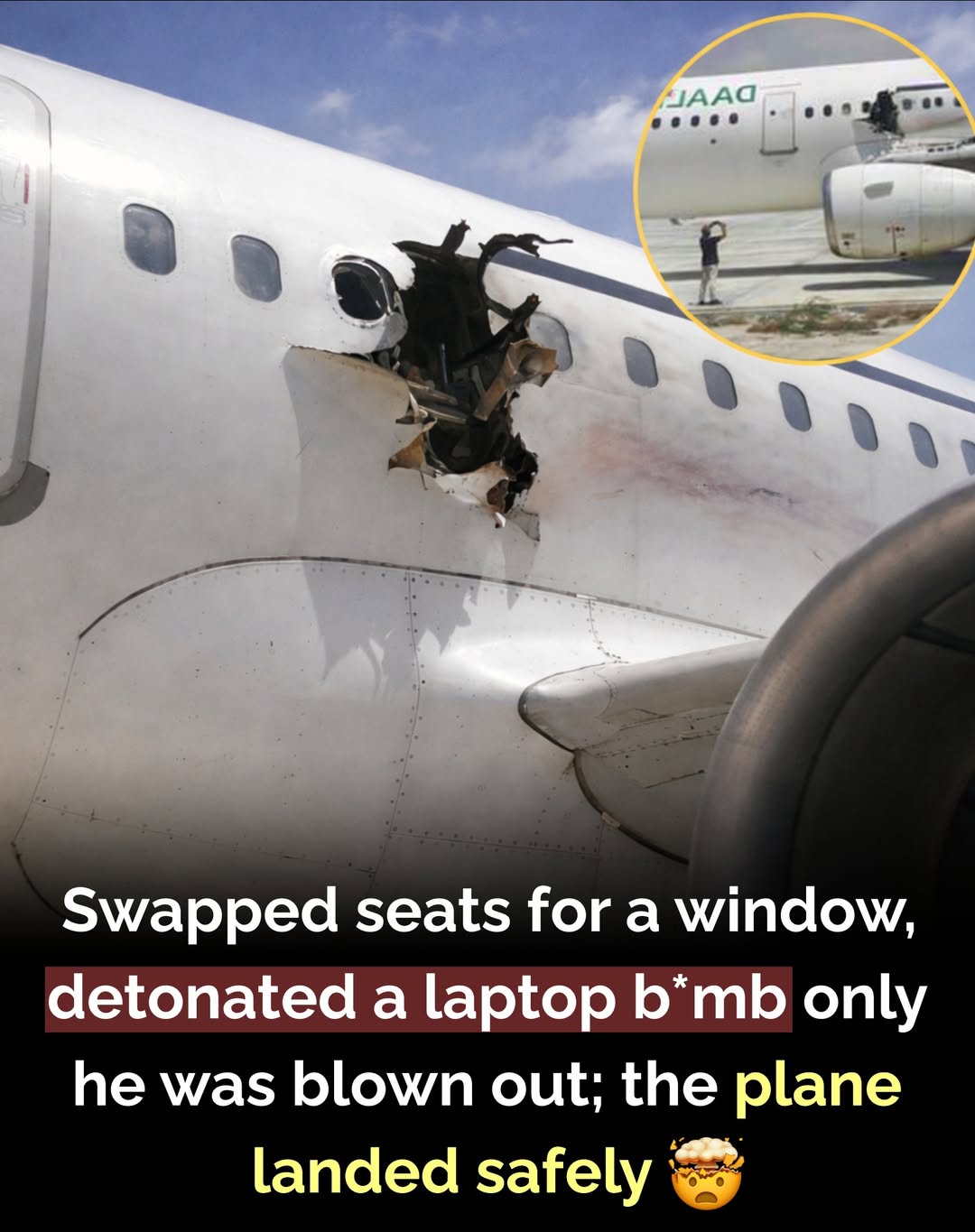
  • In 2016, a man boarded Daallo Airlines Flight 159 carrying a dangerous device hidden inside a laptop . His plan depended on precise timing —it was meant to activate at high altitude, where pressure differences could cause maximum damage.

    Before takeoff, he convinced another passenger to swap seats so he could sit by the window , believing it would make his plan more effective. But an unexpected delay changed everything.

    Because the flight departed late, the timing no longer matched the aircraft’s altitude. Instead of going off at cruising height, it activated much earlier—while the plane was still climbing at a lower altitude .

    The blast created a hole in the aircraft’s side, but the impact was far less severe than intended due to lower pressure. Instead of widespread damage, the force remained limited.

    Tragically, the man who carried out the act was pulled out through the opening he created . Despite the situation, the pilots stayed calm and safely landed the aircraft .

    Out of everyone on board, he was the only person who lost his life.
    In 2016, a man boarded Daallo Airlines Flight 159 carrying a dangerous device hidden inside a laptop . His plan depended on precise timing —it was meant to activate at high altitude, where pressure differences could cause maximum damage. Before takeoff, he convinced another passenger to swap seats so he could sit by the window , believing it would make his plan more effective. But an unexpected delay changed everything. Because the flight departed late, the timing no longer matched the aircraft’s altitude. Instead of going off at cruising height, it activated much earlier—while the plane was still climbing at a lower altitude . The blast created a hole in the aircraft’s side, but the impact was far less severe than intended due to lower pressure. Instead of widespread damage, the force remained limited. Tragically, the man who carried out the act was pulled out through the opening he created . Despite the situation, the pilots stayed calm and safely landed the aircraft . Out of everyone on board, he was the only person who lost his life.
    Like
    Love
    Haha
    Wow
    8
    0 Commentaires 0 Parts 69 Vue 0 Aperçu
Plus de résultats