


Honda Is Giving Up on the All-Electric Dream
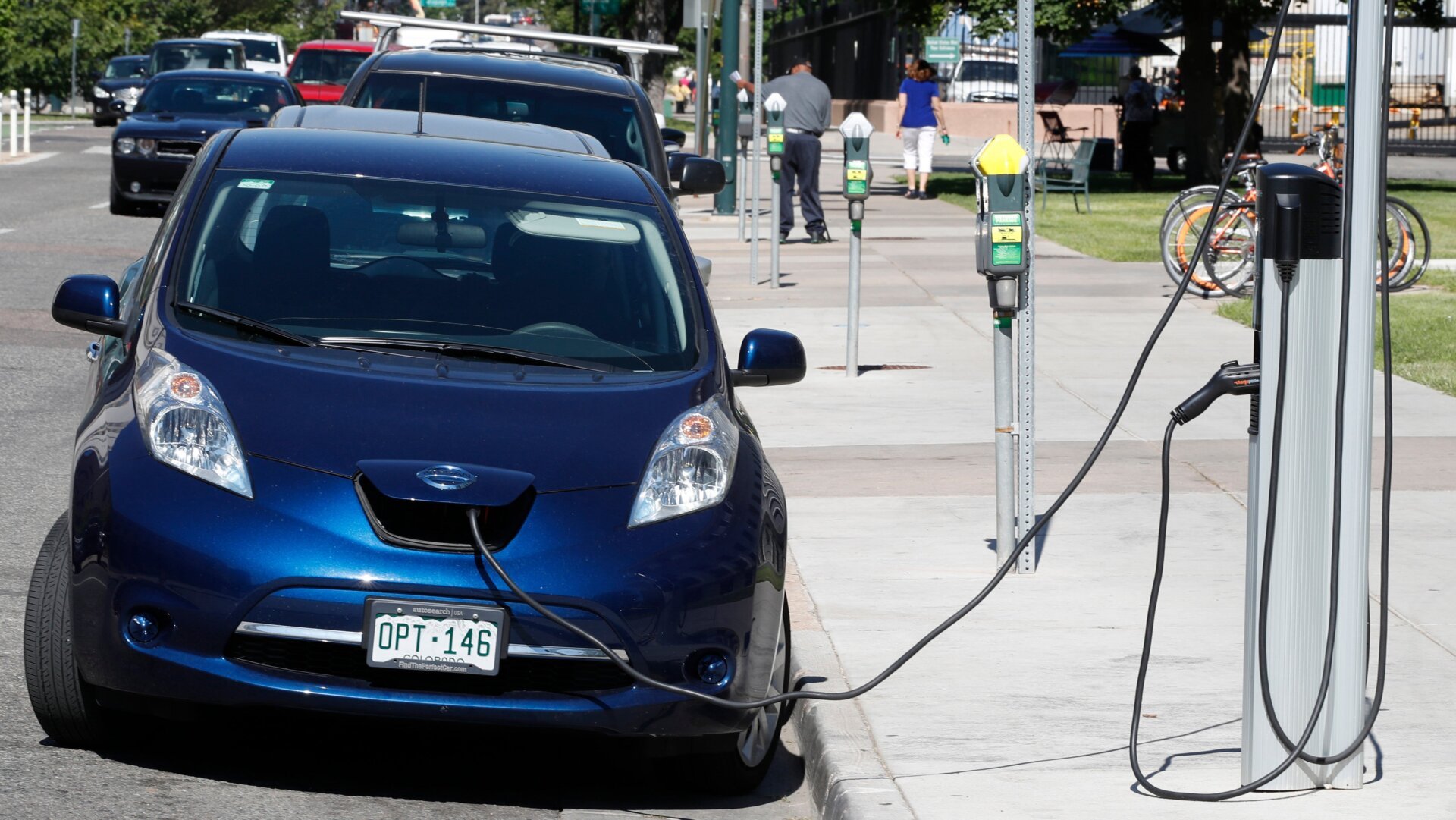
Honda just dealt a huge blow to the all-electric dream. In a stunning reversal, the Japanese auto giant has announced it is rethinking its electrification strategy, signaling that battery-electric vehicles (BEVs) are no longer the holy grail of its future.
The move is a major setback for the EV industry, which is already reeling from the September 30 expiration of federal tax credits that made electric cars competitive with their gas-powered counterparts. For years, the auto industry, mesmerized by the success of Tesla, has been in an arms race to go all-electric. Now, one of its biggest players is pumping the brakes. Hard.
“BEVs are not the goal, better electric vehicles are a pathway to achieving carbon neutral, not necessarily the only pathway,” Honda Australia president and CEO, Jay Joseph, recently told the publication Drive. “BEVs will continue to improve, we’re working on solid-state batteries, but our goal is carbon neutral, not battery electric vehicles.”
His statement confirms a dramatic strategic shift that Honda executives laid out during an August 6 press conference. They are no longer betting the farm on an all-electric future.
A Nightmarish Reality
The reason for the pivot is simple: Honda’s EV strategy has been a financial nightmare. During the press conference, Honda Managing Executive Officer Eiji Fujimura admitted that they are “not very optimistic” about the EV market, citing the impact of the expiring Inflation Reduction Act (IRA) tax credits and a general “cooling down of the market.” The company is “struggling with the sales of EV this year series,” Fujimura said, and needs to “expedite actions” to meet consumer expectations.
The financial results tell the real story. Honda’s latest quarter was hammered by a one-time charge of 113.4 billion yen ($780 million) directly linked to its EV business. This included losses on EVs sold in the United States and a massive write-off of assets for EV models the company is now scrapping from its future lineup. The company now expects its full-year EV-related expenses to hit a staggering 650 billion yen ($4.47 billion).
Honda currently sells two EV models in the U.S., the Honda Prologue and the Acura ZDX. To sell them, the company has been forced to offer massive incentives. According to industry data from Motor Intelligence cited by Automotive News, Honda spent an average of more than $12,000 in promotions on each Prologue and an eye-watering $21,000 on each ZDX it sold last quarter.
Even with these huge discounts, the company’s market share has declined.
The Pivot to Hybrids and Hydrogen
These struggles are compounded by the expiration of the $7,500 federal tax credit for new EVs, a subsidy that helped convince many consumers to make the costly switch. Without it, the high sticker price of EVs and the lack of reliable charging infrastructure in many parts of the country become even bigger obstacles.
Faced with this brutal reality, Honda is turning to a strategy that, until recently, was mocked by EV purists. To achieve its carbon neutrality goals, the company will now lean heavily on hybrid vehicles, joining Toyota, whose cautious, hybrid-first approach was seen as outdated just a few years ago. Now, it looks prescient. A recent report from GlobalData indicated that between 2025 and 2035, virtually every popular Honda model in America would be offered as a hybrid.
“I think at some point we’re going to be all-hybrid, all-electrified, but this is just another step in that particular transition,” Joseph confirmed to Drive.
Honda is also exploring hydrogen-powered Fuel Cell Electric Vehicles (FCEVs), which convert hydrogen into electricity onboard. While FCEVs face their own infrastructure and cost challenges, they produce only water vapor as emissions.
Our Take
Just a few years ago, BEVs were the industry’s obsession and the clear symbol of the race to decarbonize. Now, Honda’s retreat marks a new reality: the path to carbon neutrality is looking more complicated, and the BEV-only strategy is no longer sacred.
Honda’s move doesn’t just affect its own lineup. It sends a warning signal across the auto industry that the EV growth story is hitting limits. If one of the world’s largest automakers is hedging its bets, other companies might follow, slowing the shift away from fossil fuels at a critical moment for climate goals.


 Language
 English
 VN
VN
 French
 Spanish
 Portuguese
 Deutsch
 Dutch
Dutch
 Italiano
 Russian
 Romaian
 Portuguese (Brazil)
 Greek
Greek
 Arabic