


The U.S. May Change Strategy in Its Battle With China for AI Dominance
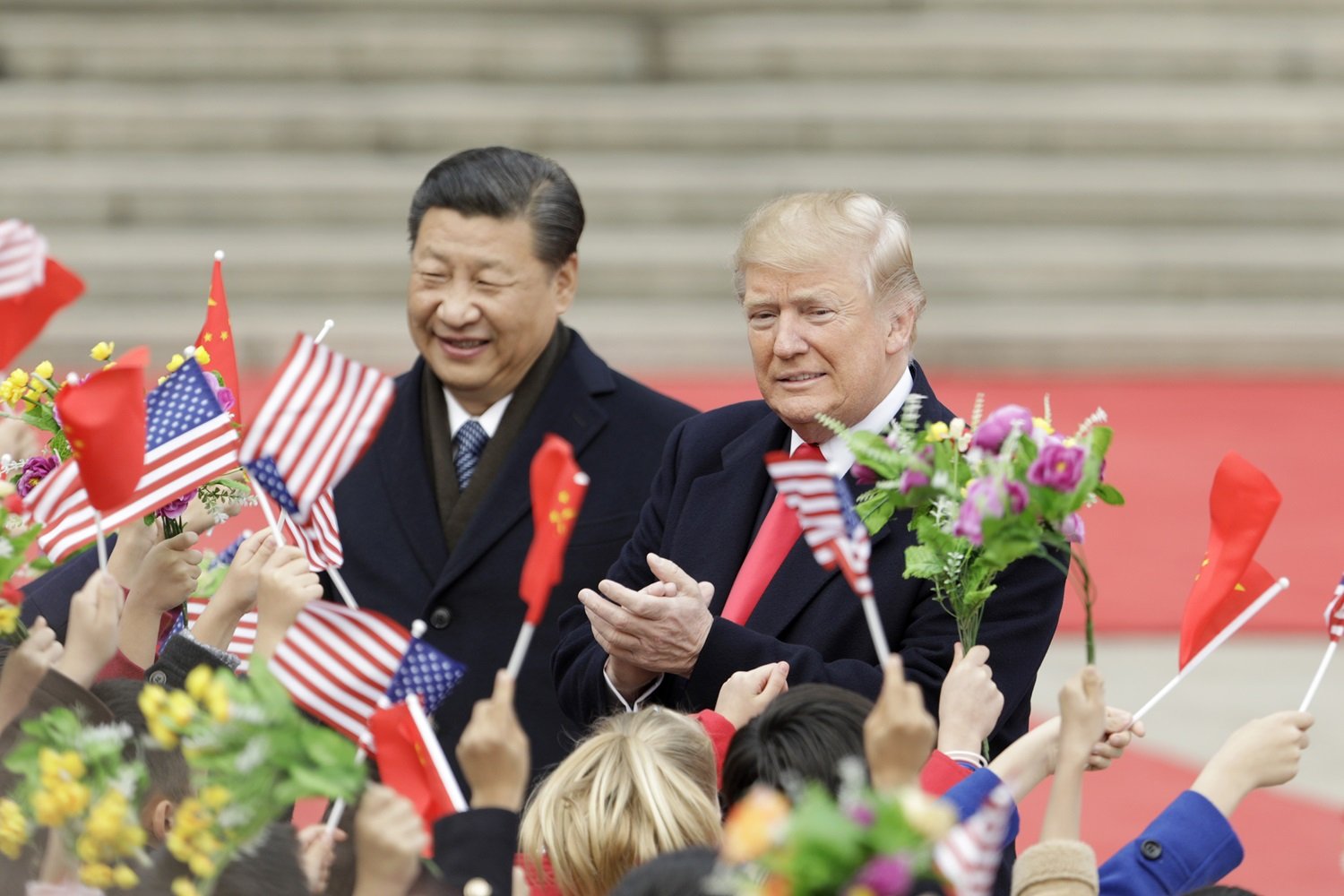
This weekend, Shanghai was host to China’s annual “World Artificial Intelligence Conference,” a government-organized AI showcase packed with tech giants from both China and the U.S. including Huawei, Tesla, and Amazon.
The theme was “Global Solidarity in the AI Era,” and Chinese Premier Li Qiang opened the conference with a sweeping proposal: the establishment of a global AI cooperation organization, potentially headquartered in Shanghai. The Chinese foreign ministry has since released an action plan calling for international collaboration in AI through open-source communities and joint research.
While China’s AI messaging is starting to sound like “AI for all,” the United States is still split on its own battle tactic. The Trump administration has welded an isolationist trade approach globally, and particularly with China when it comes to AI and technology. But with recent policy changes, that hardline has seemed to soften as Washington is split between two camps on how to approach the battle for AI dominance with China: that is, whether to continue with a heavily protectionist approach or join China’s calls for solidarity.
A tense year in AI geopolitics
Beijing’s invitation to rally behind a Chinese vision of AI cooperation landed in the middle of a tense year in AI geopolitics.
The United States has been the global leader in AI development, but domestic confidence in America’s competitive edge was shaken earlier this year. Following the meteoric success of Chinese AI company Deepseek’s low-cost yet high-performance model, the Trump administration took a hard line on advanced technology exports to China.
The administration attempted to slam the brakes on Beijing’s hardware access by further tightening existing export controls on advanced Nvidia chips to China, in an effort to curb the country’s rapid innovation, starve its AI ecosystem, and preserve U.S. dominance.
But the ban hasn’t gone exactly to plan.
A Financial Times report from last week revealed that roughly $1 billion worth of Nvidia’s banned advanced B200 chips had been smuggled into China in the three months since the export controls went into effect.
The administration changed course on the ban and quietly retreated from its hard-line stance earlier this month, when Nvidia CEO Jensen Huang announced that the company would resume selling its older H20 chips legally to China.
Notably, the FT found that Chinese black market demand for the smuggled B200s faced a noticeable drop after the relaxation of the H20 ban, suggesting that Chinese companies would rather take legal access to older chips over the highest technology illegally (companies who buy smuggled chips can’t take advantage of important Nvidia customer support when installing them in their own data centers). The implications of this finding could throw the logic of blanket export bans into question.
Dominance through solidarity
China isn’t proposing global solidarity in AI development out of the goodness of its heart. Open cooperation and joint research not only helps the development of AI technology in China, but it is also a soft power play by China. By centering this cooperation in Shanghai and under Chinese terms and values, Beijing is trying to cement its position in the global AI trade, potentially achieving global AI dominance over the U.S.
But Trump has made it clear that he wants America to win that battle.
“America is the country that started the AI race, and as President of the United States, I’m here to declare that America is going to win it,” Trump said while announcing the measures last week.
The U.S. government’s fears are twofold when it comes to AI and China: losing economic edge and jeopardizing national security.
Currently, the Chinese AI industry is dependent on American chipmakers like Nvidia. Skeptics of blanket export bans say that if China has no access to advanced American AI technology, it will have no choice but to develop its own. And if China builds a true rival to Nvidia and gains self-sufficiency in AI hardware, the U.S. may lose its grip on the global AI market. At the center of these concerns is Chinese tech giant Huawei, which is already developing AI computing systems that rival Nvidia’s most advanced products.
Advocates of this approach in Washington hope to have more control over the scale of innovation in China by flooding the market with American products. And especially by controlling what chips go into the country, the U.S. could help curb the proliferation of more advanced chip technology in China. The Trump administration’s recent move to ease restrictions on older Nvidia chip models could be following this logic, and might be bearing its fruits already, at least according to the Financial Times’ findings.
The case for techno-nationalism
It’s two steps forward and one step back.
Although the U.S. has seemed to relax the rules on chip exports into China, the Trump administration is eager to continue the government’s hard line based on the President’s AI Action Plan that was unveiled last week.
“Advanced AI compute is essential to the AI era, enabling both economic dynamism and novel military capabilities,” the administration wrote in the action plan. “Denying our foreign adversaries access to this resource, then, is a matter of both geostrategic competition and national security. Therefore, we should pursue creative approaches to export control enforcement.”
Proponents of stricter export controls have sizable national security concerns when it comes to China’s AI development.
Chinese AI companies proved that you don’t need the latest hardware to make AI that outperforms benchmarks, with the release of both Deepseek and Alibaba-backed Kimi K2 this year. Even though newer chips are kept out of China while the older ones dominate chip sales, that does not necessarily mean that state-of-the-art AI models that rival or even exceed American ones can’t be developed. Going even beyond just market competition, these models could pose security risks when deployed for use in the Chinese military.
While China and the U.S. are not in direct military conflict, tensions are high between the two superpowers, particularly over China’s territorial claims in Taiwan and the South China Sea and American involvement in the region.
Trade talks and the next phase
All of this comes as U.S. and China trade envoys are meeting in Stockholm this week to discuss what exactly the long game is here. The countries are expected to decide on a tariff agreement or opt for yet another extension of the previously granted truce that is set to expire on August 12.
The outcome of these talks, no matter what, is likely to have implications going even beyond what’s stated on paper. It could very well set the stage for the next phase of the war over global AI dominance.


 Language
 English
 VN
VN
 French
 Spanish
 Portuguese
 Deutsch
 Turkish
 Dutch
Dutch
 Italiano
 Russian
 Romaian
 Greek
Greek
 Arabic