


Dental Floss Could Deliver Next-Gen Vaccines, No Needles Required
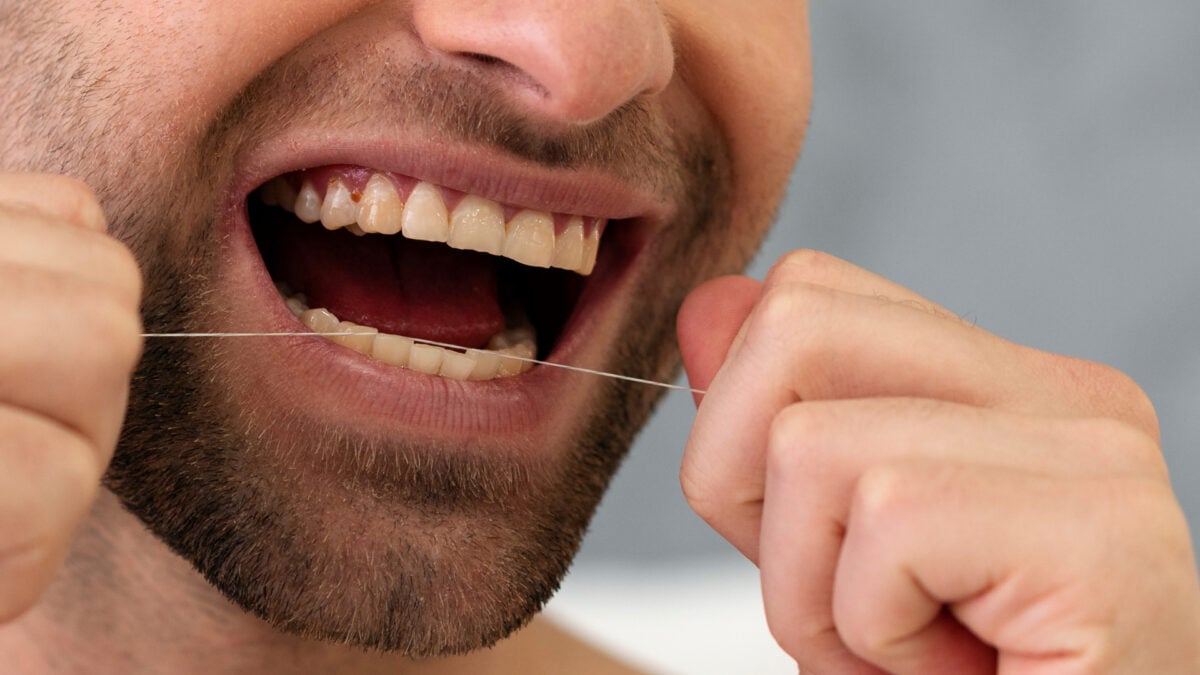
Flu shot season is around the corner, and while injections remain the most common form of vaccination, scientists are working hard to find other ways to deliver inoculations that don’t involve shoving a needle into your flesh. And in a new study, researchers think they might have found another novel approach: dental floss.
In the new work, a team of scientists based in the U.S. demonstrated how this might work on lab mice, finding that vaccine delivery via dental floss was more effective at stimulating antibody production than if the vaccine was delivered under the mice’s tongues and about as effective as a nasal spray delivery method. If the results hold true for humans, then some vaccines could be given via tooth tape and without the need for needles.
“Here we show that flat tape dental floss can deliver vaccines through the junctional epithelium of the gingival sulcus, exploiting its naturally leaky properties,” the researchers wrote in the study, which was published in July in the journal Nature Biomedical Engineering. The junctional epithelium is the technical term for the deep tissue between the tooth and the gum. Epithelial tissues are one of three layers of so-called mucosal surfaces, which are the membranes that lubricate and protect your body’s organs and cavities, including your nose, mouth, and intestines. Many pathogens like influenza and Covid-19 can enter the body through these mucosal surfaces.
“If a vaccine is given by injection, antibodies are primarily produced in the bloodstream throughout the body, and relatively few antibodies are produced on mucosal surfaces,” Harvinder Singh Gill, co-author of the study and a professor in Nanomedicine at North Carolina State University, explained in a statement. “But we know that when a vaccine is given via the mucosal surface, antibodies are stimulated not only in the bloodstream, but also on mucosal surfaces.”
“This improves the body’s ability to prevent infection, because there is an additional line of antibody defense before a pathogen enters the body,” he added.
Because the tissue in between our teeth and gums is more permeable than other similar tissues, like those lining your stomach, lungs, and intestines, then it should be able to introduce a vaccine into the body relatively easily, triggering the production of antibodies throughout the mucosal layers. To test this idea, the researchers applied peptide flu vaccine on unwaxed dental floss, and then used it to floss the teeth of lab mice.
Gill and colleagues then compared the animals’ antibody production to that of mice that either received the peptide flu vaccine via a nasal spray or under their tongues. The dental floss vaccine delivered significantly superior antibody production on mucosal surfaces than the under-the-tongue inoculation, and was comparable to the nasal spray.
“This is extremely promising, because most vaccine formulations cannot be given via the nasal epithelium—the barrier features in that mucosal surface prevent efficient uptake of the vaccine,” said Gill, adding that nasal delivery also carries the risk of the vaccine reaching the brain, which could pose safety concerns. “Vaccination via the junctional epithelium offers no such risk,” he said.
The team also tested the floss approach with three other vaccine classes—proteins, inactivated viruses, and mRNA—and revealed that the novel method triggered antibodies both in the bloodstream and mucosal surfaces in all of them. What’s more, their efficacy wasn’t impeded if the mice consumed food or water right after flossing.
To investigate the practicality of the flossing approach, the researchers also tested its mechanics with humans. Using floss picks, they coated the tape with food dye and asked study participants to try and get it as deep between their teeth and their gums as they could. Participants were able to deposit around 60% of the dye in the gum pocket, indicating that vaccine-coated floss picks could be an effective way to deliver vaccines to that tissue.
As for costs, the researchers think that it would be similar in price to other vaccine delivery techniques. However, there are some inherent limitations to a floss vaccine.
“For example, it can only be used for individuals with teeth,” the researchers explained in the study. “Therefore, this approach cannot be used in neonates [newborns] until they experience teeth eruption, which typically occurs at around 6 months of age. Further, the impact of gingival tissue infection on vaccination is unclear. Additional studies are required to answer this question.”


 Language
 English
 VN
VN
 French
 Spanish
 Portuguese
 Deutsch
 Dutch
Dutch
 Italiano
 Russian
 Romaian
 Portuguese (Brazil)
 Greek
Greek
 Arabic