


Acting NASA Chief Tells Agency to Build a Nuclear Reactor on the Moon, Before China Does It First
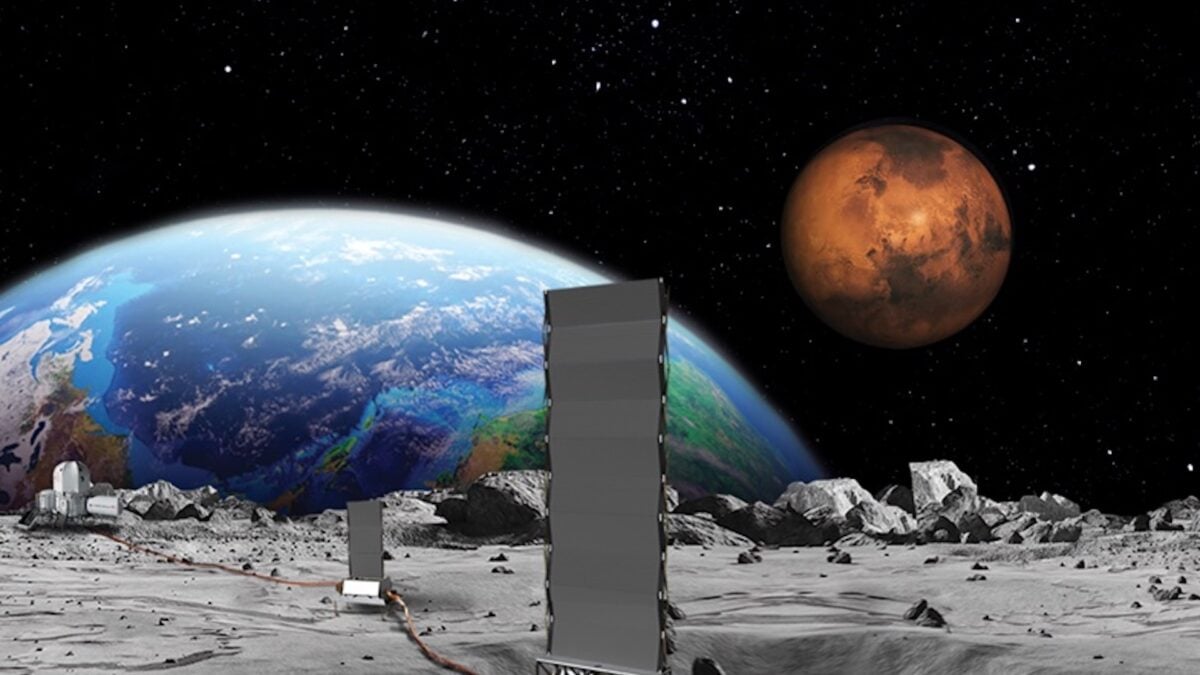
NASA’s acting administrator Sean Duffy is fast-tracking the agency’s plans to build a nuclear reactor on the lunar surface, a move that highlights the Trump administration’s focus on human spaceflight and establishing a long-term presence on the Moon.
Duffy issued a directive to expedite the timeline for the reactor, aiming for a launch date to the Moon by 2030, Politico first reported. In the directive, Duffy mentions China and Russia’s joint plan to put a nuclear reactor of their own on the Moon in the mid-2030s, citing a concern that the two countries could “potentially declare a keep-out zone” that would hinder NASA’s ability to do the same.
“To properly advance this critical technology to be able to support a future lunar economy, high power energy generation on Mars, and to strengthen our national security in space, it is imperative the agency move quickly,” Duffy wrote in the directive, which was sent out on Thursday, July 31.
NASA has been working on a Fission Surface Power System for the Moon since 2022, when the agency awarded three $5 million contracts to its commercial partners to develop initial concept designs for a small reactor. At the time, NASA specified that the reactor should stay under 6 metric tons and be able to produce 40 kilowatts of electrical power, enough to power around 33 households. In the new directive, however, Duffy not only wants NASA to move fast on its project, but he also specified that the reactor should produce 100 kilowatts of power, enough for about 80 households.
With the ongoing Artemis program, NASA wants to establish a sustainable human presence on the Moon. Building a habitat on the lunar surface would prove tricky without power, and relying on solar energy alone would likely be insufficient. The day-night cycle on the Moon lasts for about a month, with roughly two weeks of sunlight followed by two weeks of darkness that would leave solar arrays without its energy source. On the other hand, fission reactors can operate around the clock, even in the Moon’s shadowy craters and during the long lunar nights.
Establishing a power source on the Moon is crucial for human exploration, an aspect of NASA’s objectives that the current administration is especially keen on. NASA is preparing for severe budget cuts under the White House’s proposed budget for 2026, which threaten several of its robotic missions to space. Under the proposed budget, NASA’s planetary science budget would drop from $2.7 billion to $1.9 billion. On the other hand, the agency’s human space exploration budget would receive an additional $647 million compared to the 2025 budget.
The recent directive is part of the administration’s push to send humans to the Moon and Mars and to establish dominance in the new space race with China and Russia. The directive orders NASA to designate an agency official to oversee the project within 30 days and for it to issue a request for proposals from commercial partners within 60 days.


 Language
 English
 VN
VN
 French
 Spanish
 Portuguese
 Deutsch
 Turkish
 Dutch
Dutch
 Italiano
 Russian
 Romaian
 Portuguese (Brazil)
 Arabic