


Neanderthals Ate Maggots, Scientists Say
Modern humanity’s most famous cousins, the Neanderthals, may have had a clever, if unappealing, dietary trick for survival: maggots. Research out today posits these creepy crawly fly larvae provided Neanderthals an ample source of essential nitrogen and fat.
Scientists at Purdue University, the University of Michigan, and others conducted the study, published Friday in Science Advances. Using both experimental and historical data, they showed that maggot-infused meat is rich in fat and nitrogen and that similar human populations have commonly included such foods in their diets. The team argues that maggots are the most reasonable explanation for why Neanderthals had very high levels of nitrogen in their system.
“Fly larvae are a fat-rich, nutrient dense, ubiquitous, and easily procured insect resource, and both Neanderthals and anatomically modern humans, much like recent foragers, would benefit from taking full advantage of them,” lead author Melanie Beasley, a paleoanthropologist at Purdue, told Gizmodo.
Nitrogen is a much-needed nutrient; among other things, it’s used to help create amino acids, the building blocks of proteins. Speaking of protein, dietary nitrogen is most abundantly found in animal meat (though certain leafy vegetables and legumes are also high in it).
The excavated remains of Neanderthals are known to have high levels of nitrogen isotopes, indicating they had plenty of nitrogen in their diets. According to Beasley, most researchers have assumed this meant Neanderthals were hypercarnivores—predators at the top of the food chain that ate lots of freshly killed large animals, mammoths included. But in 2017, co-author John Speth put forth a different hypothesis: that Neanderthals were actually eating lots of stored and putrid meat filled with maggots.
Both then and now, researchers note that some Indigenous groups in the Northern Hemisphere have regularly and intentionally eaten maggot-rich food—practically as a delicacy. In 1931, for instance, Knud Rasmussen, a polar explorer and anthropologist, wrote this anecdote about him and some members of an Inuit community coming across a cache of meat: “The meat was green with age, and when we made a cut in it, it was like the bursting of a boil, so full of great white maggots was it. To my horror my companions scooped out handfuls of the crawling things and ate them with evident relish.”
Beasley heard about Speth’s argument and said she could help him test it out experimentally. At the time, she was pursuing a postdoctoral degree that involved studying muscle tissue decomposition in deceased people. This work also meant Beasley would spend much of her time around the maggots that feed on decaying tissue.
Beasley and her colleagues documented the changing nitrogen levels in these samples of decaying tissue along with three different species of fly maggots. As the tissue decayed, levels of nitrogen inside changed modestly. The maggots themselves, however, were chock-full of nitrogen.
Given the conditions back then, it would have been impossible for Neanderthals to avoid some maggots ending up in any animal meat they tried to store. Rather than a hindrance, though, these hominids probably made the most of the situation, using the maggots to turn their lean meat into a “fat-rich, more complete food resource,” Beasley said.
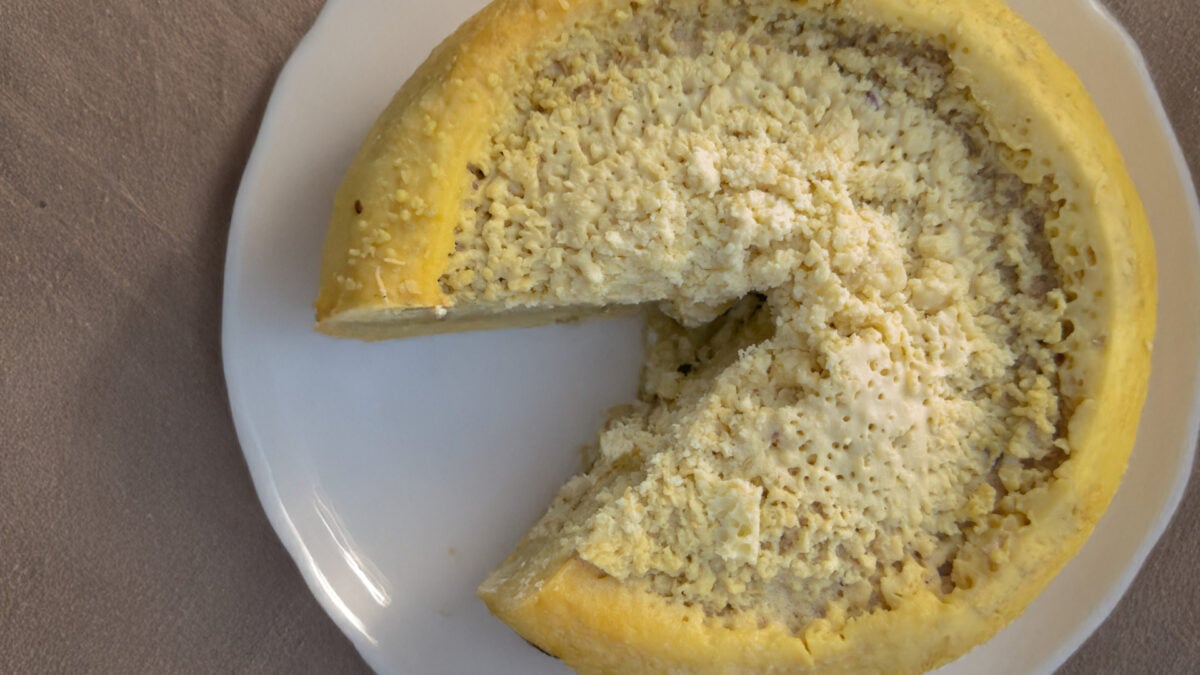
The researchers are still collecting more evidence to shore up their argument for maggot-eating Neanderthals, and they’re also working to understand how the nutritional benefits of maggot-rich food change over time (exactly when is rotten meat too rotten, in other words?). However Neanderthals ate their meat, though, there are many people today still using insects and maggots to spice up their diet, the researchers point out. In Europe, for instance, there’s casu marzu, a Sardinian sheep’s milk cheese that’s intentionally laced with cheese fly (Piophila casei) maggots.
Much love to my Neanderthal brethren and casu marzu fans, but I think I’ll still just stick to some classic sharp cheddar for my next cheese plate.


 Language
 English
 VN
VN
 French
 Spanish
 Portuguese
 Turkish
 Dutch
Dutch
 Italiano
 Russian
 Romaian
 Portuguese (Brazil)
 Greek
Greek
 Arabic