


Hibernation’s Hidden Healing ‘Superpowers’ Could Be Locked in Our DNA
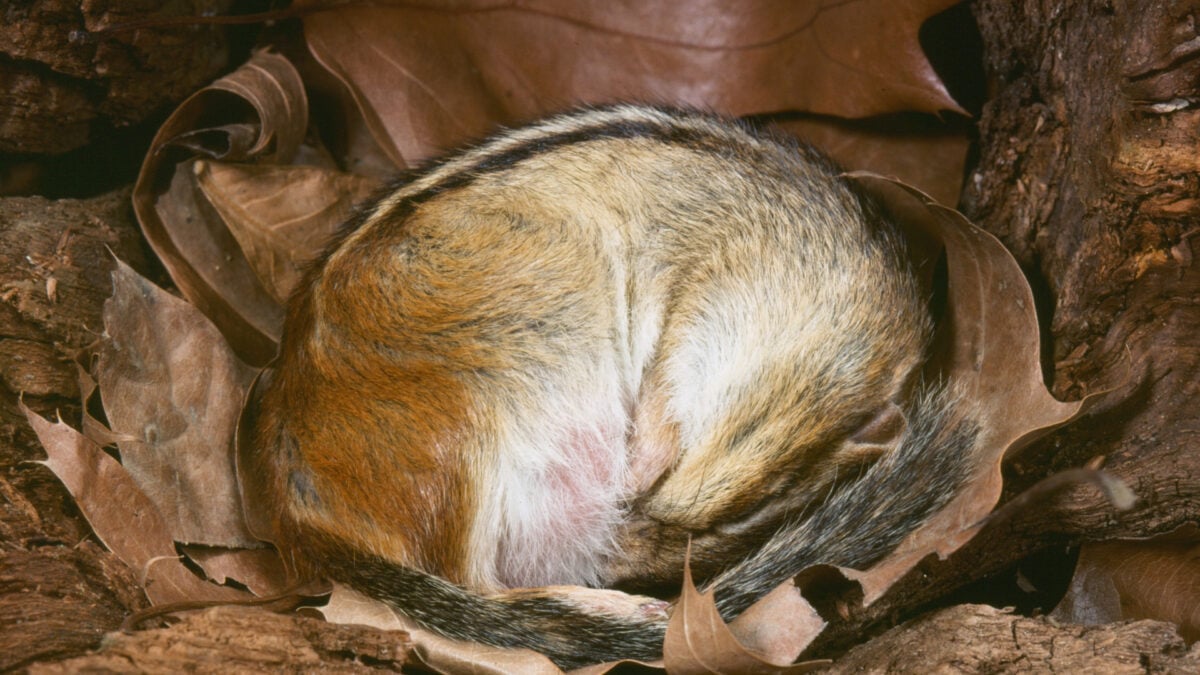
After spending months without eating, drinking, or moving, hibernating mammals must rebound from extreme physiological changes. Two new studies suggest that the genetic “superpowers” underlying this incredible resilience may also be present in the human genome.
For these studies, published Thursday, July 31, in the journal Science, researchers at the University of Utah honed in on the specific DNA regions that help hibernators rapidly recover from muscle atrophy, insulin resistance, and brain damage. They found strong evidence to suggest that the human genome shares these genetic regions, which function as control switches for hibernator adaptations. Finding and harnessing them could lead to new treatments for type 2 diabetes, Alzheimer’s disease, and other disorders, the researchers say.
“Humans already have the genetic framework,” said Susan Steinwand, a neurobiology and anatomy researcher at U of U Health and first author of one of the studies. “We just need to identify the control switches for these hibernator traits.”
During hibernation, mammals enter a state of torpor, or physiological dormancy. This allows them to survive months without food and water, but at great cost to their health. Their muscles deteriorate due to lack of nutrition and movement, Christopher Gregg, a professor of neurobiology at U of U and senior author on both studies, told Gizmodo. Proteins associated with Alzheimer’s disease build up in their brains, and upon awakening, the sudden reperfusion of blood can cause further neurological damage, he explained. What’s more, they become insulin resistant due to the amount of fat they gain to sustain them during months of starvation.
Hibernating mammals have evolved remarkable adaptations to reverse this extensive physiological damage. The genes that underlie these adaptations are likely also present in humans and other non-hibernators, Gregg explained. The fact that hibernation has evolved independently in multiple animal species suggests that its basic genetic ingredients are present across the mammalian genome. Therefore, non-hibernators may still carry them.
“We mostly all have the same genes across species,” Gregg said. “The big change is in the 98% of the genome that does not encode for genes.” Non-coding DNA is largely responsible for gene regulation. In hibernators, specific regions of non-coding DNA act as “master switches” for controlling functional gene responses to starvation and refeeding, he explained.
Finding these master switches in the mammalian genome is like searching for needles in a DNA haystack. To accomplish this, the researchers made whole-genome comparisons across mammals to identify conserved DNA regions that are stable in most species but show accelerated change in hibernators. These hibernator-accelerated regions are regulators that turn genes on in specific cells at specific times, Elliott Ferris, a data analyst in Gregg’s lab at U of U and first author of one of the studies, told Gizmodo.
To understand the biological processes that may be linked to these hibernator-accelerated regions, the researchers identified genes that get turned up or turned down during fasting in mice. Hibernation is an adaptation to survive food scarcity, so fasting triggers similar metabolic changes. This led them to “hub genes” that act as master regulators for fasting-induced changes to gene activity.
“The really surprising discovery that was very exciting was that the hibernation-linked elements are disproportionately affecting those key hub genes,” Gregg explained. “The implication is that hibernators changed the regulation and activity of these core hub genes to have big downstream effects on the whole program for responding to food scarcity and food deprivation. That’s important as we think about translating this knowledge into the real world.”
Gregg is co-founder of Primordial AI, a Utah-based biotech startup that leverages AI to uncover master regulator gene drug targets. Through this company, he aims to develop drugs that mimic the genetic advantages hibernators have, such as boosting neuroprotection in Alzheimer’s patients or reversing insulin resistance in type 2 diabetics. “Those hub genes are the ones that we think are a really good starting point to design medicines to affect those genes,” Gregg said.


 Language
 English
 VN
VN
 French
 Spanish
 Portuguese
 Deutsch
 Turkish
 Dutch
Dutch
 Italiano
 Russian
 Romaian
 Portuguese (Brazil)
 Arabic