


New Details Emerge About Ancient Inca Counting Technology
The Inca were a pre-Columbian civilization whose empire sprawled along South America’s Pacific Coast from the 15th to the 16th century CE. Like other Andean peoples, they used khipus (also known as quipus), an intricate cord and knot system used to record information. According to Spanish colonial-era sources, only male Inca elites could make khipus. A new study, however, challenges this widespread notion.
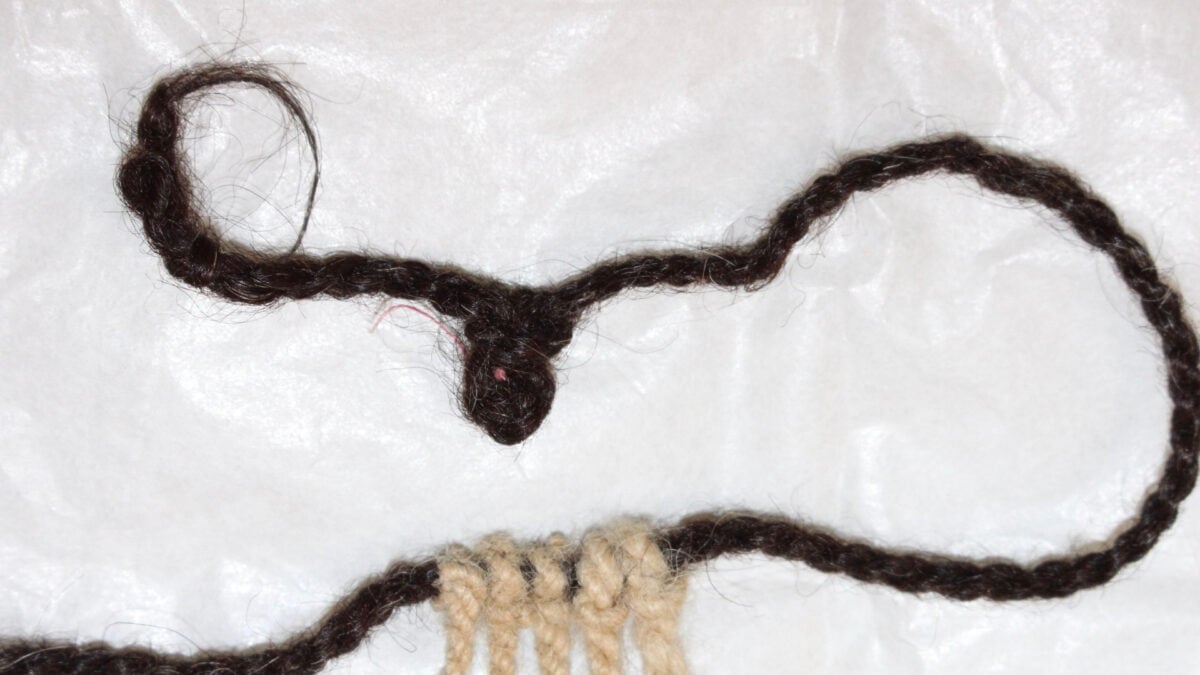
In a paper published today in Science Advances, an international team of researchers investigated the primary cord of a khipu from around 1498 CE made from human hair. Their analysis revealed that the individual who wove their hair into the khipu ate a diet commonly associated with commoners, suggesting that a greater diversity of people used the instrument than previously thought.
“Despite recent advances in our understanding of Andean khipus, scholars know little about the specialists who created Inka khipus,” the researchers wrote in the study. “With limited direct evidence concerning the lives of Inka khipu experts, our knowledge is based mainly on the chronicles of Spanish-language colonial observers.”

Researchers believe that khipus were buried alongside their owners when they died. Unfortunately, however, the burials where experts have discovered many Inca khipus were previously looted, meaning they can no longer provide this crucial insight. As such, the team from the new study took a different approach.
“Historically, when human hair was incorporated into a khipu’s primary cord, it served as a ‘signature’ to indicate the person who created the khipu,” the researchers explained. “Recent advances in elemental analysis–isotope ratio mass spectrometry allowed us to undertake simultaneous carbon (C), nitrogen (N), and sulfur (S) measurements from a single KH0631 hair sample, revealing that this individual consumed a diet characteristic of low-ranking commoners,” they added. “This evidence suggests that Inka commoners could be involved in creating Inka-style khipus.”
Specifically, the individual in question ate tubers and greens instead of meat and corn, which was the typical Inca elite’s diet. The researchers’ approach also revealed that this khipu specialist, or khipukamayuqs, probably lived in modern-day southern Peru or northern Chile.
These results align with the fact that in the 19th and 20th centuries, “commoners,” such as peasant farmers, farm laborers, and female peasants, created and used khipus. What’s more, it bolsters recent research as well as accounts by Felipe Guamán Poma de Ayala, a 16th-century Inca nobleman and chronicler, that women in the Inca Empire also made khipus.
While the researchers admit that “KH0631 is only one khipu,” they conclude that “the new isotopic evidence from KH0631 suggests that khipu literacy in the Inca Empire may have been more inclusive and widespread than hitherto thought.”


 Language
 English
 VN
VN
 French
 Spanish
 Portuguese
 Deutsch
 Turkish
 Dutch
Dutch
 Italiano
 Russian
 Romaian
 Portuguese (Brazil)
 Greek
Greek